


empowering sustainable business
How We're Funded
IOI is supported through a mix of philanthropic support and financial commitments from institutions, consortia-based organizations, and more. As a sustainability focused not-for-profit initiative, we are keenly aware of the strains that exist on the current funding landscape for open infrastructure non-profits. We are dedicated at IOI to exploring revenue
Entelechy | Intentional Community on Salt Spring Island, BC
Join Entelechy, a sustainable intentional community on Salt Spring Island, BC. Experience conscious living and personal growth, and join our Ecovillage Design Education (EDE) course running Summer 2026.
The end of ownership: the zero-marginal-cost economy
Dries is the Founder and Project Lead of Drupal and the Co-founder and Executive Chair of Acquia.
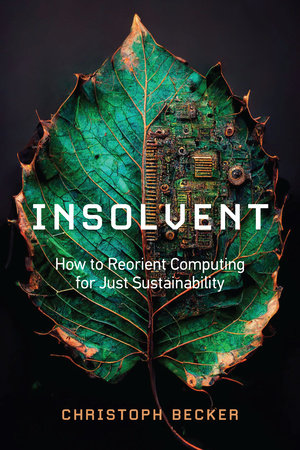
Insolvent: How to Reorient Computing for Just Sustainability
How we can enact meaningful change in computing to meet the urgent need for sustainability and justice.The deep entanglement of information technology with
What does a sustainable open source project look like?
Over the past couple years, thanks in part to Nadia Eghbal’s Roads and Bridges report, the world is starting to see the need for long-term…

Evaluating Sustainable Digitalization: A Carbon-Aware Framework for Enhancing Eco-Friendly Business Process Reengineering
In an era where sustainability is paramount, understanding the environmental impact of digitalizing business processes is critical. Despite the growing emphasis on sustainable practices, there is a lack of comprehensive methodologies to evaluate how digitalization impacts environmental sustainability compared to traditional processes. This paper introduces a carbon-aware methodological framework specifically designed to assess the sustainability of business process reengineering through digitalization. The Digital Green framework quantitatively analyzes the environmental costs associated with digital transformation, ensuring that truly sustainable digitalization results in lower resource consumption relative to the complexity of the process being digitalized. To demonstrate its effectiveness, the framework was applied to a case study involving the reengineering of an administrative process at a small university in southern Italy. The case study highlighted the framework’s ability to quantify the environmental benefits or detriments of digital transformation, thus guiding organizations toward more sustainable digital practices. This research contributes to the field by offering a concrete tool for aligning digitalization efforts with ecological sustainability, and by paving the way for integration with initiatives such as the Green Software Foundation’s Software Carbon Intensity (SCI) specifications.
The relationship between organizational culture, sustainability, and digitalization in SMEs: A systematic review
Organizational culture, environmental sustainability, and digitalization have an impact on the business development of Small and Medium-Sized Enterprises (SME). Dimensions associated with organizational culture (e.g., attitudes, norms, assumptions) give a sense of identity and determine behavior. The latter include general approaches concerning the organizational impact on the natural environment (environmental sustainability) or the adoption of digital technologies (digitalization), which can cause profound transformations of the business model. These three concepts have been investigated separately and scarce attention has been paid to their relationship. To enable SMEs to successfully manage this complex relationship, our study cumulates existing knowledge, offering the first integrative view on organizational culture, level of environmental sustainability, and level of digitalization and their interactions. Through a systematic literature review protocol supplemented where possible by meta-analysis we selected 80 significant papers out of 811 peer-reviewed papers analyzed. We developed a network map to display the relations between the three concepts. Quantitative path analysis was used on three bidirectional main paths. For qualitative analysis we developed a novel extension to the Belief-Action-Outcome (BAO) framework, presented for the first time in the paper. Our findings reveal thirteen key dimensions and identify ten links between the key constructs. Strategic orientation, internal capabilities, management, and attitudes are the most investigated cultural dimensions. Furthermore, we integrated interchangeably used terms (e.g. Green IT and Green IS) introducing the novel concept of green digitalization tools. The meta-analysis revealed trends in applied research methods, geographical locations of research, top journals, and a growing interest in the relationship. Finally, we identify gaps in existing research and challenges for future research.
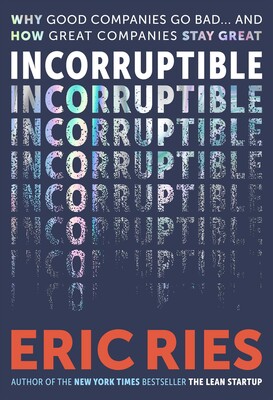
Incorruptible
"Incorruptible by Eric Ries is the best and most important business book of the year." —Dan Heath, NYT Bestselling Author & Podcast Host of "Wh...
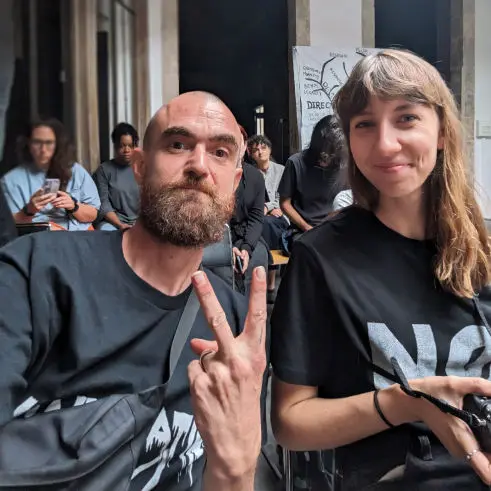
Association NØ
Initiated and led by artists and educators Benjamin Gaulon + Dasha Ilina, NØ is a non profit organisation whose mission is to support and promote emerging art and design research and practices with a critical outlook on the influence of technology on human life, socioeconomics, and the environment.
45 patterns to support sustainable business model innovation
Our new study presents a comprehensive and up-to-date overview of presently known business model patterns that hold the potential to contribute to the diffusion of ecologically and socially benefic…

Small- and Medium-Sized Enterprises: Trends and Future Perspectives for Sustainability and Digitalization in Germany | MDPI
The objective of this research was to provide a review of the state-of-the-art literature related to sustainability and digitalization in SMEs to identify current trends and future perspectives within this vital sector.
The Owning Impact Project | MIT Sloan Sustainability Initiative | MIT Sloan
The Owning Impact Project examines the role that systemic investing strategies can have in fostering transformative change.

Role of digitalization in environment, social and governance, and sustainability: Review-based study for implications
Digitalization gives people access to a vast network of untapped data, which has the potential to help society and the environment. Smart systems connected to the internet can systematically provide a unique opportunity to solve difficulties related to long-term sustainability. The goals are to create an egalitarian, ecologically sustainable, and healthy society. Technological resources are envisioned as game-changing instruments. Three key concerns integration benefits are highlighted here: (i) sustainable development goals, (ii) socio-economic development, and (iii) the role of digital technology in environmental sustainability. This viewpoint describes the potential that digitization can create a future sustainable society. The technological network would unite the urban and rural worlds under a shared banner of sustainable development, keeping all social elements in the loop. Nations that take a comprehensive strategy will be able to provide equitable growth and an efficient, sustainable, and digital existence for their citizens. As a result, digitization provides better living conditions, active public involvement, clean governance, and transparency in public welfare programs and processes. People who are well-informed, self-aware, and digitally equipped will be better learners, thinkers, reformers, participators, and change and growth agents, marching forward on sustainable progress. The advantages of digitization in hastening the transition to sustainable industrial processes and improving people's health and happiness are explored. Finally, the perspective encapsulates the advantages of digitization by offering a holistic vision of how technology could aid in addressing major challenges such as endangered world biodiversity and climate change.

Effective Altruism’s Bait-and-Switch: From Global Poverty To AI Doomerism
The Effective Altruism movement Effective Altruism (EA) is typically explained as a philosophy that encourages individuals to do the “most good” with their resources (money, skills). Its “effective…

Green Software Foundation — Building a Sustainable Digital Future
The Green Software Foundation is a non-profit creating a trusted ecosystem of people, standards, tooling, and best practices for building green software.
There’s some conversation in the Atmosphere right now about how we turn @atproto.com projects into sustainable businesses. One of the biggest opportunities is sitting right in front of us: give publishers back the audience development business they spent the last 20 years outsourcing to platforms.
