

A think tank centered on orienting education toward a culture of excellence. Click to read Center for Educational Progress, a Substack publication with thousands of subscribers.
Another Democratic Future | Substack
DemocracyNext brings you stories, research, and reflections on the global deliberative wave. Click to read Another Democratic Future, a Substack publication with thousands of subscribers.

Do Not Research | Substack
DNR is a publishing platform for writing, visual art, internet culture and more. Click to read Do Not Research, a Substack publication.

Standardized Education | The Paper Pilot
The Paper Pilot's digital garden of thoughts on philosophy, politics, and sociology
School Yourself | Karen Vaites | Substack
Karen Vaites's takes on K-12 education and more. Click to read School Yourself, by Karen Vaites, a Substack publication with thousands of subscribers.

underneath
underneath.study is an offsite and online learning + arts collective dedicated to the principle of generosity as knowledge. situated in the belief of sharing skills, resources, and time, underneath.study and its offerings stem from generosity within and should be as accessible and straightforward as possible. our offerings are built on community and promise a tangible or lyrical artifact at the end to be shared as a token of shared time together, and published in our collective zine publication on a rolling basis.
Khan Academy Blog
News, updates, and stories from the nonprofit that helps learners, teachers, and districts accelerate learning. Show all Educators ... Read more

How to grow tomorrows
What if schools were not just sites for delivering education, but societies in miniature? Thousands of chances to cultivate a better future

Equity in K-12 STEM Education
Science, technology, engineering, and mathematics (STEM) live in the American imagination as promising tools for solving pressing global challenges and enhancing quality of life. Despite the importance of the STEM disciplines in the landscape of U.S. political, economic, and social priorities, STEM learning opportunities are unevenly distributed, and the experiences an individual has in STEM education are likely to vary tremendously based on their race, ethnicity, socio-economic class, gender, and a myriad of other factors. Equity in K-12 STEM Education: Framing Decisions for the Future approaches equity in STEM education not as a singular goal but as an ongoing process that requires intentional decision-making and action toward addressing and disrupting existing inequities and envisioning a more just future. Stakeholders at all levels of the education system - including state, district, and school leaders and classroom teachers - have roles as decision-makers who can advance equity. This consensus study report provides five equity frames as a guide to help decision-makers articulate short- and long-term goals for equity and make decisions about policy and practice.
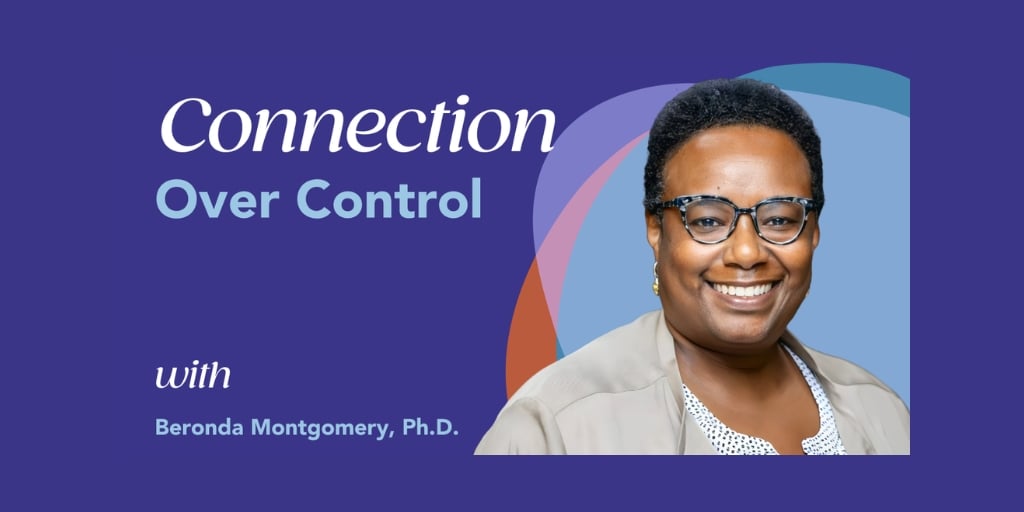
How to Break the Academic Silo Mindset - The Community Solution Education System
What’s stopping higher education from reaching its full potential? In this episode of Radical Cooperation, Dr. Michael Horowitz sits down with Dr. Beronda Montgomery—biologist, author of Lessons from Plants, and former Vice President for Academic Affairs and Dean at Grinnell College—to unpack why silos persist in colleges and universities, and how those divisions hold institutions […]
Developing our position on AI - Blog - Recurse Center
This post is about how we've tried to develop a position on AI in the context of learning and growth at RC.

PARCC
The Partnership for Assessment of Readiness for College and Careers (PARCC) is a consortium that includes the US Department of Defense Educational Activity and the US Bureau of Indian Education. Consortium members work to create and deploy a standard set of K–12 assessments in Mathematics and English,[1] based on the Common Core State Standards.
Decentralized Education | The Paper Pilot
The Paper Pilot's digital garden of thoughts on philosophy, politics, and sociology
Zone of Proximal Development
Vygotsky’s Zone of Proximal Development (ZPD) refers to the gap between what a learner can do independently and what they can achieve with guidance. Learning occurs most effectively in this zone, as the learner receives support from more knowledgeable individuals, such as teachers or peers, to help them reach the next level of understanding.

Reinventing Commons Governance in Modern Times | David Bollier
I gave the following remarks about commons governance on September 27 as part of the U!REKA Lab Lecture Series. U!REKA -- which stands for Urban Research and Education Knowledge Alliance -- is a consortium of eight European universities that studies urban commons. The subtitle of my talk was "Find Answers by Living the Questions."
