

Today, almost everything about our lives is digitally recorded and stored somewhere. Each credit card purchase, personal medical diagnosis, and preference about music and books is recorded and then
'Anonymised' data can never be totally anonymous, says study
Findings say it is impossible for researchers to fully protect real identities in datasets

Who owns your data?
A Supreme Court case about a bank robbery could redefine your digital rights.
Opinion | The Dark Market for Personal Data (Published 2014)
Companies should disclose the information they sell about us.

How Data Can Be Used Against People: A Classification of Personal Data Misuses
Even after decades of intensive research and public debates, the topic of data privacy remains surrounded by confusion and misinformation. Many people still str

Data anonymization doesn't make you anonymous. | Proton
Anonymized data can still be traced back to you. Here's how companies use it, and how you can protect your privacy.
Your shopping habits are one in a million, literally
A handful of purchases can unmask an anonymous credit card record

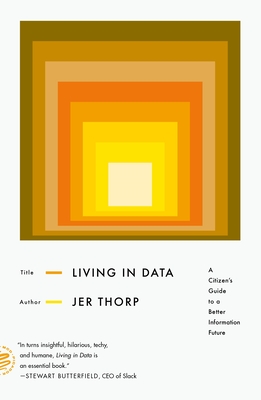
Living in Data: A Citizen's Guide to a Better Information Future (Paperback)
Jer Thorp’s analysis of the word “data” in 10,325 New York Times stories written between 1984 and 2018 shows a distinct trend: among the words most closely associated with “data,” we find not only its classic companions “information” and “digital,” but also a variety of new neighbors—from “scandal” and “misinformation” to “ethics,” “friends,” and “play.”To live in data in the twenty-first century
Digital cash and privacy: What are the alternatives to Libra?
By Christian Grothoff and Alex Pentland

‘Conditioning an entire society’: the rise of biometric data technology
The use of our bodies to unlock access to services raises concerns about the trade-off between convenience and privacy

Digital identification: The hidden and visible implications
Countries are rolling out digital identification schemes, but citizens are protesting about loss of privacy and misuse of data. They may have a point.

Nonrivalry and the Economics of Data
(September 2020) - Data is nonrival: a person's location history, medical records, and driving data can be used by many firms simultaneously. Nonrivalry leads to increasing returns. As a result, there may be social gains to data being used broadly across firms, even in the presence of privacy considerations. Fearing creative destruction, firms may choose to hoard their data, leading to the inefficient use of nonrival data. Giving data property rights to consumers can generate allocations that are close to optimal. Consumers balance their concerns for privacy against the economic gains that come from selling data broadly.
Privacy Fundamentalism
The current privacy debate is making things worse by not considering trade-offs, the inherent nature of digital, or the far bigger problems that come with digitizing the offline world.

Reframing our relation to our data | Ronen Tamari
From data as digital exhaust to data as digital trails to collective wisdom.

The Age Verification Privacy Paradox: Why Document Uploads Hurt Everyone—and How World Solves It
Age verification is now required by many digital platforms worldwide, but most systems create new risks for user data and privacy. This article explores why document-based age verification exposes everyone to greater risk—and how privacy-first technology like World ID offers a safer path for consumers and platforms.

A first-party data reality check | The Mozilla Blog
Part I in Anonym’s Rewiring the Rules Series First-party data — the kind users share willingly with brands they trust — is a marketer’s mos

Is this a thing? Something about private data on AT Proto, where a person could purchase content and have a copy of said content injected into their Private Data, so it could not be removed without their consent? I’m thinking “I’ve bought a copy of a book, and now the book blob lives in my PDS”
