

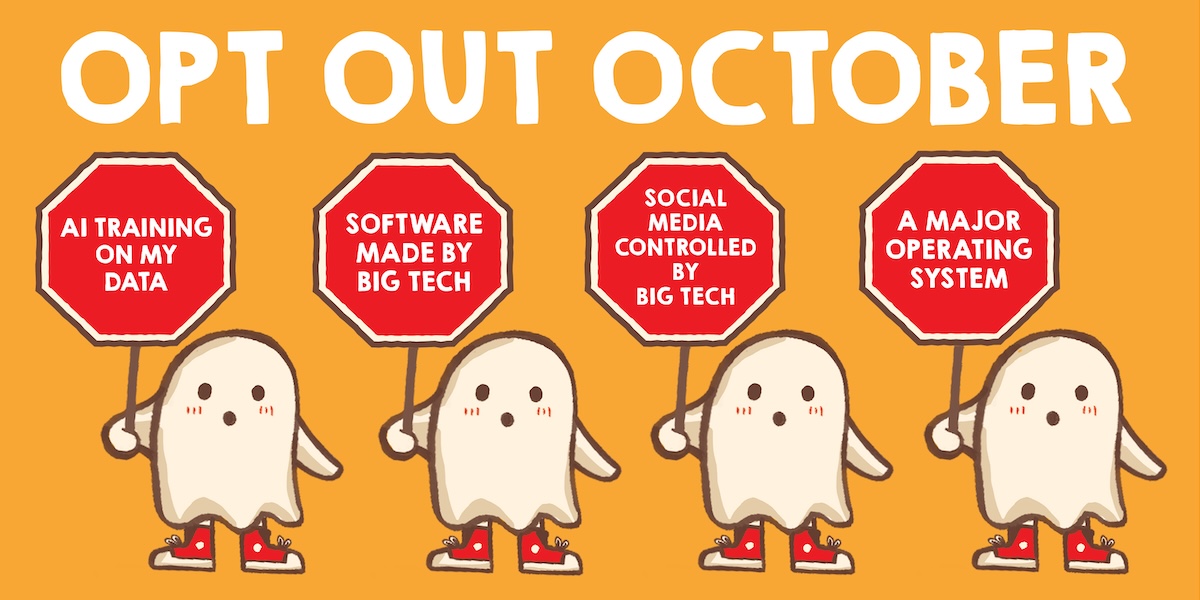
It might seem like there are simply no other choices for social media beyond those controlled by big tech companies, but that’s not true at all. In fact, we’re in a golden era of options being built
Recently I’ve been thinking about a couple of... - Adam Wood
Recently I’ve been thinking about a couple of different tech-related things that sort of overlap. One is the (emerging) shape of the new social web; the other is a pull I’m feeling to try and lessen reliance on American companies. I’ve been interested in / concerned by what became of social media for some time.1 Since the sundering of Twitter in 2022, I’ve kept an eye on the various alternatives, with particular interest in Mastodon and Bluesky. Actually, to be more accurate, my interest has been in the protocols behind those platforms: ActivityPub and AT Protocol respectively. Both have their...

The future of social media is human
We cannot continue participating in social media platforms which do nothing to stop us being tricked by GenAI and the powerful people/governments that control them.

Bluesky & Open Social Media Tech
How do you solve a problem like social media? Part I
It's all well and good saying we should regulate social media. But social media is already regulated. So why is it failing? And what could we do in response?
Big Tech tried to get young people addicted. Now we’re fighting back
Two seismic court decisions in the US have intervened where legislators have failed to defend social media users from exploitation, writes campaigner Zamaan Qureshi

RIP social media. What comes next is messy.
As social media splinters, how can we keep the new online spaces from devolving into toxic pits of despair?

The Future of Sex Work Slams Up Against Big Tech
As influencers peddle more sexually explicit content, Big Tech's biggest platforms—Facebook, Instagram, and Twitter—are increasing restrictions.

It's obvious why we hate social media
We need better internet platforms. We're already building them.

Our Social Media is Broken. Is Decentralization the Fix? | Internet Archive Blogs
When Jack Dorsey, founder of the very centralized social media platform, Twitter, posted this message about decentralized social media, our DWeb community took note:
Shifts in U.S. Social Media Use, 2020–2024: Decline, Fragmentation, and Enduring Polarization
The social media ecosystem appears to be in flux. Twitter’s rebranding to X has come to symbolize a broader reorganization of online publics – political reshuffling, user attrition, and uncertainty over the role of legacy platforms. Simultaneously, the shift from text-based, networked feeds toward algorithmically curated, short-form video has accelerated, with TikTok setting the pace for the wider ecosystem [18, 14, 16]. At the same time, everyday communication increasingly migrates from large, open networks to semi-private spaces such as group chats and messaging apps. Commentators describe a digital public sphere in transition: smaller, more fragmented, less dominated by traditional social networking sites, and rise of more broadcast-oriented forms of media – with some even suggesting that we are seeing the beginning of the end of the social media era.
Social media algorithms can be redesigned to bridge divides — here’s how
"It falls to both the tech companies that built these systems and an engaged public to create technologies designed for social cohesion."

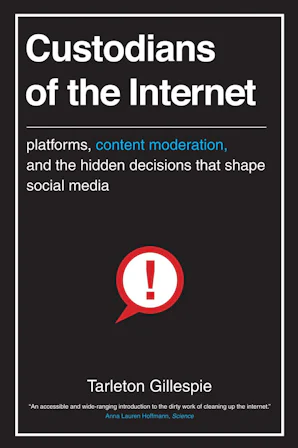
Custodians of the Internet
A revealing and gripping investigation into how social media platforms police what we post online—and the large societal impact of these decisions Most use...
Free Our Feeds
Social media is broken: controlled by a handful of billionaires who shape what people see, say, and believe. These platforms profit from division, exploit user data, and lock people into closed systems.
> The Mozilla Foundation isn't holding back its disdain for Big Tech leaders. > Wannabe kings don't rule the internet. We do. AT Protocol and the broader open social web is one of the ways we take back power from Big Tech. (If you see me out in these New York City streets, let me know.)

Business Insider
Mozilla's new ad campaign skewers tech billionaires like Mark Zuckerberg and Elon Musk bit.ly/4xBAuDZ
I'm excited to finally have a preprint of this paper up, a few years in the making. In it we argue that industry-driven manipulation of social media research is well underway and that norms and institutions in the field are ill-prepared to resist tech's influence. arxiv.org/abs/2510.19894
it's not lost on me how critical it is to be building community-driven social technology in this time, because there's a lot we need - more joy, more connection, more education, more agency, and more privacy. breaking out of the box of "social media" - what are the tools we need in these times?


