

Author Block: Mehwish Zeb, Michigan State University, Yarub Al-Alousi, St. Joseph University Medical Center, Syed Farasat Ali Shah, Institute of Diabetes and Endocrinology
Hypoglycemia Associated With Hypermobile Ehlers-Danlos Syndrome
Abstract. Hypoglycemia in the absence of diabetes is often multifactorial and challenging to diagnose definitively. We present a case report and an expande
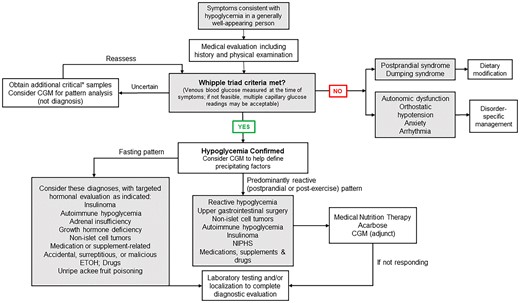
(PDF) Neuroendocrine, Autonomic and Metabolic Challenges in Hypermobile Ehlers-Danlos Syndrome- A Case Study on Hypoglycemia in a patient with Craniocervical Instability.. Medical Research Archives. [Online] 12-5
PDF | This report presents a compelling case of hypoglycemia in a 20-year-old female with craniocervical instability receiving chronic total parenteral... | Find, read and cite all the research you need on ResearchGate

Uncooked cornstarch for the prevention of hypoglycemic events
Hypoglycemia is a pathological condition characterized by a low plasma glucose concentration associated with typical autonomic and/or neuroglycopenic symptoms, and resolution of these symptoms with carbohydrate consumption. Hypoglycemia is quite common in clinical practice, particularly in insulin-treated patients with diabetes and in other inherited or acquired conditions involving the regulation of glucose metabolism. Beyond symptoms that might strongly affect the quality of life, hypoglycemia can lead to short- and long-term detrimental consequences for health. Hypoglycemia can be prevented by appropriate changes in dietary habits or by relevant modifications of the drug treatment. Several dietary approaches based on the intake of various carbohydrate foods have been tested for hypoglycemia prevention; among them uncooked cornstarch (UCS) has demonstrated a great efficacy. In this narrative review, we have summarized the current evidence on the UCS usefulness in some conditions characterized by high hypoglycemic risk, focusing on some inherited diseases -i.e. glycogen storage diseases and other rare disorders - and acquired conditions such as type 1 diabetes, postprandial hypoglycemia consequent to esophageal-gastric or bariatric surgery, and insulin autoimmune syndrome. We also considered the possible role of UCS during endurance exercise performance. Lastly, we have discussed the dose requirement, the side effects, the limitations of UCS use, and the plausible mechanisms by which UCS could prevent hypoglycemia.
LLM-Assisted Reanalysis of Unsolved Rare Disease Genomes Increases Diagnostic Yield
Rare and undiagnosed genetic disorders affect millions of patients globally, and many patients endure years of inconclusive testing. Conventional genomic interpretation can be insufficiently sensit...

In Utero Metabolic Disruption—A Preventable Antecedent of Adult Disease?
The early manifestation of metabolic syndrome (MetS) in children, characterized by the premature onset of visceral obesity, elevated blood pressure, and the progression to dyslipidemia and type 2 diabetes, is associated with adult cardiovascular disease. Tackling the rising epidemic of obesity and...


Folate-dependent hypermobility syndrome: A proposed mechanism and diagnosis
Hypermobility involves excessive flexibility and systemic manifestations of connective tissue fragility. We propose a folate-dependent hypermobility syndrome model based on clinical observations, and through a review of existing literature, we raise the possibility that hypermobility presentation may be dependent on folate status. In our model, decreased methylenetetrahydrofolate reductase (MTHFR) activity disrupts the regulation of the ECM-specific proteinase matrix metalloproteinase 2 (MMP-2), leading to high levels of MMP-2 and elevated MMP-2-mediated cleavage of the proteoglycan decorin.

Precision Medicine in Neuroscience: Tools, Translation, and Implementation: A Workshop
Precision medicine approaches are rapidly transforming neuroscience, driven by advances in genetics, neuroimaging, biomarkers, and data science. These tools enable more refined disease classification, improved diagnosis, and treatments tailored to individual patients across neurological and psychiatric disorders. However, challenges remain in translating these advances into routine research and clinical practice. On March 4–5, the National Academies’ Forum on Neuroscience and Nervous System Disorders, in collaboration with the Forum on Drug Discovery, Development, and Translation and the Roundtable on Genomics and Precision Health, will host a workshop exploring opportunities, challenges, and strategies for integrating precision medicine into neuroscience research and care.

Current status and future perspectives on the mechanistic and pathophysiological understanding of long COVID
Viral and infectious illnesses can exert profound and enduring effects on population health and well-being. In the aftermath of SARS-CoV-2 infection, post-acute sequelae, collectively referred to as Long COVID, have emerged as a major global health challenge, affecting more than 400 million people and contributing to estimated annual economic costs exceeding $1 trillion. Long COVID encompasses a wide and heterogeneous spectrum of debilitating symptoms, including cognitive dysfunction, sleep disturbances, severe fatigue, and post-exertional malaise. Despite its substantial burden, fundamental uncertainties remain regarding its underlying pathophysiology, the development of robust diagnostic criteria, and the identification of effective therapeutic options. This review synthesises current evidence on the biological mechanisms thought to contribute to Long COVID, spanning immune dysregulation, viral persistence, autonomic dysfunction, microvascular pathology, and other emerging hypotheses. We examine advances and limitations in contemporary diagnostic approaches and critically appraise existing treatment strategies, highlighting inconsistencies and gaps that hinder clinical consensus. By integrating interdisciplinary insights, this review underscores the urgent need for mechanistic clarity, validated diagnostic frameworks, and rigorously evaluated treatment pathways. Addressing these gaps will be essential to developing effective, evidence-based management strategies and mitigating the long-term impact of Long COVID on global health.
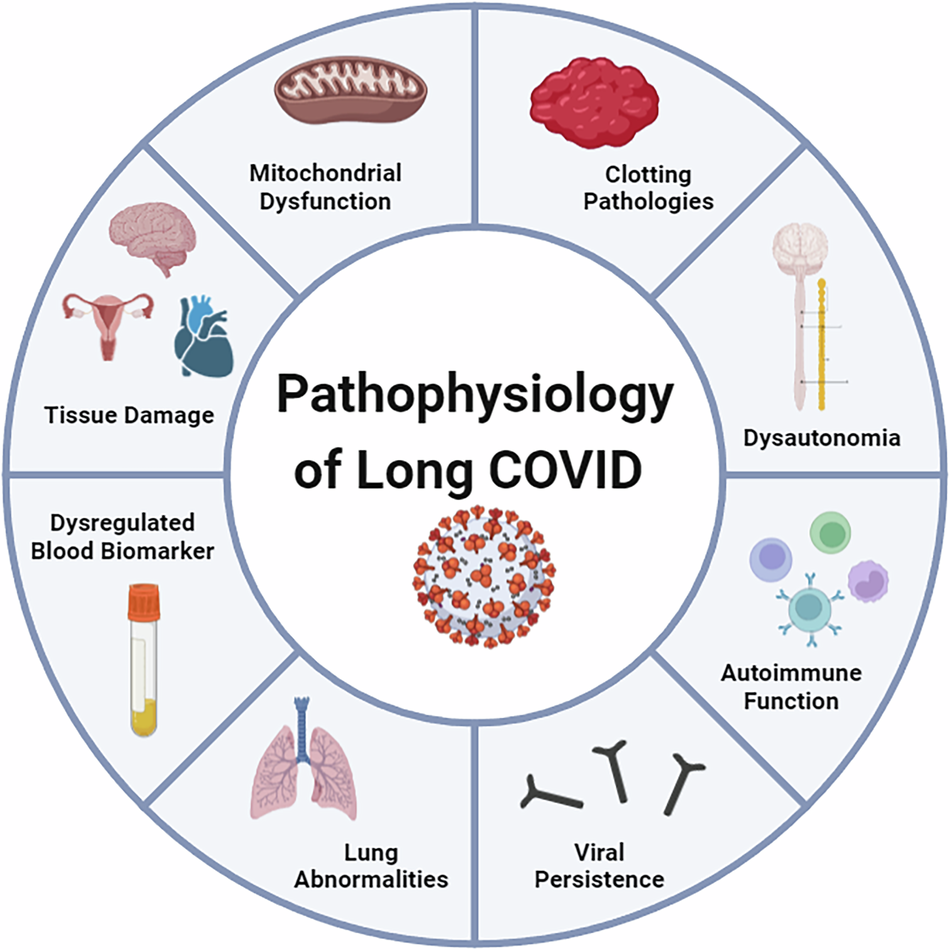
Current status and future perspectives on the mechanistic and pathophysiological understanding of long COVID
Viral and infectious illnesses can exert profound and enduring effects on population health and well-being. In the aftermath of SARS-CoV-2 infection, post-acute sequelae, collectively referred to as Long COVID, have emerged as a major global health challenge, affecting more than 400 million people and contributing to estimated annual economic costs exceeding $1 trillion. Long COVID encompasses a wide and heterogeneous spectrum of debilitating symptoms, including cognitive dysfunction, sleep disturbances, severe fatigue, and post-exertional malaise. Despite its substantial burden, fundamental uncertainties remain regarding its underlying pathophysiology, the development of robust diagnostic criteria, and the identification of effective therapeutic options. This review synthesises current evidence on the biological mechanisms thought to contribute to Long COVID, spanning immune dysregulation, viral persistence, autonomic dysfunction, microvascular pathology, and other emerging hypotheses. We examine advances and limitations in contemporary diagnostic approaches and critically appraise existing treatment strategies, highlighting inconsistencies and gaps that hinder clinical consensus. By integrating interdisciplinary insights, this review underscores the urgent need for mechanistic clarity, validated diagnostic frameworks, and rigorously evaluated treatment pathways. Addressing these gaps will be essential to developing effective, evidence-based management strategies and mitigating the long-term impact of Long COVID on global health.
Ramez Naam on Twitter / X
There was a site years ago called CureTogether where patients could share information in a structured way on their disease, regimen, and progress, working towards a sort of bottoms-up clinical trial. 23andMe acquired them and it seems to be mostly dead.— Ramez Naam (@ramez) September 14, 2025
DANDI
DANDI: Distributed Archives for Neurophysiology Data Integration The DANDI platform is supported by the BRAIN Initiative for publishing, sharing, and processing neurophysiology data. The archive accepts cellular neurophysiology data including electrophysiology, optophysiology, and behavioral time-series, and images from immunostaining experiments. The platform is now available for data upload and distribution. The storage of data in the archive is also supported by the Amazon Opendata program. The data in the archive can be browsed using the Data Portal. For detailed instructions on how to interact (view, upload, download, process) with DANDI click here.
Patient Led Research Collaborative – for Long COVID
Cite as: O’Connor, A. M. (2023). Hypothesis: Long COVID brain fog is caused by free glycan sugar chains in the brain. Patient-Generated Hypotheses Journal for Long COVID & Associated Conditions, Vol. 1, 5-12
RCCX Genetic Module Theory
NOTE: This page is modified from a summary of findings available at the RCCX and Illness website.

Relationships between type 2 diabetes, cell dysfunction, and redox signaling: A meta‐analysis of single‐cell gene expression of human pancreatic α‐ and β‐cells
Abstract Background Type 2 diabetes mellitus (T2DM) is a chronic disease characterized by insulin resistance and failure of β‐cells to meet the metabolic demand for insulin. Recent advances in single‐cell RNA sequencing (sc‐RNA‐Seq) have allowed for in‐depth studies to further understand the underlying cellular mechanisms of T2DM. In β‐cells, redox signaling is critical for insulin production. A meta‐analysis of human pancreas islet sc‐RNA‐Seq data was conducted to evaluate how T2DM may modify the transcriptomes of α‐ and β‐cells. Methods Annotated sc‐RNA‐Seq data from six studies of human pancreatic islets from metabolically healthy and donors with T2DM were collected. α‐ and β‐cells, subpopulations of proliferating α‐cells, immature, and senescent β‐cells were identified based on expression levels of key marker genes. Each dataset was analyzed individually before combining, using weighted comparisons. Pathways of significant genes and individual redox‐related gene expression were then evaluated to further understand the role that redox signaling may play in T2DM‐induced β‐cell dysfunction. Results α‐ and β‐cells from T2DM donors modified genes involved in energy metabolism, immune response, autophagy, and cellular stress. α‐ and β‐cells also had an increased nuclear factor erythroid 2‐related factor 2 (NFE2L2)‐mediated antioxidant response in T2DM donors. The proportion of immature and senescent β‐cells increased in T2DM donors, and in immature and senescent β‐cells, genes regulated by NFE2L2 were further upregulated. Conclusions These findings suggest that NFE2L2 plays a role in β‐cell maturation and dysfunction. Redox singling maybe a key pathway for β‐cell restoration and T2DM therapeutics. , 摘要 背景 2型糖尿病(T2D)是一种以胰岛素抵抗和β细胞无法满足胰岛素代谢需求为特征的慢性疾病。近年来在单细胞RNA测序(sc‐RNA‐Seq)方面的进展为进一步深入研究T2D的细胞机制奠定了基础。在β细胞中, 氧化还原信号对胰岛素的产生至关重要。本研究对人胰岛sc‐RNA‐Seq数据进行 meta 分析, 以评估T2D如何调控α‐和β‐细胞的转录组。 方法 收集6项研究的sc‐RNA‐Seq数据, 这些数据来自代谢正常的人胰岛和T2D供者。根据关键标记基因的表达水平鉴定α‐细胞和β‐细胞、增殖中的α‐细胞亚群、未成熟和衰老的β‐细胞。在使用加权比较进行组合之前, 每个数据集都被单独分析。然后评估重要基因的通路和单个氧化还原相关基因的表达, 以进一步了解氧化还原信号在T2D诱导的β‐细胞功能障碍中可能扮演的角色 结果 来自T2D供者的α‐和β‐细胞修饰了与能量代谢、免疫反应、自噬和细胞应激相关的基因, 在T2D供者中α‐和β‐细胞NFE2L2介导的抗氧化反应增强。在T2D供者中, 未成熟和衰老的β‐细胞比例增加, 并且在未成熟和衰老的β‐细胞中, 受NFE2L2调控的基因进一步上调。 结论 这些发现提示NFE2L2在β‐细胞成熟和功能障碍中起作用。氧化还原信号通路可能是β‐细胞修复和T2D治疗的关键途径。

Evidence mounts that Long Covid is damaging the hearts of those affected
There are also increasing signs that the condition can disrupt the autonomic nervous system
