


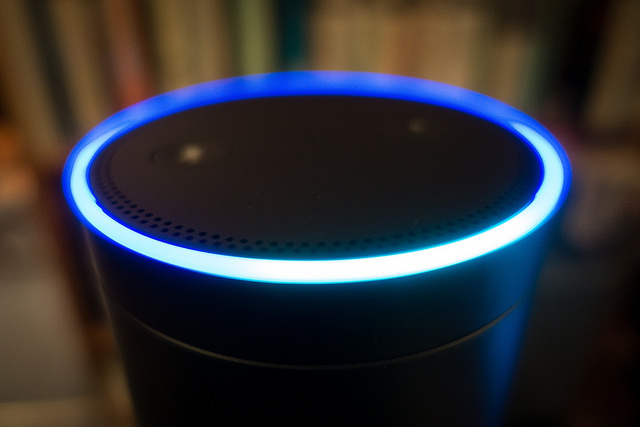
With new rivals on the market, Amazon has to do something to help its Alexa devices compete. Until now, Amazon has not given third-party developers access to what you say to the voice assistant. Google Home, though, does. According to sources reported by The Information, Amazon is currently looking at opening up this private transcript data to its developers, which could help them build better voice apps for Alexa. It would also raise serious privacy concerns for users. It's a delicate balancing act between user privacy and developer access, of course, but with rivals like Google and Apple getting into the smart speaker game, Amazon needs to keep its early lead.
Voiceflow, which allows anyone to make voice apps without coding, raises $3.5 million | TechCrunch
The market for voice apps has opened up -- Amazon Alexa's platform alone has more than 80,000 skills as of earlier this year -- and there's little sign of

Amazon’s Alexa+ Now Produces AI-Generated ‘Podcasts’ Featuring Chats Between Two Robot ‘Co-Hosts’
The podcast industry suddenly has a big new player: Amazon's Alexa+ AI-powered voice assistant, which can now create extended 'podcasts' on any topic.

The future of Siri, or: why private inference isn’t private enough
Yesterday Apple announced a big step towards deploying real AI in their Siri ecosystem. In most ways this is good and inevitable: Siri is one of the world’s most widely-used voice agents, and…

Siri, Alexa, and Google Assistant Can Be Controlled By Inaudible Commands - Slashdot
Apple's Siri, Amazon's Alexa, and Google's Assistant were meant to be controlled by live human voices, but all three AI assistants are susceptible to hidden commands undetectable to the human ear, researchers in China and the United States have discovered. From a report: The New York Times reports t...

Researchers show Siri and Alexa can be exploited with 'silent' commands hidden in songs | TechCrunch
Researchers at UC Berkeley have shown they can embed within songs stealthy commands for popular voice assistants that can prompt platforms like Siri,

Amazon patents Alexa tech to tell if you’re sick, depressed and sell you meds
Echo could analyze your voice to detect a "physical or emotional abnormality."
Ask Slashdot: Who's Building The Open Source Version of Siri? - Slashdot
We're moving to a world of voice interactions processed by AI. Now Long-time Slashdot reader jernst asks, "Will we ever be able to do that without going through somebody's proprietary silo like Amazon's or Apple's?" A decade ago, we in the free and open-source community could build our own versions ...

Introducing Whisper – an open source voice note taking app! Record voice notes and transcribe them into lists, blogs, & more with AI. 100% free & open source. https://t.co/UZWGkUDJ6d
Introducing Whisper – an open source voice note taking app!Record voice notes and transcribe them into lists, blogs, & more with AI.100% free & open source. pic.twitter.com/UZWGkUDJ6d— Hassan (@nutlope) July 22, 2025

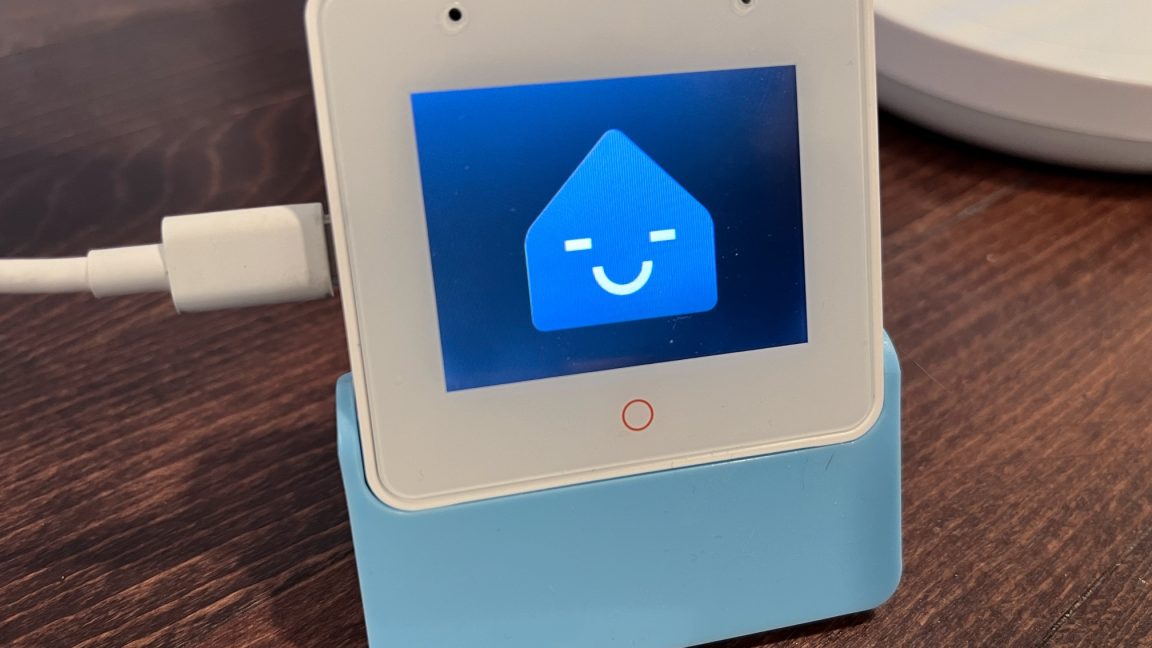
Can you manage your house with a local, no-cloud voice assistant? Mostly, yes.
If you're tired of Alexa and Google listening, a DIY option is possible.
Google Open-Sources Live Transcribe's Speech Engine - Slashdot
Friday Google open-sourced "the speech engine that powers its Android speech recognition transcription tool Live Transcribe," reports Venture Beat: The company hopes doing so will let any developer deliver captions for long-form conversations. The source code is available now on GitHub. Google re...

Google is pulling YouTube off the Fire TV and Echo Show as feud with Amazon grows
New Nest devices have mysteriously disappeared from Amazon

User Privacy and Large Language Models: An Analysis of Frontier Developers' Privacy Policies
Hundreds of millions of people now regularly interact with large language models via chatbots. Model developers are eager to acquire new sources of high-quality training data as they race to improve model capabilities and win market share. This paper analyzes the privacy policies of six U.S. frontier AI developers to understand how they use their users' chats to train models. Drawing primarily on the California Consumer Privacy Act, we develop a novel qualitative coding schema that we apply to each developer's relevant privacy policies to compare data collection and use practices across the six companies. We find that all six developers appear to employ their users' chat data to train and improve their models by default, and that some retain this data indefinitely. Developers may collect and train on personal information disclosed in chats, including sensitive information such as biometric and health data, as well as files uploaded by users. Four of the six companies we examined appear to include children's chat data for model training, as well as customer data from other products. On the whole, developers' privacy policies often lack essential information about their practices, highlighting the need for greater transparency and accountability. We address the implications of users' lack of consent for the use of their chat data for model training, data security issues arising from indefinite chat data retention, and training on children's chat data. We conclude by providing recommendations to policymakers and developers to address the data privacy challenges posed by LLM-powered chatbots.

User Privacy and Large Language Models: An Analysis of Frontier Developers' Privacy Policies
Hundreds of millions of people now regularly interact with large language models via chatbots. Model developers are eager to acquire new sources of high-quality training data as they race to improve model capabilities and win market share. This paper analyzes the privacy policies of six U.S. frontier AI developers to understand how they use their users' chats to train models. Drawing primarily on the California Consumer Privacy Act, we develop a novel qualitative coding schema that we apply to each developer's relevant privacy policies to compare data collection and use practices across the six companies. We find that all six developers appear to employ their users' chat data to train and improve their models by default, and that some retain this data indefinitely. Developers may collect and train on personal information disclosed in chats, including sensitive information such as biometric and health data, as well as files uploaded by users. Four of the six companies we examined appear to include children's chat data for model training, as well as customer data from other products. On the whole, developers' privacy policies often lack essential information about their practices, highlighting the need for greater transparency and accountability. We address the implications of users' lack of consent for the use of their chat data for model training, data security issues arising from indefinite chat data retention, and training on children's chat data. We conclude by providing recommendations to policymakers and developers to address the data privacy challenges posed by LLM-powered chatbots.
User Privacy and Large Language Models: An Analysis of Frontier Developers’ Privacy Policies
Hundreds of millions of people now regularly interact with large language models via chatbots. Model developers are eager to acquire new sources of high-quality training data as they race to improve model capabilities and win market share. This paper analyzes the privacy policies of six U.S. frontier AI developers to understand how they use their users' chats to train models. Drawing primarily on the California Consumer Privacy Act, we develop a novel qualitative coding schema that we apply to each developer’s relevant privacy policies to compare data collection and use practices across the six companies. We find that all six developers appear to employ their users' chat data to train and improve their models by default, and that some retain this data indefinitely. Developers may collect and train on personal information disclosed in chats, including sensitive information such as biometric and health data, as well as files uploaded by users. Four of the six companies we examined appear to include children's chat data for model training, as well as customer data from other products. On the whole, developers' privacy policies often lack essential information about their practices, highlighting the need for greater transparency and accountability. We address the implications of users' lack of consent for the use of their chat data for model training, data security risks arising from indefinite chat data retention, and issues with training on children's chat data. We conclude by providing recommendations to policymakers and developers to address the data privacy challenges posed by LLM-powered chatbots.
User Privacy and Large Language Models: An Analysis of Frontier Developers’ Privacy Policies
Hundreds of millions of people now regularly interact with large language models via chatbots. Model developers are eager to acquire new sources of high-quality training data as they race to improve model capabilities and win market share. This paper analyzes the privacy policies of six U.S. frontier AI developers to understand how they use their users' chats to train models. Drawing primarily on the California Consumer Privacy Act, we develop a novel qualitative coding schema that we apply to each developer’s relevant privacy policies to compare data collection and use practices across the six companies. We find that all six developers appear to employ their users' chat data to train and improve their models by default, and that some retain this data indefinitely. Developers may collect and train on personal information disclosed in chats, including sensitive information such as biometric and health data, as well as files uploaded by users. Four of the six companies we examined appear to include children's chat data for model training, as well as customer data from other products. On the whole, developers' privacy policies often lack essential information about their practices, highlighting the need for greater transparency and accountability. We address the implications of users' lack of consent for the use of their chat data for model training, data security risks arising from indefinite chat data retention, and issues with training on children's chat data. We conclude by providing recommendations to policymakers and developers to address the data privacy challenges posed by LLM-powered chatbots.
Do you remember when people were saying "I think my phone is listening to me, i'm getting ads for stuff I spoke about" and people said "They arent listening to you, they're just this good at predicting your interests"? Well, it happens they were doing exactly that. cbsnews.com/news/google-voice-assistant-l…

Google to pay $68 million over allegations its voice assistant eavesdropped on users
www.cbsnews.com