

Something that struck me reading about the history of the Apple I computer was the fairly simple “ASCII bus” that it used for input and output. As I understand it a hobbyist back in the day could get an ASCII keyboard that quite literally presented as an interface a header giving 7-bits of ASCII and an additional strobe pin that indicated that a key had been pressed. Press the “A” key on the keyboard and the 7-bits representing the letter “A” in ASCII would be set high/low on 7 output pins and the strobe pin would momentarily go high. Needless to say, the Apple I was wired up in such a way that when the strobe pin pulsed it would immediately fetch the 7-bits of ASCII from the keyboard.
Stole this meme from pcmasterrace. Pretty relate-able.
655 votes, 41 comments. 1.4M subscribers in the MechanicalKeyboards community. /r/MechanicalKeyboards is about typing input devices for users of all…

author's note and welcome
I didn’t mean to know about computers. I didn’t study them in school, though I enjoyed using the clackety-clack keys in grade nine keyboarding class. “Keyboa...

Part 4: Brief history of Apple ML Stack
By Mirai Labs, frontier on-device AI lab. Building the models, inference runtime, and quantization stack from the device constraint up.
Our interfaces have lost their senses
We programmed them by punching cards, plugging in wires, and flipping switches. Programmers walked among banks of switches and cables, physically choreographing their logic. Being on a computer used to be a full-body experience.
The Accidental History of the @ Symbol
Once a rarely used key on the typewriter, the graceful character has become the very symbol of modern electronic communication

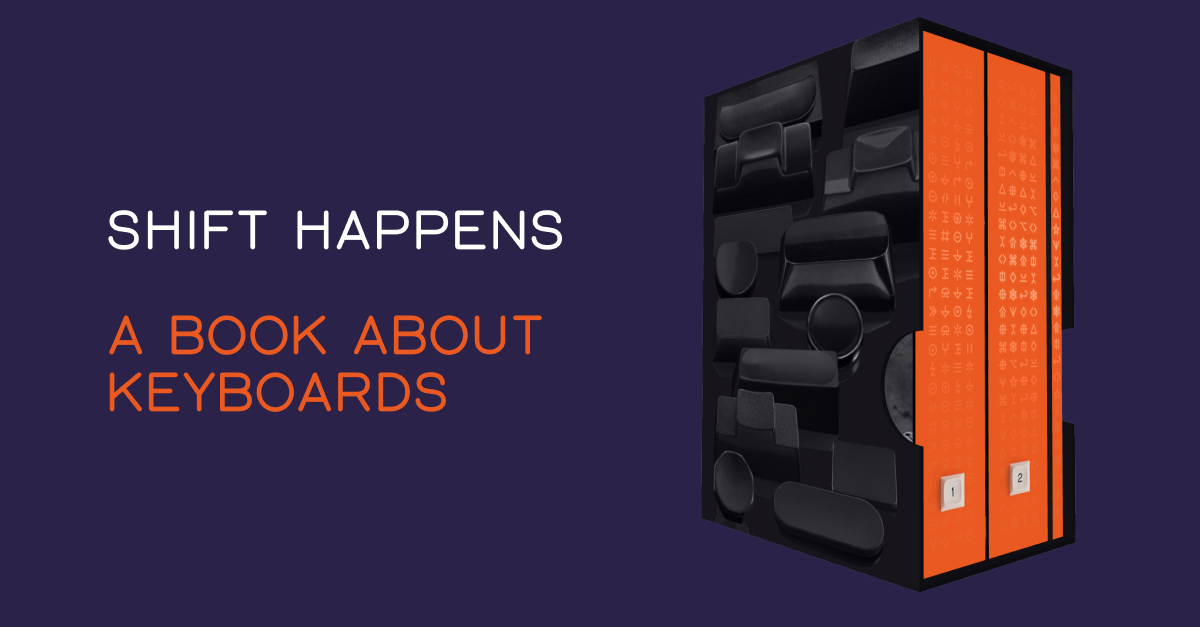
Shift Happens: A book about keyboards
Shift Happens tells the story of keyboards like no book ever before, covering 150 years from the early typewriters to the pixellated keyboards in our pockets.
Apple Computer, Inc. v. Franklin Computer Corp.
Apple Computer, Inc. v. Franklin Computer Corp., 714 F.2d 1240 (3d Cir. 1983), was the first time an appellate level court in the United States held that a computer's BIOS could be protected by copyright. As second impact, this ruling clarified that binary code, the machine-readable form of software and firmware, was copyrightable too and not only the human-readable source code form of software.[1][2]
Home | apple-svelte
apple-svelte is a component library based on Apple's Human Interface design language.
Apple at 50: eight technology leaps that changed our world
From Apple II to the iPhone, time and again this extraordinary company has anticipated the value of opening up computing to everyone.
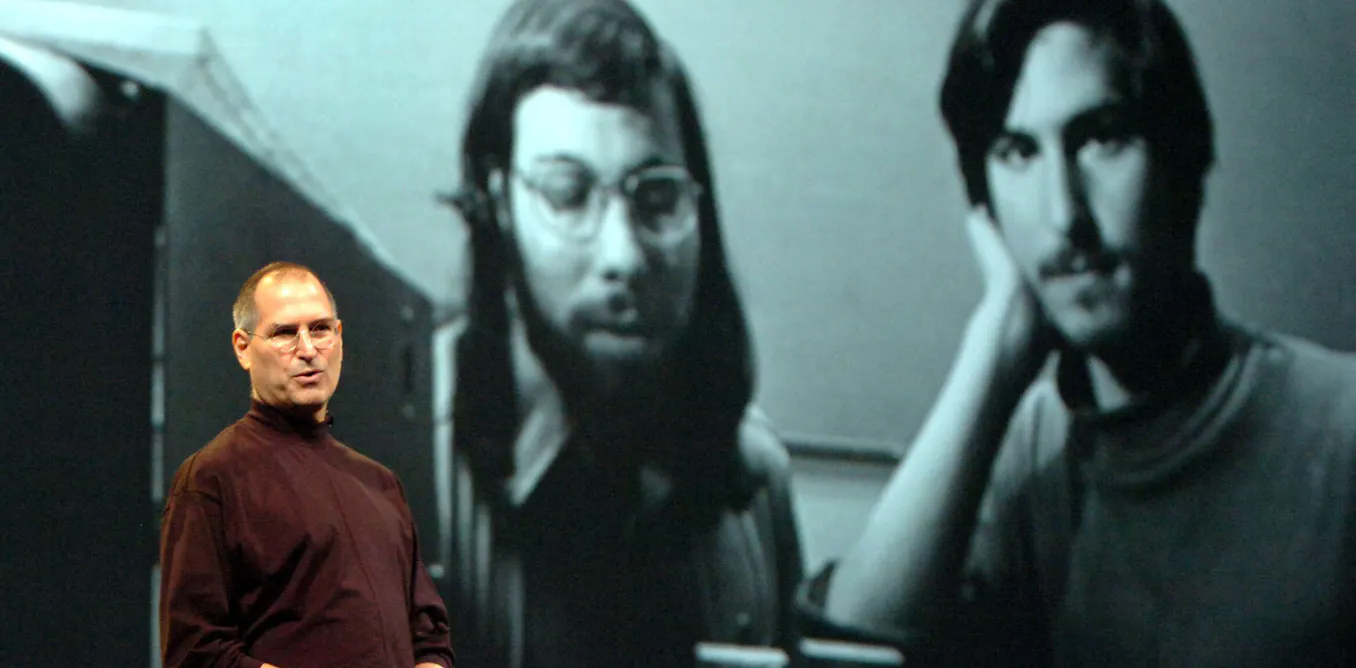
Protected by its moat, Apple has time to get AI right
Best of all, the hardware it sells today will run whatever Apple comes up with.

AskTog:
Originally published in the AppleDirect, August, 1989 Republished as Chapter 6, in Tog on Interface
Is Apple's AI Strategy as Safe as It Looks?
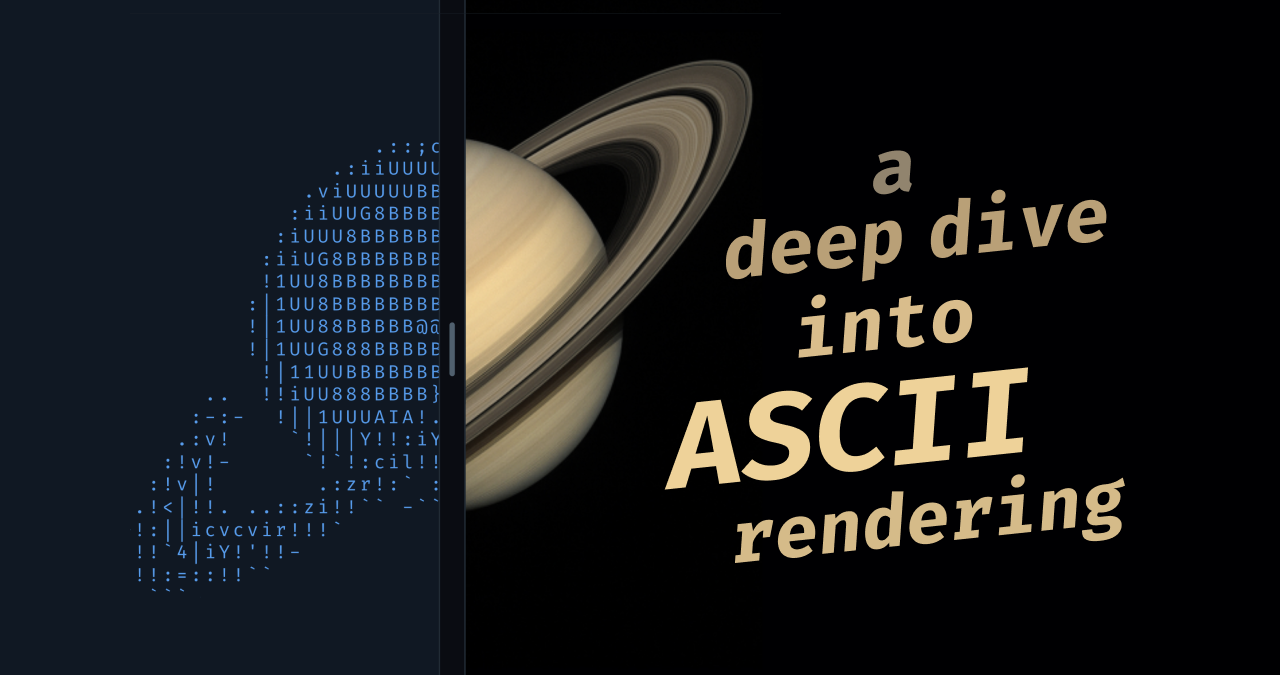
ASCII characters are not pixels: a deep dive into ASCII rendering
A look at how I used shape vectors to achieve sharp, high-quality ASCII rendering.
Michael Tsai - Blog - Alan Kay on the iPhone
If people could understand what computing was about, the iPhone would not be a bad thing. But because people don’t understand what computing is about, they think they have it in the iPhone, and that illusion is as bad as the illusion that Guitar Hero is the same as a real guitar. That’s the simple long and the short of it.
Computer: A History of the Information Machine
Computer: A History of the Information Machine is a history of computing written by Martin Campbell-Kelly and William Aspray first published in 1996. It follows the history of "information machines" from Charles Babbage's difference engine through Herman Hollerith's tabulating machines to the invention of the modern electronic digital computer. A revised 2nd edition published in 2004 included new material on the Internet and World Wide Web, while the updated 3rd edition published in 2013 includes contributions from historians Nathan Ensmenger and Jeffrey Yost. The 3rd edition extends the story to include recent phenomena such as social networking and revises the discussion of early history to reflect new insights from the literature.
