

Collaborative AI research where agents share GPU resources to collectively improve a language model
trycua/acu
A curated list of resources about AI agents for Computer Use, including research papers, projects, frameworks, and tools.
Download | Tiles
A local-first, collaborative AI assistant that works for you. Built with open models and decentralized protocols.

Turn 10,994 Notes Into Memory - Paul Iusztin, Decoding AI & Louis-François Bouchard, Towards AI
Agentic Search for Dummies — Benjamin Anderson
A simple, effective baseline for building AI search agents.
Meet Foundry: An AI Startup that Builds, Evaluates, and Improves AI Agents

How I Made AI Assistants Do My Work For Me: CrewAI
browser-use/browser-use
🌐 Make websites accessible for AI agents. Automate tasks online with ease.
Tiles
A local-first, collaborative AI assistant that works for you. Built with open models and decentralized protocols.
Collaborative AI Engineering: One Dev, Two Dozen Agents, Zero Alignment — Maggie Appleton, GitHub
Introduction to Agents
Discover what actually works in AI. Join millions of builders, researchers, and labs evaluating agents, models, and frontier technology through crowdsourced benchmarks, competitions, and hackathons.

AutoScientists: Self-Organizing Agent Teams for Long-Running Scientific Experimentation
Scientific research proceeds through iterative cycles of hypothesis generation, experiment design, execution, and revision. AI agents can automate parts of this process, but existing approaches typically follow a single research trajectory or coordinate through a central planner with fixed objectives. As a result, they struggle to sustain parallel exploration, adapt as experimental evidence changes, or preserve knowledge of failed directions over long-running experiments. We introduce AutoScientists, a decentralized team of AI agents for long-running computational scientific experimentation. Agents interpret a shared experimental state, self-organize into teams around promising hypotheses, critique proposals before using experimental compute, and share successes and failures to reduce redundant exploration. Under matched experimental budgets, AutoScientists improves over prior AI agents across biomedical machine learning, language-model training optimization, and protein fitness prediction. On BioML-Bench, spanning biomedical imaging, protein engineering, single-cell omics, and drug discovery, AutoScientists achieves a mean leaderboard percentile of 74.4% across 24 tasks, improving over the strongest AI agent by +8.33%. On GPT training optimization, AutoScientists reaches a target validation bits-per-byte 1.9x faster than Autoresearch and continues discovering improvements from a starting champion where the single-agent approach finds none (7 vs. 0 accepted improvements). On ProteinGym fitness prediction, AutoScientists discovers a method for ACE2-Spike binding that improves over the current state-of-the-art model by +12.5% in Spearman correlation. Applied without modification across all 217 ProteinGym assays, the same method improves over the prior state of the art by +6.5% (Spearman correlation).

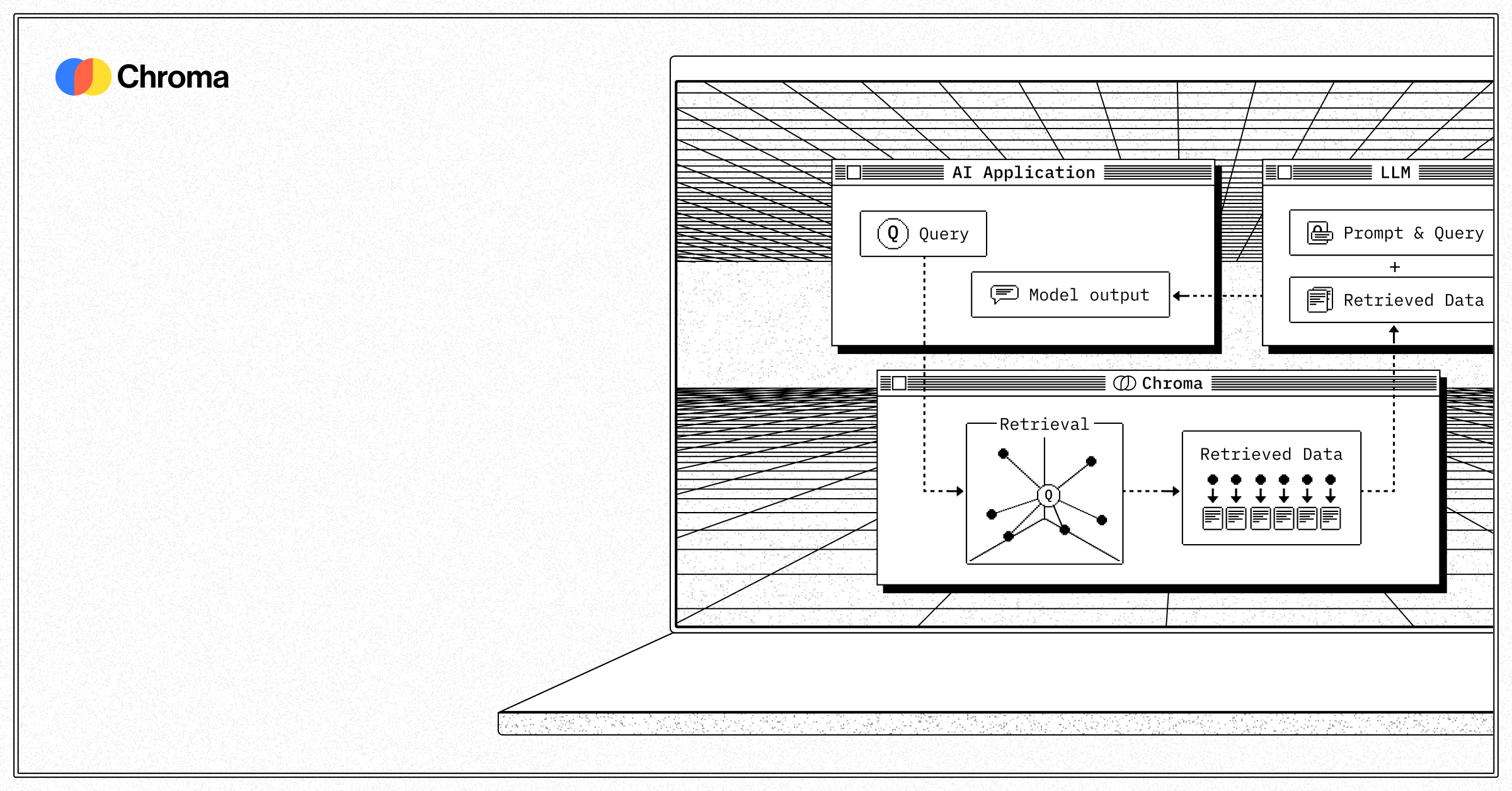
Chroma - open-source search infrastructure for AI
Open-source search infrastructure for AI
The Agentic Systems Series - The Agentic Systems Series
Welcome to the complete guide for building AI coding assistants that actually work in production. This comprehensive three-book series takes you from fundamental concepts to implementing enterprise-ready collaborative systems.
Introducing FlexOlmo: a new paradigm for language model training and data collaboration | Ai2
Explore how FlexOlmo enables collaborative language model training without sacrificing data privacy or control, introducing a new, flexible approach to building shared AI models.
Got to talk at @aidotengineer.bsky.social conf last week about the need for collaborative AI engineering. All our current coding agents are single player. We're trying to scale up individual productivity, but creating tons of alignment problems in the process. We have no good tools for...
Brown University's SwarmEvolve runs 450 AI agents that reason without generating text and share ideas through KV-caches, exploring 5-13x more programs per hour and matching competing systems' hour-long results in just 3-8 minutes. alphaxiv.org/abs/2611.08483

