We believe technology should serve humanity and that human creativity is essential and irreplaceable. We support the ethical development and deployment of AI by funding protective technologies and translating research into real-world tools for creative communities.
derek guy on Twitter / X
I suspect we're approaching a time where if you want to protect creative work, it has to be something that can't be digitized. AI has made is so that creative works speed run through the lifecycle from cool to cliche in a matter of months. This contributes to our cultural… https://t.co/HJYL6Tj6t4— derek guy (@dieworkwear) September 19, 2026
AI Is a Product of Humanity. Humanity Should Own AI.
Big Tech has looted humanity’s creative output to create artificial intelligence. We don’t just deserve a share of AI’s profits — we deserve control over it.

The tech industry hijacking of the AI ethics research agenda and why we should reclaim it
This paper reflects on the tech industry’s colonization of the AI ethics research field and addresses conflicts of interest in public policymaking concerning AI. The AI ethics research community faces two intertwined challenges: In the first place, we have a tech industry heavily influencing the AI ethics research agenda. Secondly, cleaning up after the tech industry has implied that we have turned to value-driven design methods to bring ethics to AI design. But by framing research questions relevant to a technical practice, we have facilitated the technological solutionism behind the tech industry’s business model. Therefore, this paper takes the first steps to reshape the AI ethics research agenda by suggesting moving toward an emancipatory framework that brings politics to design while, at the same time, bearing in mind that AI is not to be treated as an inevitability. As a research community, we must focus on the repressive power dynamics exacerbated by AI and address challenges facing the vulnerable groups seldom heard, despite the fact that they are the ones most negatively affected by AI initiatives.
Beyond Slop
Visions for humane creative AI tools based on craft, process, and emergence.

AI, Ethics, and Society — Home
The Impact of Artificial Intelligence on Human Thought
This research paper examines, from a multidimensional perspective (cognitive, social, ethical, and philosophical), how AI is transforming human thought. It highlights a cognitive offloading effect: the externalization of mental functions to AI can reduce intellectual engagement and weaken critical thinking. On the social level, algorithmic personalization creates filter bubbles that limit the diversity of opinions and can lead to the homogenization of thought and polarization. This research also describes the mechanisms of algorithmic manipulation (exploitation of cognitive biases, automated disinformation, etc.) that amplify AI's power of influence. Finally, the question of potential artificial consciousness is discussed, along with its ethical implications. The report as a whole underscores the risks that AI poses to human intellectual autonomy and creativity, while proposing avenues (education, transparency, governance) to align AI development with the interests of humanity.

Human-Centered Artificial Intelligence: Three Fresh Ideas
Human-Centered AI (HCAI) is a promising direction for designing AI systems that support human self-efficacy, promote creativity, clarify responsibility, and facilitate social participation. These human aspirations also encourage consideration of privacy, security, environmental protection, social justice, and human rights. This commentary reverses the current emphasis on algorithms and AI methods, by putting humans at the center of systems design thinking, in effect, a second Copernican Revolution. It offers three ideas: (1) a two-dimensional HCAI framework, which shows how it is possible to have both high levels of human control AND high levels of automation, (2) a shift from emulating humans to empowering people with a plea to shift language, imagery, and metaphors away from portrayals of intelligent autonomous teammates towards descriptions of powerful tool-like appliances and tele-operated devices, and (3) a three-level governance structure that describes how software engineering teams can develop more reliable systems, how managers can emphasize a safety culture across an organization, and how industry-wide certification can promote trustworthy HCAI systems. These ideas will be challenged by some, refined by others, extended to accommodate new technologies, and validated with quantitative and qualitative research. They offer a reframe -- a chance to restart design discussions for products and services -- which could bring greater benefits to individuals, families, communities, businesses, and society.
The Age of Wonders and Terrors
Twenty years ago, when the idea of AI taking over the world in our lifetimes still struck most of us as the unconstrained fantasy of those who knew too much science fiction and too little science, …

AI as the greatest source of empowerment for all
I’ve always considered myself a pragmatic technologist—someone who loves technology not for its own sake, but for the direct impact it can have on people’s lives. That’s what makes this job so exciting, since I believe AI will unlock more opportunities for more people than any other technology in history. If we get this right, AI can give everyone more power than ever.
Is AI the greatest art heist in history?
New technologies of reproduction are plundering the art world – and getting away with it

AI Use in The Scholarly Kitchen - The Scholarly Kitchen
Some thoughts on the reader response the Scholarly Kitchen has seen regarding AI use by authors, a recent Nature News article on the efficacy of AI detection tools, and why it's important to keep experimenting to figure out what's ethically acceptable.
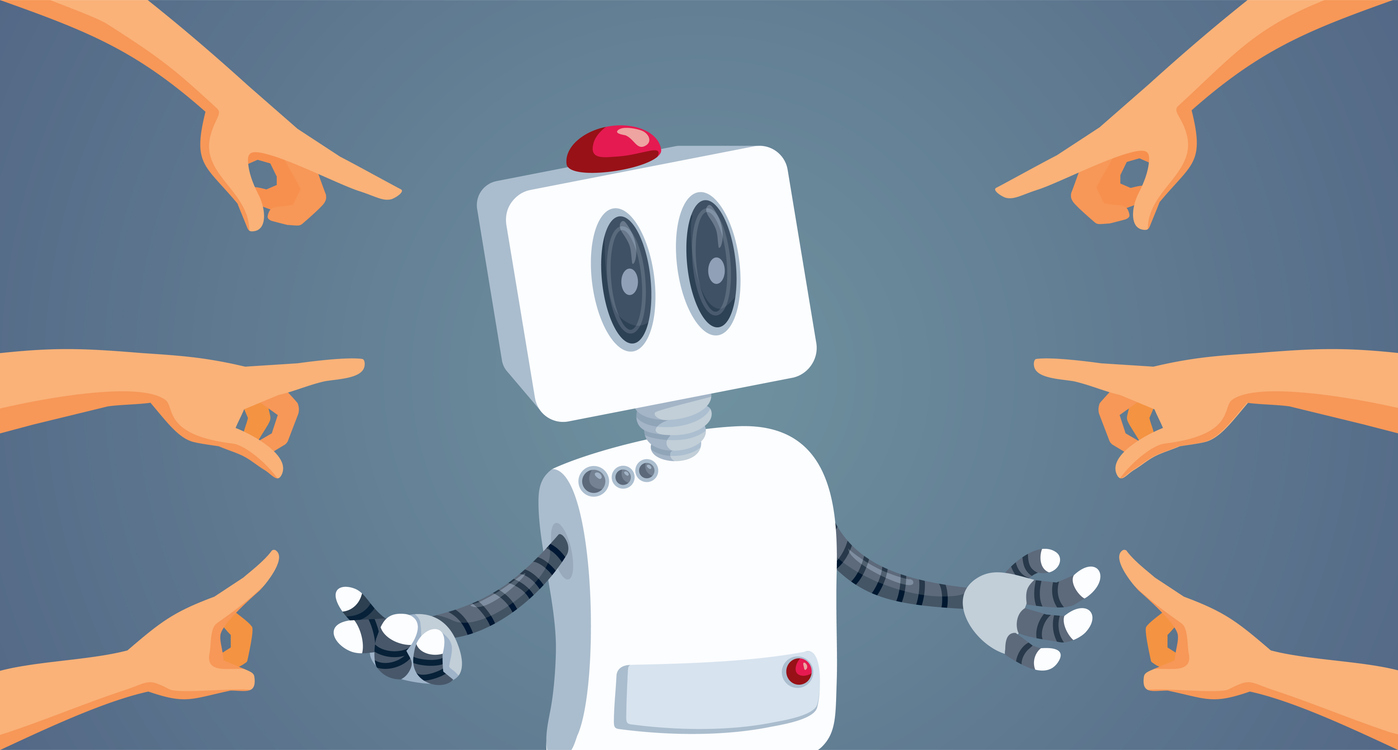
We build AI that works for humans
Imbue builds AI to help people think, create, and build. We share our tools openly because we believe progress in AI should be collaborative and developer-driven

Effective Altruism Is Pushing a Dangerous Brand of ‘AI Safety’
This philosophy—supported by tech figures like Sam Bankman-Fried—fuels the AI research agenda, creating a harmful system in the name of saving humanity
Charting AI’s Role in Scientific Discovery — Renaissance Philanthropy – A brighter future for all through science, technology, and innovation
Renaissance Philanthropy, with support from Google.org , is conducting a landscape study of AI integration in scientific research — and we want your perspective.

AI agents pose untold risk to humanity. We must act to prevent that future | David Krueger
The pieces are falling into place for autonomous artificial intelligence. We must stop unregulated development

AIs are not people
Humans and other fleshy life-forms are valuable in ways that artificial intelligence never can be.