Liberal institutions treat each surge of populism as a domestic challenge to be managed within national elections or courts. Meanwhile the far right amplifies each other’s victories, recycles each other’s talking points, and shares disinformation
How the unholy alliance of Big Tech and the far right threatens the world
Far-right populists are the best chance for the tech oligarchs to hold onto power and wealth through the pursuit of ‘End Times Fascism’

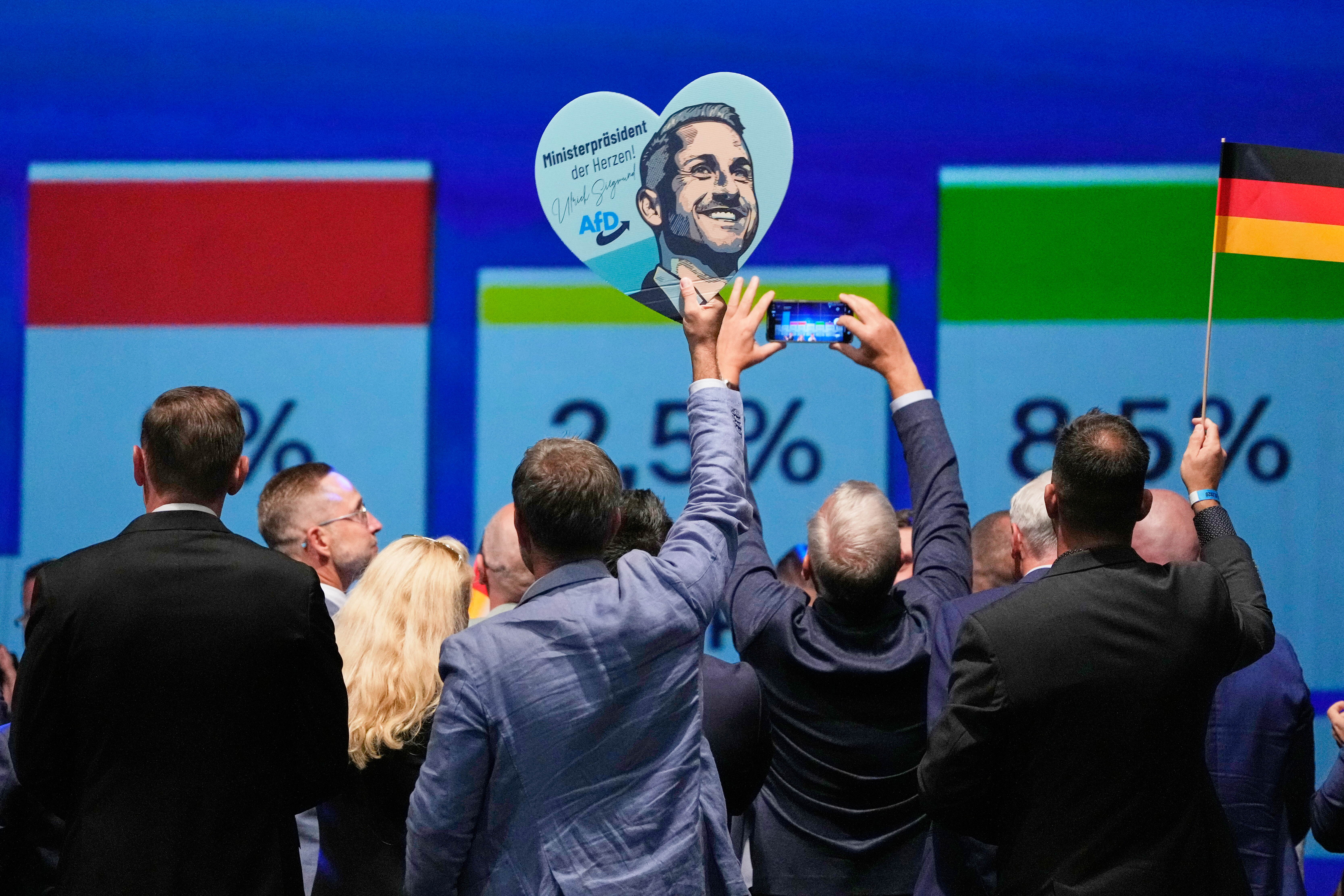
Germany's far-right achieves an electoral breakthrough in key state election
Germany's populist, far-right Alternative for Germany party has declared victory in the state of Saxony-Anhalt after more than doubling its share of the vote in the first of several regional elections this fall.
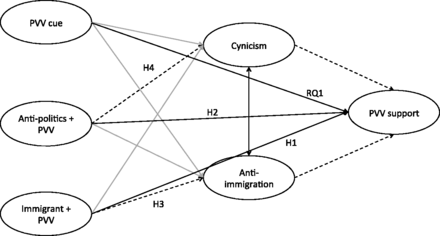
Media Cues and Citizen Support for Right-Wing Populist Parties
Abstract. Right-wing populist parties are thriving across Europe. Their success is usually attributed to demand-side voter factors and supply-side factors
When Do Parties Lie? Misinformation and Radical-Right Populism Across 26 Countries - Petter Törnberg, Juliana Chueri, 2026
The spread of misinformation has emerged as a global concern. Academic attention has recently shifted to emphasize the role of political elites as drivers of mi...

Public support for the <i>cordon sanitaire</i> : Descriptive evidence from Spain
Reactions to the rise of far-right parties that advocate democratic backsliding, and the dilution of socially liberal democratic norms present a dilemma for existing political parties. How should existing political parties respond to this challenge? A commonly adopted strategy is to apply a cordon sanitaire which excludes radical right-wing challengers from the government-forming process. Do voters support this policy? Leveraging data from Spain – where the mainstream right has accommodated the radical right-wing party, VOX, via numerous governing coalitions – I rely on individual citizens’ views on how parties should respond to rise of the far-right party, to answer this question. Empirically, the results show very low-level support for the cordon sanitaire in Spain. Indeed, the modal position of the electorate, regardless of their ideological position, is to treat the party just like any other. These results are not conditioned by the propensity of individuals to identify VOX as indeed being a “radical right” party. These descriptive findings suggest that whilst radical right-wing parties may present an inimical threat to democratic norms, citizens do not necessarily view the means of squashing this threat to be one of strategic exclusion. This likely explains why the mainstream right has been able to institutionalise VOX as a political ally: where strategic exclusion is not expected, the mainstream right need not fear violating an expectation that does not exist.
Rising Market Power Has Led to the Rise in Far-Right Political Parties - ProMarket
In new research, Tommaso Crescioli & Toon Van Overbeke find that small business owners and their families who have lost revenue share to rising market concentration among big businesses have turned to far-right political parties to express their grievances.

How to break populist parties’ appeal? An experimental evaluation of communication counter-strategies
Right-wing populist parties have become a major challenge to liberal democracies worldwide. How can mainstream parties effectively counter their appeal? While prior research has focused on the drivers of populist support, much less is known about how to counter right-wing populist rhetoric. We test four communication counter-strategies that target core elements of right-wing populist appeals: (i) undermining populists’ claims to democratic credibility, (ii) promoting inclusive in-group identity to counter exclusionary narratives, (iii) highlighting their performance legitimacy, and (iv) emphasizing the procedural legitimacy of mainstream parties. Drawing on real-world party communications from social media, manifestos, and press releases, we created 170 experimental treatments (posters and social media posts varying in format and complexity) to simulate how voters encounter political messages in everyday life. In a large-scale survey experiment with over 24,000 respondents in Germany, messages undermining right-wing populists’ democratic credibility prove most effective, particularly among citizens with high initial support for such parties.
Left-Wing Governments and Far-Right Success
In recent decades, support for the far right has surged in many countries. One common explanation for this is that far-right support is a backlash against left-wing governments and their policies. We investigate the causal effect of the partisan make-up of governments on the electoral results of far-right parties. Evidence from over-time comparative data and a quasi-experimental analysis based on a regression discontinuity design in Spain indicates that far-right parties benefit electorally when the current government is on the left. In further analyses, we employ a novel regression discontinuity design (RDD)-based sampling strategy to examine original individual-level survey data from Spanish municipalities close to the discontinuity cutoff. These data show that the likely mechanism underlying the backlash effect is an ideological shift to the right among the electorate when left-wing parties govern. Overall, the far right benefits more when the mainstream left governs than when the mainstream right does.

It’s Not Polarization; It’s the Radicalization of the Political Right
Polarization has become the master concept for diagnosing contemporary democratic crises. The notion denotes three features: symmetry between parties, politics as an opinion space where positions diverge, and mutual repulsion between opposing camps. Yet none of these capture current realities. Across democracies, the central dynamic is not two poles drifting apart but the transformation of the political right into authoritarianism, norm breaking, and openness to political violence. Social democratic and center-right parties tend to respond in the opposite way from what “polarization” implies: by accommodating rightward. Attempts to salvage the polarization frame with modifiers (“asymmetric,” “affective,” “sectarian,” “pernicious”) concede these realities but risk hollowing out the concept’s definitional core. These limitations reveal a deeper misdiagnosis: when one party turns antidemocratic and illiberal, incivility and conflict are inevitable—but they are symptoms, not the root problem. Misdiagnosing them as the central issue leads to viewing civility and compromise as remedies, thereby risking the legitimation of authoritarian actors. This article proposes an alternative lens: the radicalization of the political right. Developed in the study of extremism, the radicalization framework better captures asymmetric change, identity-driven politics, and the mainstreaming of illiberalism. It foregrounds identity fusion, threat narratives, elite entrepreneurship, and escalation. Concepts are never politically innocent and persisting with “polarization” risks both misdiagnosing and normalizing authoritarian threats.
It’s Not Polarization; It’s the Radicalization of the Political Right
Polarization has become the master concept for diagnosing contemporary democratic crises. The notion denotes three features: symmetry between parties, politics as an opinion space where positions diverge, and mutual repulsion between opposing camps. Yet none of these capture current realities. Across democracies, the central dynamic is not two poles drifting apart but the transformation of the political right into authoritarianism, norm breaking, and openness to political violence. Social democratic and center-right parties tend to respond in the opposite way from what “polarization” implies: by accommodating rightward. Attempts to salvage the polarization frame with modifiers (“asymmetric,” “affective,” “sectarian,” “pernicious”) concede these realities but risk hollowing out the concept’s definitional core. These limitations reveal a deeper misdiagnosis: when one party turns antidemocratic and illiberal, incivility and conflict are inevitable—but they are symptoms, not the root problem. Misdiagnosing them as the central issue leads to viewing civility and compromise as remedies, thereby risking the legitimation of authoritarian actors. This article proposes an alternative lens: the radicalization of the political right. Developed in the study of extremism, the radicalization framework better captures asymmetric change, identity-driven politics, and the mainstreaming of illiberalism. It foregrounds identity fusion, threat narratives, elite entrepreneurship, and escalation. Concepts are never politically innocent and persisting with “polarization” risks both misdiagnosing and normalizing authoritarian threats.
When Do Parties Lie? Misinformation and Radical-Right Populism Across 26 Countries
The spread of misinformation has emerged as a global concern. Academic attention has recently shifted to emphasize the role of political elites as drivers of misinformation. Yet, little is known of the relationship between party politics and the spread of misinformation—in part due to a dearth of cross-national empirical data needed for comparative study. This article examines which parties are more likely to spread misinformation, by drawing on a comprehensive database of 32M tweets from parliamentarians in 26 countries, spanning 6 years and several election periods. The dataset is combined with external databases such as Parlgov and V-Dem, linking the spread of misinformation to detailed information about political parties and cabinets, thus enabling a comparative politics approach to misinformation. Using multilevel analysis with random country intercepts, we find that radical-right populism is the strongest determinant for the propensity to spread misinformation. Populism, left-wing populism, and right-wing politics are not linked to the spread of misinformation. These results suggest that political misinformation should be understood as part and parcel of the current wave of radical right populism, and its opposition to liberal democratic institution.
Anti-AI Populism is Reshaping American Politics
Democrats are winning on data center opposition. So are Republicans.

Is Australia's two-party political system dead?
With the rise of One Nation's popularity and younger voters increasingly turning to the Greens, the traditional two-party system in Australian politics has been dismantled, a former political strategist argues.
Legitimize or Delegitimize? Mainstream Party Strategy toward (Former) Pariah Parties and How Voters Respond
Mainstream parties have often shifted from initially portraying new competitors as undemocratic pariahs (i.e., a delegitimizing strategy) to portraying the same parties later as democratic (i.e., a legitimizing strategy). I argue that voters follow mainstream parties’ legitimizing strategies in their legitimacy evaluations of these parties. I investigate this argument with two independent survey experiments and a quantitative media content analysis in two countries that differ sharply in the nature of party competition—from mainstream parties delegitimizing a far-right party (i.e., Germany) to mainstream parties legitimizing it (i.e., Sweden). I find strong evidence that (a) mainstream parties can effectively legitimize pariah parties in the eyes of voters, (b) turning back to delegitimization has little effect, (c) legitimization is no less effective in the face of a third party’s delegitimizing strategy, and (d) legitimization resonates beyond co-partisans. The results suggest that mainstream party legitimization of pariah parties has far-reaching consequences.

Capitalism, Democracy, and Du Bois’s <em>Two</em> Proletariats
[epq-quote align="align-right"]"What can be more radical or liberating than freedom and justice for all?"[/epq-quote] As an ideal, liberal democracy has great appeal. What can be more radical or liberating than...