

Exfiltrate LLM weights and data through GET requests
Building a simple load balancer in Go
Load balancers are crucial in modern software development. If you've ever wondered how requests are...

Infinite-Parameter LLMs: Generating and Adapting Weights from Live Data
Scaling laws hold that language models grow more capable with more parameters and more training data. Mixture-of-Experts (MoE) architectures are a remarkable demonstration of these laws, activating only a fraction of an enormous parameter bank for each token. But this success is built on static pretraining data --- the facts and corrections supplied by users during live interactions are a significant untapped source of potential improvement for a deployed model, but cannot be exploited by conventional architectures whose weights are frozen after training. Instead, this newfound knowledge must be placed in the context (by instruction or retrieval) and re-read on every request, only to be discarded afterwards. We seek instead to learn from live interactions by dynamically updating model weights. Inspired by MoEs, we propose the \textbf{Infinite-Parameter LLM}. A compact hypernetwork turns the online data into low-rank modulations of a shared base network, so feed-forward weights are generated from live data, not read from static memory. Whereas existing weight generators are held fixed after reading the context once, we form a Bayesian belief over the generator's latent state and update it online, such that the effective weights are re-derived as our belief evolves during the session. Although the model's memory footprint is constant, the feasible space of generated weights is thus effectively infinite. Representing live data in the weights rather than the prompt amortises compute, frees the context window, persists updates across turns, and can generalise better than in-context use. Our evaluation protocol applies this methodology to in-context learning and retrieval.

The next weight
Credit: NeedPix Something that comes up regularly in coaching is the idea that you get stronger against the weight you can lift, not against the one you can’t. If your goal is to bench 100kg …

How Open Weights Are Changing the AI Race | Serverless Guru
Open Weight models: what they are, why you should care, and how the work of the open-source fine-tuning community around those models is reshaping daily life, both for developers and for everyday AI users.

The OpenAI Open weight model might be 120B
726 votes, 163 comments. The person who "leaked" this model is from the openai (HF) organization So as expected, it's not gonna be something you can…
Resolution 5 (2026) - BIPM
The General Conference on Weights and Measures (CGPM), at its 28th meeting,
Inkling: Our open-weights model
Mira Murati's Thinking Machines Lab just released their first open-weights model. Inkling is "a Mixture-of-Experts transformer with 975B total parameters, 41B active" - an Apache-2.0 licensed multimodal model trained on …

Equivariance Encryption for Private LLM Inference — Davide Cifarelli
This article shows how we can leverage equivariant transformations to run LLM inference on encrypted data without losing model performance.
Issue · BerriAI/litellm
Python SDK, Proxy Server (AI Gateway) to call 100+ LLM APIs in OpenAI (or native) format, with cost tracking, guardrails, loadbalancing and logging. [Bedrock, Azure, OpenAI, VertexAI, Cohere, Anthr...
vllm-project/vllm
A high-throughput and memory-efficient inference and serving engine for LLMs
Sebastian Raschka on Twitter / X
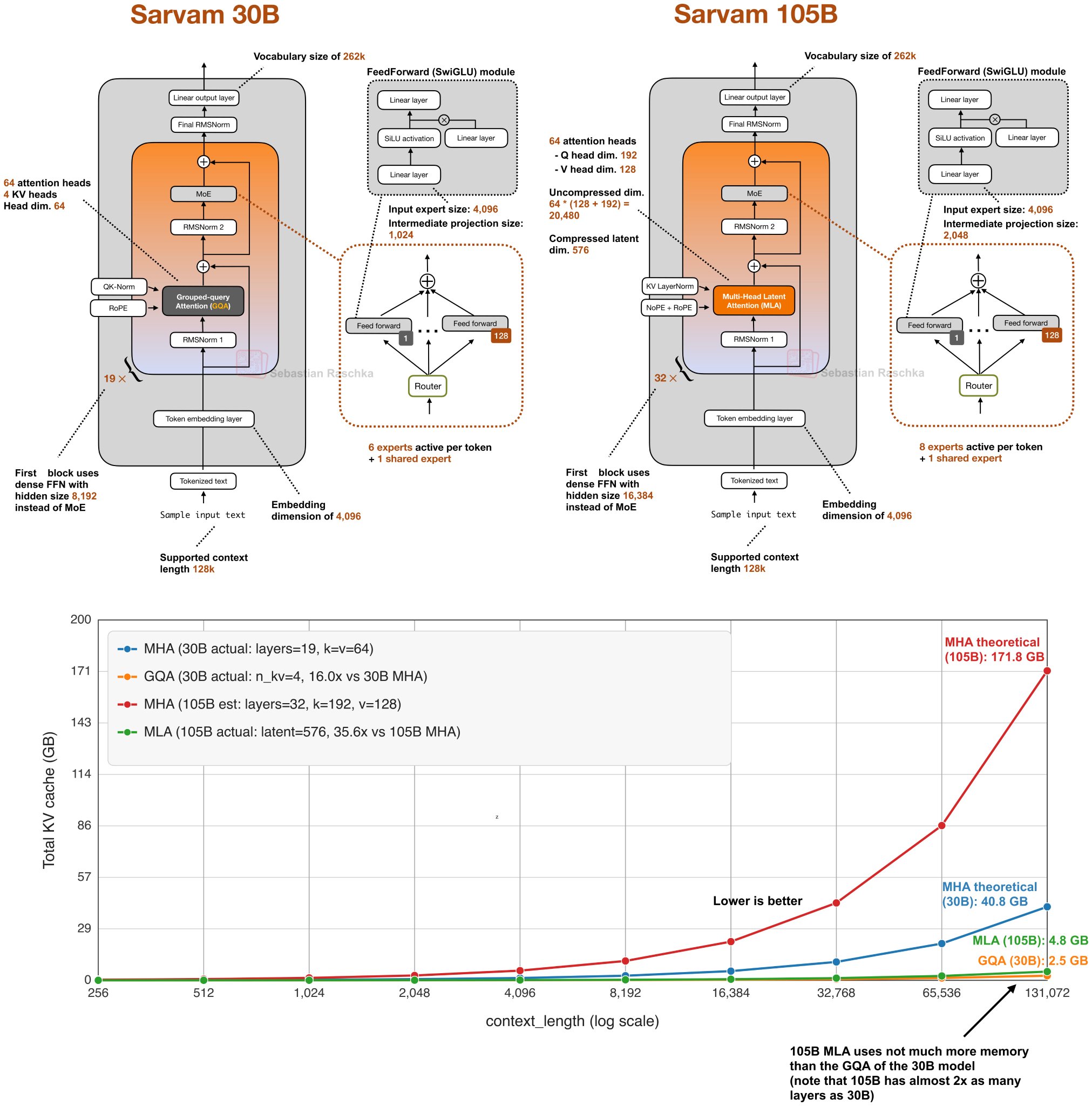
While waiting for DeepSeek V4 we got two very strong open-weight LLMs from India yesterday.There are two size flavors, Sarvam 30B and Sarvam 105B model (both reasoning models).Interestingly, the smaller 30B model uses “classic” Grouped Query Attention (GQA), whereas the… https://t.co/OiJVkDCYNz pic.twitter.com/0uqmLxofRE— Sebastian Raschka (@rasbt) March 7, 2026
Meta-Weight-Net: Learning an Explicit Mapping For Sample Weighting
Current deep neural networks(DNNs) can easily overfit to biased training data with corrupted labels or class imbalance. Sample re-weighting strategy is commonly used to alleviate this issue by designing a weighting function mapping from training loss to sample weight, and then iterating between weight recalculating and classifier updating. Current approaches, however, need manually pre-specify the weighting function as well as its additional hyper-parameters. It makes them fairly hard to be generally applied in practice due to the significant variation of proper weighting schemes relying on the investigated problem and training data. To address this issue, we propose a method capable of adaptively learning an explicit weighting function directly from data. The weighting function is an MLP with one hidden layer, constituting a universal approximator to almost any continuous functions, making the method able to fit a wide range of weighting function forms including those assumed in conventional research. Guided by a small amount of unbiased meta-data, the parameters of the weighting function can be finely updated simultaneously with the learning process of the classifiers. Synthetic and real experiments substantiate the capability of our method for achieving proper weighting functions in class imbalance and noisy label cases, fully complying with the common settings in traditional methods, and more complicated scenarios beyond conventional cases. This naturally leads to its better accuracy than other state-of-the-art methods.
Benchmarks | EXO
Transparent benchmarks for LLMs tested on real hardware. Coming soon.
mesh-llm/docs/EXO_COMPARISON.md at 2c334485856b110e9eb3f8e46e4cc3e8993bea1d · Mesh-LLM/mesh-llm
Distributed AI/LLM for the people. Share compute privately or publicly to power your agents and chat. - Mesh-LLM/mesh-llm