


OR: the ideas your mother warned you about
Why Psychology Hasn’t Had a Big New Idea in Decades
Can our field get its act together?

Elegant theories and the problems of social psychology
This perspective article provides a commentary on the current state of theories used in social psychology, with a particular emphasis on the importance of distinguishing between theoretical models ...

What if Age Is Nothing but a Mind-Set? (Published 2014)
Ellen Langer’s experiments have shown that mental attitudes might reverse some ravages of old age. Now she wants to test that same radical principle on cancer.

Introducing The Psyche Network
Parenting - Fable | Stories for everyone
Delivering the world’s best social experience with exceptional stories in service of mental wellness.

Parenting | The Paper Pilot
The Paper Pilot's digital garden of thoughts on philosophy, politics, and sociology
Parent Dictated Education | The Paper Pilot
The Paper Pilot's digital garden of thoughts on philosophy, politics, and sociology
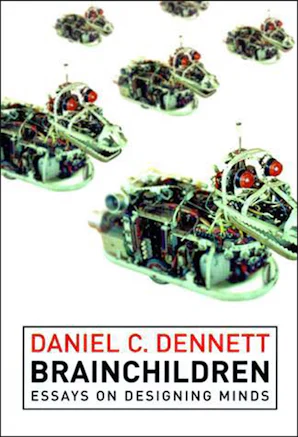
Brainchildren
Minds are complex artifacts, partly biological and partly social; only a unified, multidisciplinary approach will yield a realistic theory of how they came i...
Eiko Fried (@eikofried.bsky.social)
Professor of Mental Health & Data Science at Leiden University. Studying mental health problems as systems (http://eiko-fried.com). Building an early warning system for depression (http://WARN-D.com).

Debunking “When Prophecy Fails”
ABSTRACT In 1954, Dorothy Martin predicted an apocalyptic flood and promised her followers rescue by flying saucers. When neither arrived, she recanted, her group dissolved, and efforts to proselytize ceased. But When Prophecy Fails (1956), the now‐canonical account of the event, claimed the opposite: that the group doubled down on its beliefs and began recruiting—evidence, the authors argued, of a new psychological mechanism, cognitive dissonance. Drawing on newly unsealed archival material, this article demonstrates that the book's central claims are false, and that the authors knew they were false. The documents reveal that the group actively proselytized well before the prophecy failed and quickly abandoned their beliefs afterward. They also expose serious ethical violations by the researchers, including fabricated psychic messages, covert manipulation, and interference in a child welfare investigation. One coauthor, Henry Riecken, posed as a spiritual authority and later admitted he had “precipitated” the climactic events of the study.

A revolution in our sense of self | Nick Chater
Psychologists have tried to plumb the depths of human motivation to make sense of our behaviour. But our inner mental world is a fiction, sustained by constant improvisation
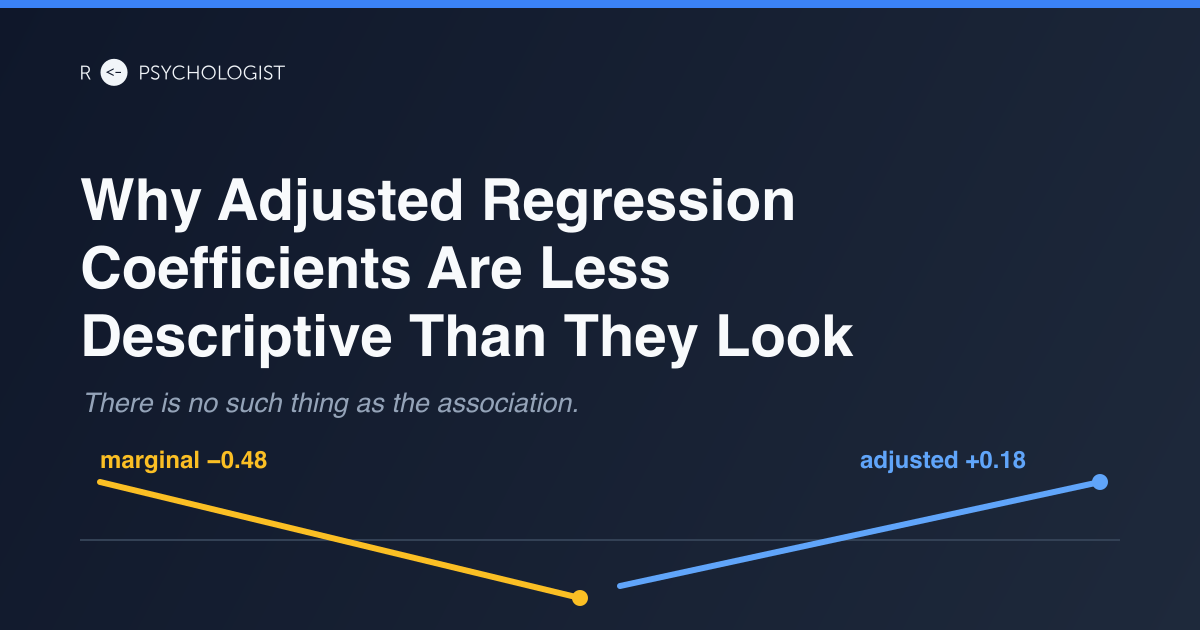
Why Adjusted Regression Coefficients Are Less Descriptive Than They Look | R Psychologist
An interactive article about how regression adjustment works and the pitfalls of conditional associations in descriptive studies.
Neurodiversity | The Paper Pilot
The Paper Pilot's digital garden of thoughts on philosophy, politics, and sociology
Matt Darling (@besttrousers)
“Darling’s thesis is the first compelling explanation I’ve seen for the vibecession…What surprises me, though, is how comparatively little attention this theory has gotten”. I am being silenced.

Why major life decisions should be approached with ‘epistemic humility’ | Psyche Videos
At a crossroads in life? No matter how much you deliberate, one unknowable remains: the person you will be on the other side

Open source confronts its midlife crisis | The Observation Deck
Midlife is tough: the idealism of youth has faded, as has inevitably some of its fitness and vigor. At the same time, the responsibilities of adulthood have grown: the kids that were such a fresh adventure when they were infants and toddlers are now grappling with their own transition into adulthood – and you try to remind yourself that the kids that you have sacrificed so much for probably don’t actually hate your guts, regardless of that post they just liked on the ‘gram. Making things more challenging, while you are navigating the turbulence of teenagers, your own parents are likely entering life’s twilight, needing help in new ways from their adult children. By midlife, in addition to the singular joys of life, you have also likely experienced its terrible sorrows: death, heartbreak, betrayal. Taken together, the fading of youth, the growth in responsibility and the endurance of misfortune can lead to cynicism or (worse) drastic and poorly thought-out choices. Add in a little fear of mortality and some existential dread, and you have the stuff of which midlife crises are made…