

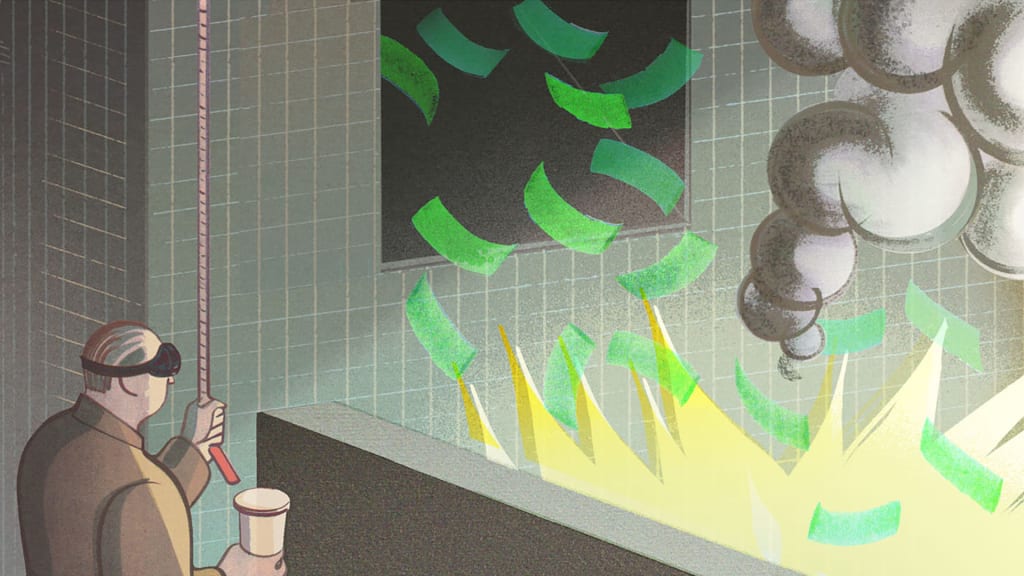
Imagine a future where everything is seamlessly paid for via your phone. It's a beautiful vision—with some dangerous unintended consequences.
Why we should fear a cashless world | Dominic Frisby
Poor people and small businesses rely on cash. A contactless system will likely entrench poverty and pave the way for terrifying levels of surveillance

Why Sweden's cashless society is no longer a utopia
Switching fully to card and app payments would put access to our money in the hands of private organizations for the first time in history.
The Future of Money: How the Digital Revolution Is Tran…
A cutting-edge look at how accelerating financial chang…

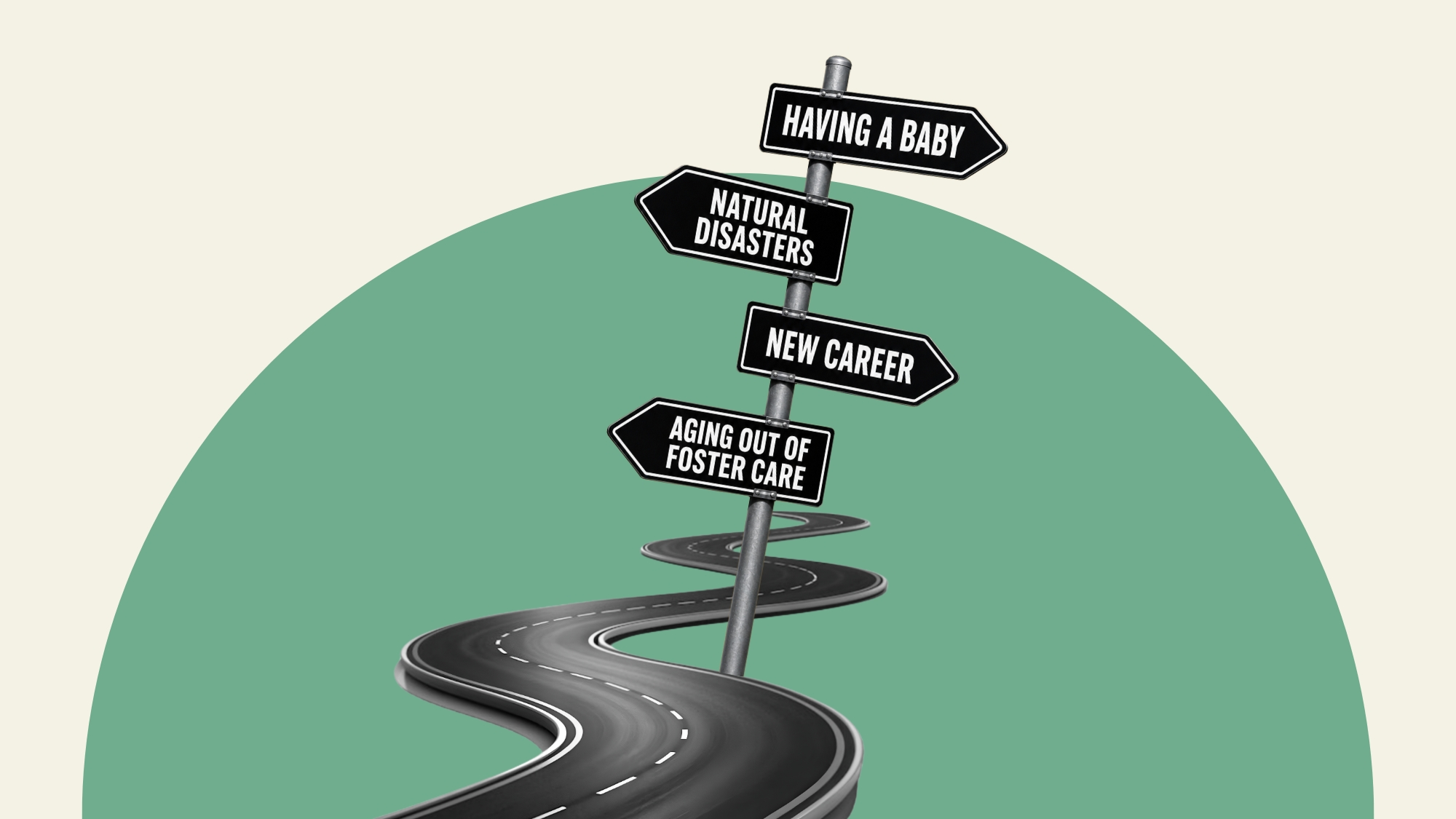
Right on Time: How Cash Helps Families Move Through Life's Transitions - Economic Security Project
Executive Summary Over the past decade, more than 250 guaranteed income pilots, programs that provide people with regular cash with no restrictions on how they use it, have run across 40 states and the District of Columbia. That research has revealed many learnings, and this report focuses on one clear takeaway: cash has its largest…
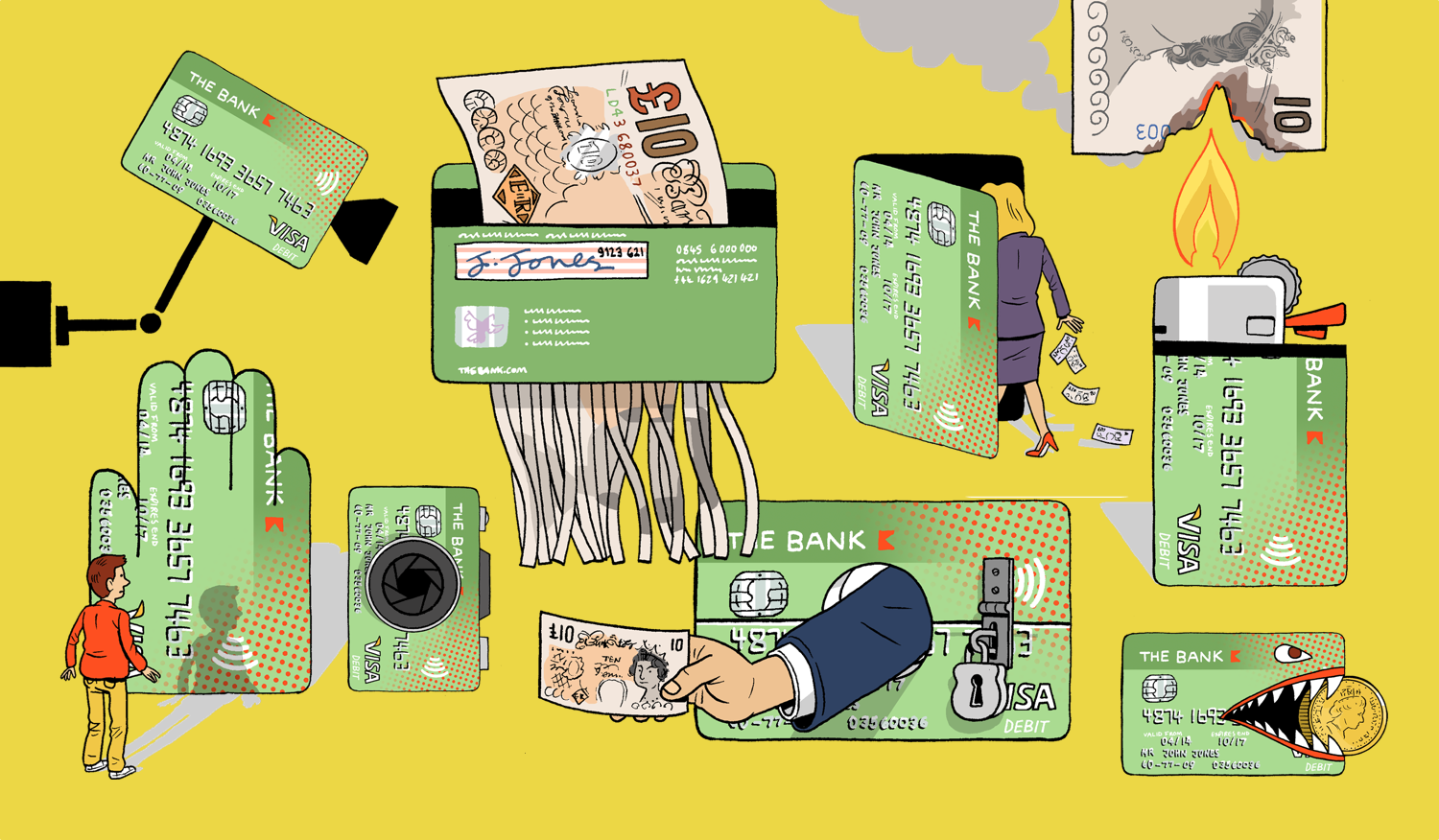
The War on Cash
Banks, governments, credit card companies and fintech evangelists all want us to believe our cashless future is inevitable and good. But this isn't a frictionless utopia says Brett Scott, and it's time to fight back
The digital exiles: Why people are abandoning their smartphones - Coda Story
A growing movement of “former screenagers” is calling for a screen-free, surveillance-free life, for a chance to build a future beyond tech capture

What I Learned From Building An App For Low-Income Americans - Fast Company
The brief was simple: build a tech product for low-income American households. It wasn’t simple at all.

The Linear Oppression of Note-taking Apps
What we lose when our digital notes remove the freedom to move
The Truth About Blockchain
Contracts, transactions, and records of them provide critical structure in our economic system, but they haven’t kept up with the world’s digital transformation. They’re like rush-hour gridlock trapping a Formula 1 race car. Blockchain promises to solve this problem. The technology behind bitcoin, blockchain is an open, distributed ledger that records transactions safely, permanently, and very efficiently. For instance, while the transfer of a share of stock can now take up to a week, with blockchain it could happen in seconds. Blockchain could slash the cost of transactions and eliminate intermediaries like lawyers and bankers, and that could transform the economy. But, like the adoption of more internet technologies, blockchain’s adoption will require broad coordination and will take years. In this article the authors describe the path that blockchain is likely to follow and explain how firms should think about investments in it.

Brett Scott (@brettscott)
Despite all the rhetoric about automation supposedly making our lives easier, the true story being told by Big Tech is that our lives are better when speeded up You are supposed to be in an ever-accelerating race, packing more units of experience into the same unit of time, a phenomenon that requires a contraction of patience and a blurring of experience as everything quickens In the end, this is what ‘convenience’ actually is. It’s a state of being in which you become disassociated and disengaged from the texture of the world around you. You pass through it dreamlike, and suddenly wake up decades years later as an elderly person on your deathbed, thinking “WTF happened”, as then the memory slips away

Craigslist, Wikipedia, and the Abundance Economy
You’ve heard it before. Maybe you’ve even said it. “There’s no such thing as a free lunch.” “You can’t get something for nothing.” “Somebody has to pay.” People recite these sayings with confidence, as though they were quoting Newton’s Laws of Motion...

About Us
Around the world, building the internet’s operating system—and a better way to work. In a world of tech companies fighting for growth at any cost, imagine one that gives away its most successful pr…

FinTech Adoption Across Generations: Financial Fitness in the Information Age
This paper analyzes how better access to financial information via new technology changes use of consumer credit and affects financial fitness. We exploit the introduction of a smartphone application for personal financial management as a source of exogenous variation. FinTech adoption reduces financial fee payments and penalties, but differs cross-sectionally in the population. After adopting the new technology, Millennials and members of Generation X incur fewer financial fees and penalties, whereas Baby Boomers do not benefit from the technological advance. Millennials and Gen Xers save fees by using their credit cards rather than overdrafts to manage short-term liabilities. Moreover, Millennials shift some of their spending to discretionary entertainment, whereas members of Generation X remain more austere. Finally, while men tend to adopt new technology and access information at a higher rate, the economic impact of access is larger for women.

App subscriptions were always inevitable
The future will be paid for in small increments

Facebook and the Cost of Monopoly
Facebook gave one of the worst keynotes in a long time: there was no vision, just the adoption of Snap’s. It’s the inevitable outcome of a monopoly.
