


This report provides a WBO overview within a European context, defines WBO and the most common models, as well as current trends and insights within the WBO context. The assessment is further enriched with insights collected from the countries analysed, incl. the mapping of the WBO frameworks in France, Spain, Italy and Slovenia and the in-debt case studies.
The PEPPER V Report - Kelso Institute Europe
This Report provides an overview of the development of employee financial participation, i.e., employee share ownership and profit sharing, across the EU-27, the United Kingdom, and the United States of America as of January 2024. Against the background of the policy development of the past 35 years, it highlights the growth of financial participation over the last decade using the most recent cross-country data available, i.e., the 2021 CRANET Survey, the 2019 European Company Survey and the 2015 European Working Conditions Survey, which also show its potential positive impact on employment and productivity.
When Does Worker Ownership Work? ESOPs, Law Firms, Codetermination, and Economic Democracy
Exclusive | Blackstone to Grant Equity to Most Employees in Future U.S. Buyouts
The private-equity firm’s plan is part of a broader movement in the buyout industry to expand ownership beyond management ranks.

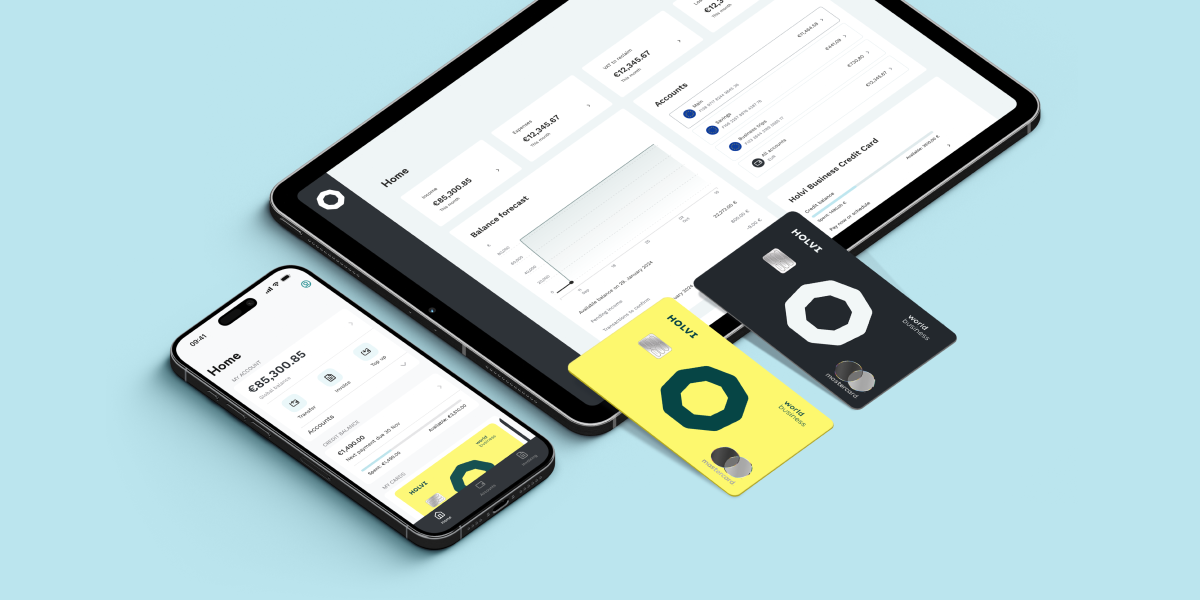
Business account for solopreneurs and teams | Holvi Europe
Online business banking ✔︎ Invoicing ✔︎ Bookkeeping ✔︎ Debit, credit and virtual cards ✔︎ Receipt scanning ✔︎ Expense management. Simplify work life.
Stellar | Together We Can - A Decentralized Vision for Financial Inclusion
In this post, our contribution to Financial Inclusion Week organized by the Center For Financial Inclusion @ Accion, we’ll share SDF’s vision for achieving financial inclusion globally.We’ll do this by first outlining how we define financial inclusion, wh

Alkemio
Alkemio, a purpose-driven organization based in the Netherlands, found a way to reward both financial backers and employees contributing their time within a steward-ownership framework. The founders aimed to create a structure that would:

Built, Owned & Stewarded in Europe
Steward & Employee Ownership keep mission, capital and talent rooted in Europe. We're asking the EU to make it an option.
Outsourcing
Outsourcing is a business practice in which companies use external providers to carry out business processes that would otherwise be handled internally. Outsourcing sometimes involves transferring employees and assets from one firm to another, or forming a separate legal entity that acts as a management service organization (MSO).

Horizon Europe
The EU's research and innovation funding programme 2021-2027
Unpacking the Mechanics of Conduit Debt Financing
Understanding the pass-through financing model behind the AI infrastructure boom
Dutch governments builds alternative for Microsoft based on NixOS | Hacker News
1) That there is an agenda, demand and total legal abetment from the top of the power/monetary hierarchy for such corporate policies
Managing and resisting ‘degeneration’ in employee-owned businesses: A comparative study of two large retailers in Spain and the United Kingdom
Employee-owned businesses have recently enjoyed a resurgence of interest as possible ‘alternatives’ to the somewhat tarnished image of conventional investor-owned capitalist firms. Within the context of global economic crisis, such alternatives seem newly attractive. This is somewhat ironic because, for more than a century, academic literature on employee-owned businesses has been dominated by the ‘degeneration thesis’. This suggested that these businesses tend towards failure—they either fail commercially, or they relinquish their democratic characters. Bucking this trend and offering a beacon—especially in the United Kingdom —has been the commercially successful, co-owned enterprise of the John Lewis Partnership whose virtues have seemingly been rewarded with favourable and sustainable outcomes. This article makes comparisons between John Lewis Partnership and its Spanish equivalent Eroski—the supermarket group which is part of the Mondragon cooperatives. The contribution of this article is to examine in a comparative way how the managers in John Lewis Partnership and Eroski have constructed and accomplished their alternative scenarios. Using longitudinal data and detailed interviews with senior managers in both enterprises, it explores the ways in which two large, employee-owned, enterprises reconcile apparently conflicting principles and objectives. The article thus puts some new flesh on the ‘regeneration thesis’.

Labor Market Adaptation | Windfall Policy Atlas
How can workers, firms, and education systems adapt to an AI-transformed economy?

Sweden Wants To Fight Our Disposable Culture With Tax Breaks For Repairing Old Stuff - Fast Company
A proposed new law takes aim at wasteful consumerism.
Equity for Europeans
Equity combines legal fairness, ownership, and upside in one everyday concept.
Supporting AT Proto development with money and infrastructure should be a no-brainer for EU industrial policy. In fact, given the need for alternatives to US-owned platforms, comparative advantage, and infinite downstream benefits, few areas offer a bigger bang for your industrial policy buck.

Eurosky Sebastian
2 days ago I had the opportunity to participate in the European Commission‘s workshop on the future of social networks in Europe, together with researchers, entrepreneurs, policymakers, investors and civil society representatives.
