

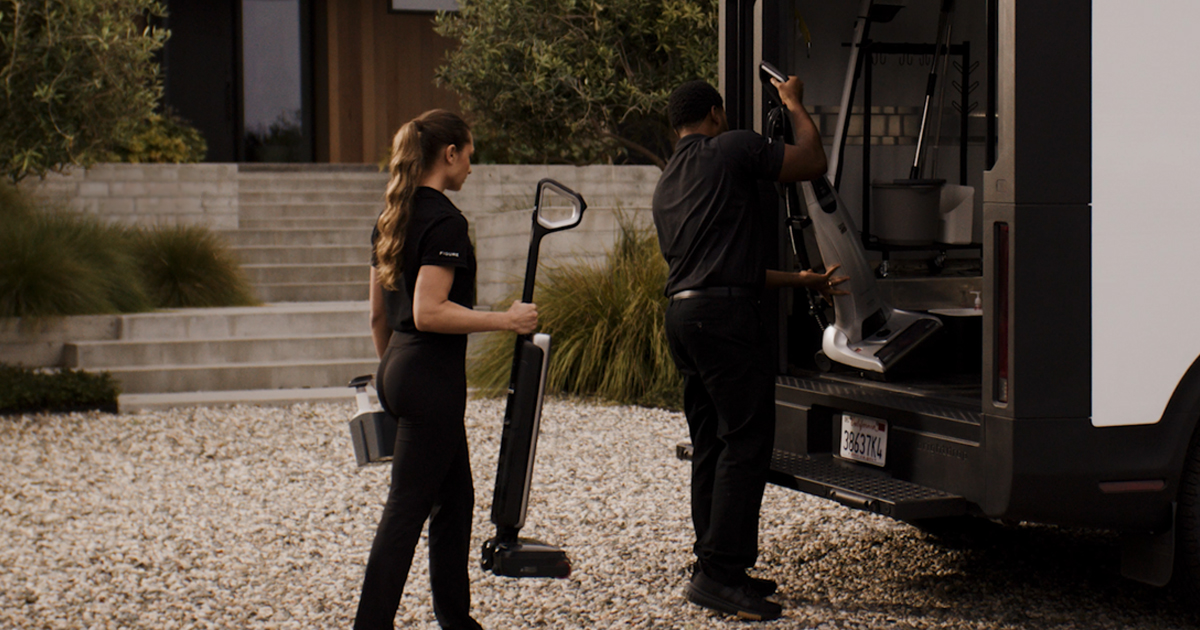
Today we're coming out of stealth with the largest robot training dataset ever built. The data needed to scale general robotics doesn't exist on the internet - it has to come from the real world: a global sampling of physics captured across every environment on earth.
Find Open Datasets for AI and Research | Kaggle
Browse and download hundreds of thousands of open datasets for AI research, model training, and analysis. Join a community of millions of researchers, developers, and builders to share and collaborate on Kaggle.

Zhijing Jin on Twitter / X
🚀 Can #AI agents actually do science?Current agents can optimize for predictive fit — but fail at recovering the underlying physical laws.We introduce Stargazer🪐: a scalable benchmark + environment for astronomical discovery🔭Agents must:• propose hypotheses•… pic.twitter.com/hGIjz4KJMT— Zhijing Jin (@ZhijingJin) May 7, 2026

MolmoAct 2: An open foundation for robots that work in the real world | Ai2
MolmoAct 2 is a fully open robotics foundation model that brings faster, stronger 3D action reasoning to real-world robot tasks, alongside a major new bimanual manipulation dataset for researchers to study, reproduce, and build on.
AI-Newton: A Concept-Driven Physical Law Discovery System without Prior Physical Knowledge
While current AI-driven methods excel at deriving empirical models from individual experiments, a significant challenge remains in uncovering the common fundamental physics that underlie these models -- a task at which human physicists are adept. To bridge this gap, we introduce AI-Newton, a novel framework for concept-driven scientific discovery. Our system autonomously derives general physical laws directly from raw, multi-experiment data, operating without supervision or prior physical knowledge. Its core innovations are twofold: (1) proposing interpretable physical concepts to construct laws, and (2) progressively generalizing these laws to broader domains. Applied to a large, noisy dataset of mechanics experiments, AI-Newton successfully rediscovers foundational and universal laws, such as Newton's second law, the conservation of energy, and the universal gravitation. This work represents a significant advance toward autonomous, human-like scientific discovery.

The AI Scaling Problem
RoboScape: Physics-informed Embodied World Model
World models have become indispensable tools for embodied intelligence, serving as powerful simulators capable of generating realistic robotic videos while addressing critical data scarcity challenges. However, current embodied world models exhibit limited physical awareness, particularly in modeling 3D geometry and motion dynamics, resulting in unrealistic video generation for contact-rich robotic scenarios. In this paper, we present RoboScape, a unified physics-informed world model that jointly learns RGB video generation and physics knowledge within an integrated framework. We introduce two key physics-informed joint training tasks: temporal depth prediction that enhances 3D geometric consistency in video rendering, and keypoint dynamics learning that implicitly encodes physical properties (e.g., object shape and material characteristics) while improving complex motion modeling. Extensive experiments demonstrate that RoboScape generates videos with superior visual fidelity and physical plausibility across diverse robotic scenarios. We further validate its practical utility through downstream applications including robotic policy training with generated data and policy evaluation. Our work provides new insights for building efficient physics-informed world models to advance embodied intelligence research. The code is available at: https://github.com/tsinghua-fib-lab/RoboScape.
APRIL Laboratory APRIL Papers : Autonomy * Perception * Robotics * Interfaces * Learning
Introducing @huggingface/kernels: 200+ WebGPU Kernels for Local AI
We’re on a journey to advance and democratize artificial intelligence through open source and open science.

HUGE — AI Without Giving Up Your Privacy
We're building an Agentic AI Platform running on your Device that lives with YOU, isolated from the cloud, fundamentally reimagining the relationship between humans and artificial intelligence through ownership, privacy, and massive context. In an age of capture and control, HUGE sells independence and sovereignty.
Agentic Laboratories of the Future: Towards World Models for Scientific Discovery
Scientific discovery is fundamentally a problem-solving process involving distributed intelligence. Human intuition, computational reasoning, and experimental execution are distributed across people, instruments, and software systems, limiting the speed and scale of discovery. Although automation, high-throughput experimentation, foundation models, and cloud infrastructure have accelerated individual stages of the scientific workflow, they have not unified the discovery process. We hypothesize that the next generation of laboratories will be agentic: environments in which scientists, AI systems, and robotic platforms operate as collaborative discovery partners, with humans contributing the parts of discovery that remain hardest to make explicit: asking the right questions and holding provisional mechanistic models of how a system works. The key missing layer is an agentic harnessing layer that continuously integrates hypothesis, literature-derived evidence, experimental data, uncertainty, and experimental state into a shared “laboratory world model”—a dynamic representation of the scientific system and its evolving context. By maintaining and updating this lab world model, the agentic harnessing layer enables coordinated decision-making, adaptive planning, and increasingly autonomous scientific workflows across humans and machines. A central challenge is that much of the scientific research process remains inaccessible to machines, including tacit knowledge, human observations, adaptive decision-making, and evolving experimental context. Advances in multimodal AI and immersive interfaces may help bridge this gap, allowing humans, agents, and robotic systems to collaborate seamlessly in scientific discovery rather than simply automating isolated tasks. Agentic laboratories could provide a new architecture for science, integrating human, artificial, and physical intelligence into a unified discovery system.

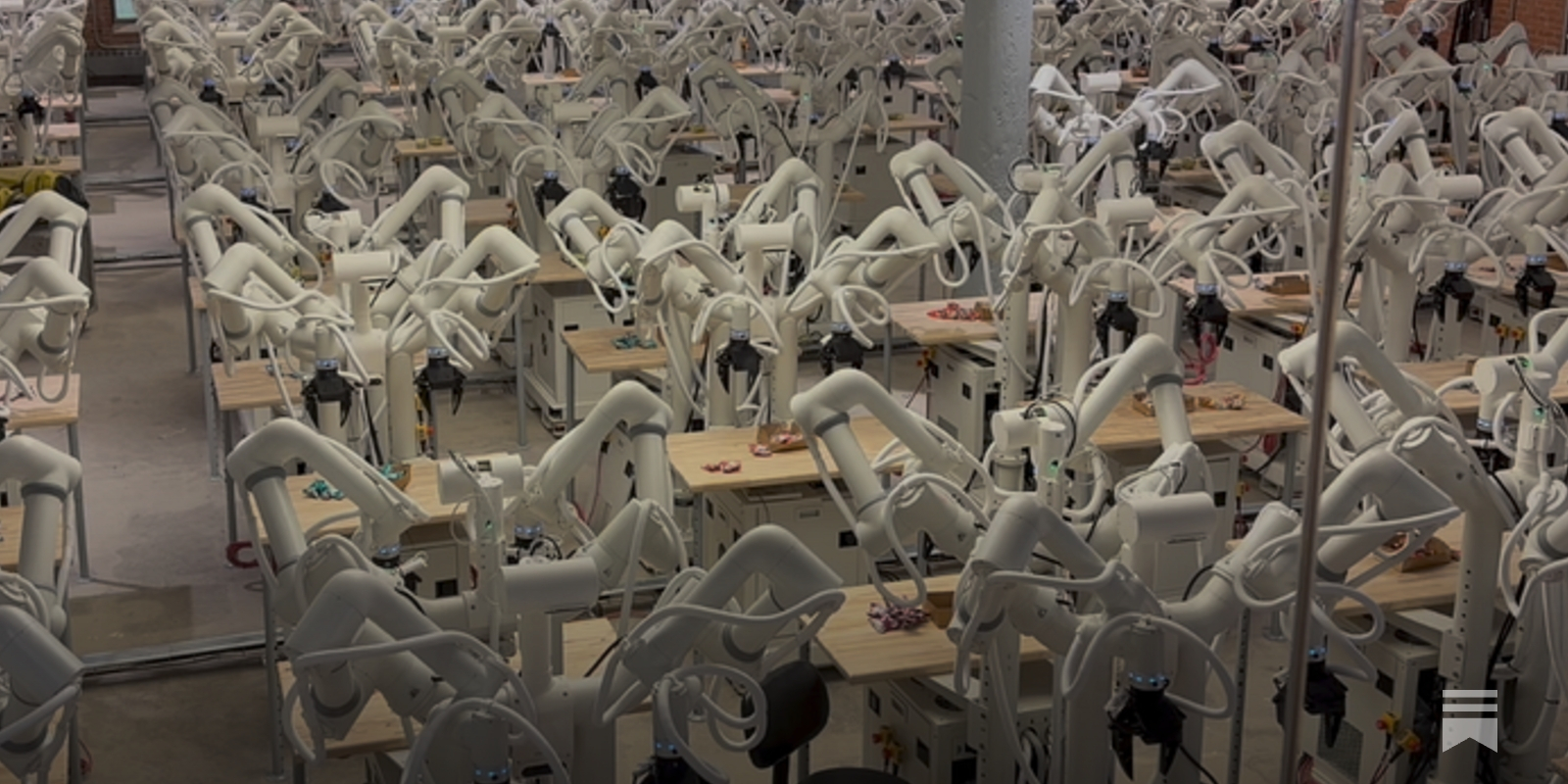
Robot startups are trying everything they can think of to get more data
Free apartment cleanings, exoskeletons, 100 robots in a warehouse...
MiniMaxAI/OctoCodingBench · Datasets at Hugging Face
We’re on a journey to advance and democratize artificial intelligence through open source and open science.

PaddlePaddle/PaddleOCR-VL · Hugging Face
We’re on a journey to advance and democratize artificial intelligence through open source and open science.
Inside China’s robotics revolution
The long read: How close are we to the sci-fi vision of autonomous humanoid robots? I visited 11 companies in five Chinese cities to find out
The End Of Independent Publishing And Giant Freakin Robot
After relaunching GIANT FREAKIN ROBOT in 2019, the site grew to a readership of more than 20 million a month, … Continue reading "The End Of Independent Publishing And Giant Freakin Robot"

