

Given the shadow which the original Master of Orion still casts over the gaming landscape of today, one might be forgiven for assuming, as many younger gamers doubtless do, that it was the very first conquer-the-galaxy grand-strategy game ever made. The reality, however, is quite different. For all that its position of influence is hardly misbegotten for other very good reasons, it was already the heir to a long tradition of such games at the time of its release in 1993. In fact, the tradition dates back to well before computer games as we know them today even existed.
Orion 1.0 ✴︎ Browse Beyond
After six years of relentless development, Orion for MacOS 1.0 is here. What started as a vision initiated by our founder, Vladimir Prelovac, has now come to fruition on Mac, iPhone, and iPad. Today, Orion for...

» Starcraft (A History in Two Acts) The Digital Antiquarian
Great success brings with it great expectations. And sometimes it brings an identity crisis as well.
» Ultima IX The Digital Antiquarian
Years ago, [Origin Systems] released Strike Commander, a high-concept flight sim that, while very entertaining from a purely theoretical point of view, was so resource-demanding that no one in the country actually owned a machine that could play it. Later, in Ultima VIII, the company decided to try to increase their sales numbers by adding action sequences straight out of a platform game to their ultra-deep RPG. The results managed to piss just about everyone off. With Ultima IX: Ascension, the company has made both mistakes again, but this time on a scale that is likely to make everyone finally forget about the company’s past mistakes and concentrate their efforts on making fun of this one.
» The CRPG Renaissance, Part 4: …Long Live Dungeons & Dragons! The Digital Antiquarian
In December of 1997, Interplay Entertainment released Descent to Undermountain, the latest licensed Dungeons & Dragons computer game. It’s remembered today, to whatever extent it’s remembered at all, as one of the more infamous turkeys of an era with more than its share of over-hyped and half-baked creations, a fiasco almost on par with Battlecruiser 3000AD or Daikatana. The game was predicated on the dodgy premise that Dungeons & Dragons would make a good fit with the engine from Descent, Interplay’s last world-beating hit — and also a hit that was, rather distressingly for Brian Fargo and his colleagues, more than two years in the past by this point.
The Legacy of No Man’s Sky in Game Design
Two years ago, No Man’s Sky, a sci-fi space exploration game boasting powerful procedural generation, released to a flurry of negative…

Aesthetic Deception
» Ultima, Part 1 The Digital Antiquarian
When we left Richard Garriott, California Pacific had just released his first game, Akalabeth, a substantial windfall for the 19-year-old university student. In between classes and SCA events, he spent his sophomore year at the University of Texas writing a new, much more ambitious game, which CP published just as the spring semester of 1981 was wrapping up. I think we can best proceed by just diving right into the game that retroactively came to be known as Ultima I.
Atari co-founder: mobile games make me want to throw my phone
Video games pioneer Nolan Bushnell is planning to revive the ‘hardcore fundamental game design’ of arcades to make mobile titles worth playing

Orion Browser by Kagi
Orion — A web browser designed from the ground-up. Native WebKit speed, compatibility with a wide selection of extensions, and absolute privacy — finally together in one browser that respects you.

Context Sensitivity
» The Game of Everything, Part 2: Playing Civilization The Digital Antiquarian
As a game designer, you have ultimate power. And with this ultimate power comes very little responsibility.
StarCraft: The past, present and future
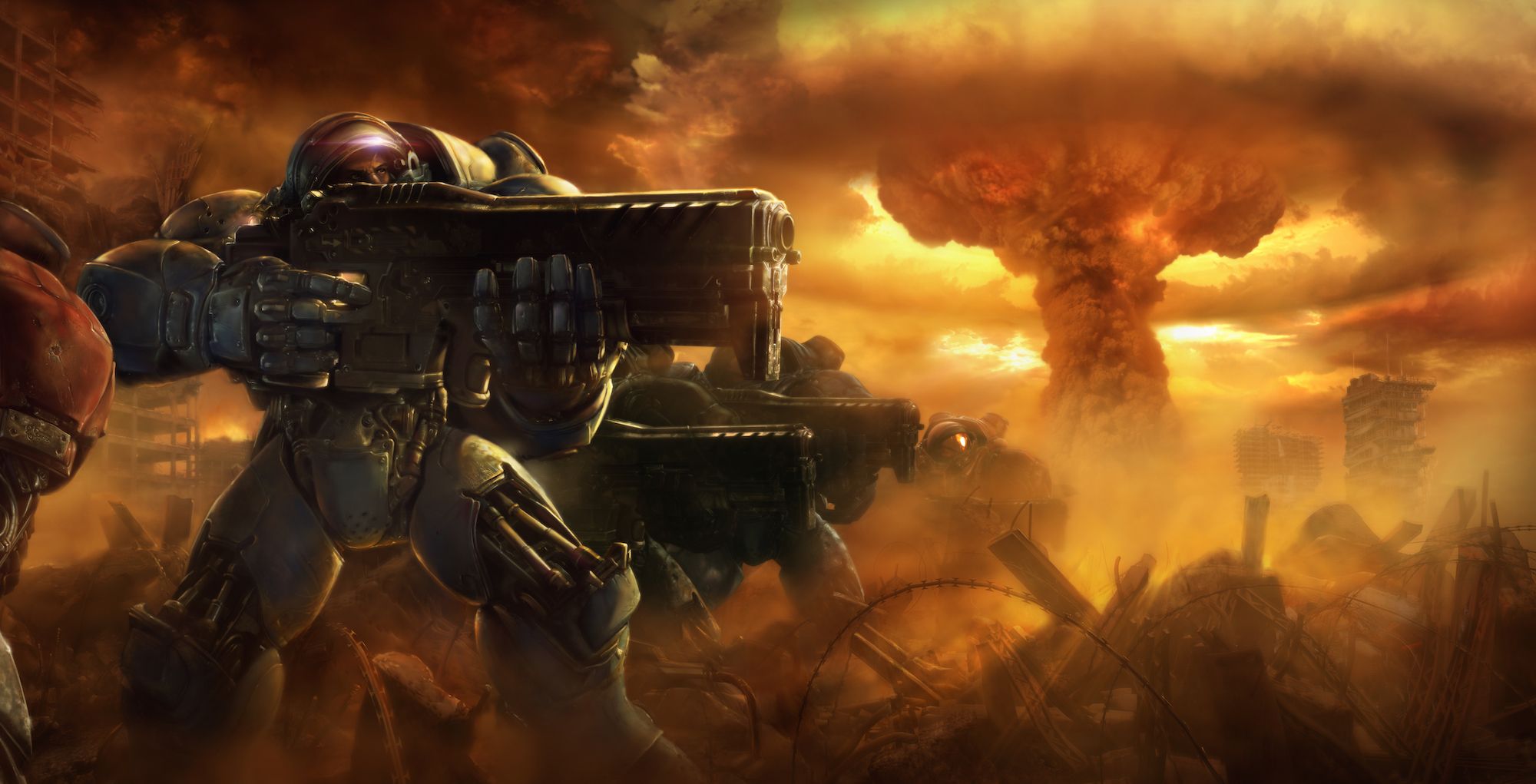
Back in the ‘90s, Chris Metzen had an idea for a new game. For the still-blooming Blizzard Entertainment, these were formative years. There was Warcraft as of 1994, but there was no World of Warcraft. There was talk about doing more real-time strategy, as the company was arguably getting good at it, and a keen interest in heading into space.
» Grim Fandango The Digital Antiquarian
My one big regret was the PlayStation version [of Broken Sword]. No one thought it would sell, so we kept it like the PC version. In hindsight, I think if we had introduced direct control in this game, it would have been enormous.
» Zork on the PDP-10 The Digital Antiquarian
One distinguishing trait of hackers is the way they never see any program as completely, definitively done; there are always additions to be made, rough edges to be smoothed. Certainly Adventure, impressive as it was, left plenty of room for improvement. On top of all that, though, one also has to consider that Adventure came to MIT from Don Woods of Stanford’s AI Lab, perhaps the only computer-science program in the country with a stature remotely comparable to that of MIT. MIT students are fiercely proud of their alma mater. If Stanford had done the adventure game first, MIT’s Dynamic Modeling Group could still do it better. And it didn’t hurt that the heritage of Project MAC and the Laboratory for Computer Science, not to mention the DMG itself, gifted them with quite some tools to bring to bear on the problem.
How ‘Baldur’s Gate’ Saved the Computer RPG
The genre-stretching game broke new narrative, technical, and gameplay ground and established the identity of one of the past two decades’ most storied video game studios
» The Last Adventures of Legend The Digital Antiquarian
The early days were the best. We had successes, we had fun, and we had a good business model. As the industry changed, everything became more complicated and harder.