

Robyn Miller, one half of the pair of brothers who created the adventure game known as Myst with their small studio Cyan, tells a story about its development that’s irresistible to a writer like me. When the game was nearly finished, he says, its publisher Brøderbund insisted that it be put through “focus-group testing” at their offices. Robyn and his brother Rand reluctantly agreed, and soon the first group of guinea pigs shuffled into Brøderbund’s conference room. Much to its creators’ dismay, they hated the game. But then, just as the Miller brothers were wondering whether they had wasted the past two years of their lives making it, the second group came in. Their reaction was the exact opposite: they loved the game.
» The Journeyman Project The Digital Antiquarian
I find that it’s oddly difficult for me to tell the story of Presto Studios, the maker of the Journeyman Project series of cult-classic adventure games, without drawing a lot of parallels and comparisons to Cyan, Inc., the maker of the multi-million-selling mega-hit Myst. This is not only because Presto won the lottery after making their last Journeyman Project game, when Cyan awarded them a contract to make a single-player Myst III while they themselves pursued an online multi-player adventure game that was to be called Uru. It’s also down to other similarities, the same ones that must have made that choice of Presto as a Myst custodian seem like such an obvious one to Cyan.
» Choose Your Own Adventure The Digital Antiquarian
The first and most iconic of all the Choose Your Own Adventure books involved spelunking, just as did the first and most iconic of all computer-based adventure games.
Reading “life in code” by ellen ullman was truly a fucking game changer…….. fuck me!!!!! Join cj the x’s book club… lol…… #internet #newyorker #timbernerslee
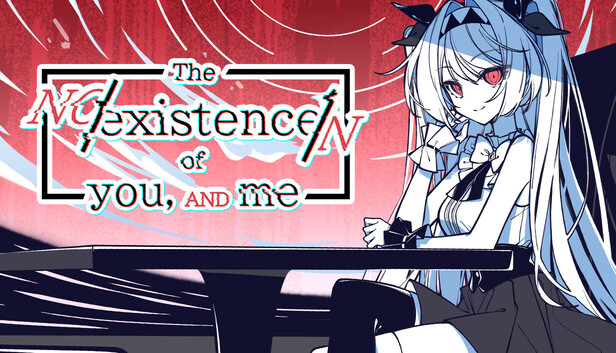
The NOexistenceN of you AND me
Use "game" as a medium to showcase the world of "you/girl". Explore the truth of "you/girl/world" through the form of a "visual novel".
Experimental Games Showcase
The Experimental Game Workshop Showcase, which featured games like 'Baba Is You', 'The Longing', 'Braid', 'Untitled Goose Game' and 'Katamari Damacy', is back for its 24th year at GDC! In this fast-paced, game-packed session, panelists will...

» The Last Adventures of Legend The Digital Antiquarian
The early days were the best. We had successes, we had fun, and we had a good business model. As the industry changed, everything became more complicated and harder.
» Starcraft (A History in Two Acts) The Digital Antiquarian
Great success brings with it great expectations. And sometimes it brings an identity crisis as well.
The Legend of Zelda: Breath of the Wild review
Link’s latest adventure is a bold and much-needed reinvention of the beloved franchise

Trust — Moving Castles: Modular and Portable Multiplayer Miniverses
Something is crawling out of the dark forest.

cataclysm: The zombie apocalypse starts now
I love it when people suggest console games for Linux are a joke. I can think of three or four games offhand — crawl is one, taipan and gearhead are others — with more depth and intelli…

The Rise and Fall of the Lone Game Developer – Holy Ghost Stories
In the early 80s, all it took to make a game was a computer, some graph paper, and a lot of determination.
Revenge of the Dilettantes
Book club and AI adventures, age of bespokeness, study groups, new rules of engagement

Revenge of the Dilettantes
Book club and AI adventures, age of bespokeness, study groups, new rules of engagement
» The CRPG Renaissance, Part 4: …Long Live Dungeons & Dragons! The Digital Antiquarian
In December of 1997, Interplay Entertainment released Descent to Undermountain, the latest licensed Dungeons & Dragons computer game. It’s remembered today, to whatever extent it’s remembered at all, as one of the more infamous turkeys of an era with more than its share of over-hyped and half-baked creations, a fiasco almost on par with Battlecruiser 3000AD or Daikatana. The game was predicated on the dodgy premise that Dungeons & Dragons would make a good fit with the engine from Descent, Interplay’s last world-beating hit — and also a hit that was, rather distressingly for Brian Fargo and his colleagues, more than two years in the past by this point.
» How Jordan Mechner Made a Different Sort of Interactive Movie (or, The Virtues of Restraint) The Digital Antiquarian
One can learn much about the state of computer gaming in any given period by looking to the metaphors its practitioners are embracing. In the early 1980s, when interfaces were entirely textual and graphics crude or nonexistent, text adventures like those of Infocom were heralded as the vanguard of a new interactive literature destined to augment or entirely supersede non-interactive books. That idea peaked with the mid-decade bookware boom, when just about every entertainment-software publisher (and a few traditional book publishers) were rushing to sign established authors and books to interactive projects. It then proceeded to collapse just as quickly under the weight of its own self-importance when the games proved less compelling and the public less interested than anticipated.