

Great success brings with it great expectations. And sometimes it brings an identity crisis as well.
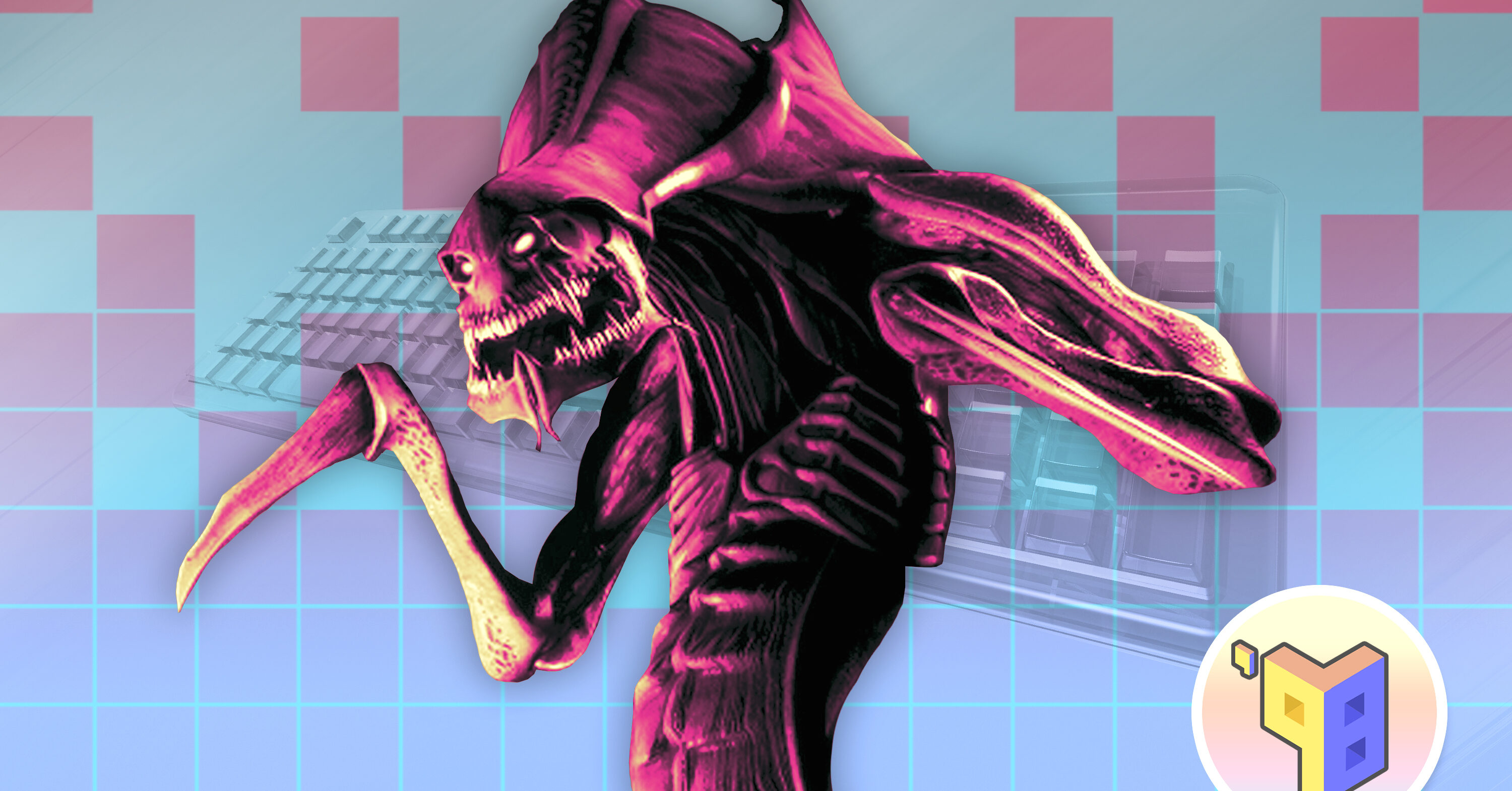
Good Game Well Played: The Story of the Staying Power of ‘StarCraft’
Twenty years after Blizzard’s baby redefined a genre and spawned the esports movement, it remains a timeless proof of concept for what online competition can be
» The Game of Everything, Part 2: Playing Civilization The Digital Antiquarian
As a game designer, you have ultimate power. And with this ultimate power comes very little responsibility.
» The Game of Everything, Part 1: Making Civilization The Digital Antiquarian
If my gravestone says, “Sid Meier, developed Civilization,” I’m happy with that. It’s a game I’m happy to be known for.
» The Last Adventures of Legend The Digital Antiquarian
The early days were the best. We had successes, we had fun, and we had a good business model. As the industry changed, everything became more complicated and harder.
StarCraft: The past, present and future
Back in the ‘90s, Chris Metzen had an idea for a new game. For the still-blooming Blizzard Entertainment, these were formative years. There was Warcraft as of 1994, but there was no World of Warcraft. There was talk about doing more real-time strategy, as the company was arguably getting good at it, and a keen interest in heading into space.

» Master of Orion The Digital Antiquarian
Given the shadow which the original Master of Orion still casts over the gaming landscape of today, one might be forgiven for assuming, as many younger gamers doubtless do, that it was the very first conquer-the-galaxy grand-strategy game ever made. The reality, however, is quite different. For all that its position of influence is hardly misbegotten for other very good reasons, it was already the heir to a long tradition of such games at the time of its release in 1993. In fact, the tradition dates back to well before computer games as we know them today even existed.
The Minecraft Generation (Published 2016)
How a clunky Swedish computer game is teaching millions of children to master the digital world.

» Half-Life The Digital Antiquarian
Around twenty years ago, people would have laughed if you told them that videogames would end up at the Smithsonian, but the Half-Life team really did want to make games that were more than just throwaway toys. The rule against cinematics — which made our jobs much harder and also ended up leaving a lot of my favorite work out of the game — was a kind of ideological stake in the ground: we really did want the game and the story to be the same thing. It was far from flawless, but it was really trying to push the boundaries of a young medium.
» Riven The Digital Antiquarian
Sometimes success smacks you right in the face. More often, it sneaks up on you from behind.
» Choose Your Own Adventure The Digital Antiquarian
The first and most iconic of all the Choose Your Own Adventure books involved spelunking, just as did the first and most iconic of all computer-based adventure games.
» Outcast The Digital Antiquarian
The Outcast box was styled to look like a movie poster. Riffing on the same theme, Infogrames’s head Bruno Bonnell called it “the first videogame that really tries to be an interactive movie,” leaving one to wonder whether he had somehow missed the first nine years of the 1990s, during which countless games tried desperately to be just that. Ironically, Outcast actually has very few of the characteristics that had become associated with the phrase: no rigidly linear plot, no digitized human actors, no out-of-engine cutscenes after the obligatory opening one. It’s a game rather than a movie through and through, and all the better for it.
» How Jordan Mechner Made a Different Sort of Interactive Movie (or, The Virtues of Restraint) The Digital Antiquarian
One can learn much about the state of computer gaming in any given period by looking to the metaphors its practitioners are embracing. In the early 1980s, when interfaces were entirely textual and graphics crude or nonexistent, text adventures like those of Infocom were heralded as the vanguard of a new interactive literature destined to augment or entirely supersede non-interactive books. That idea peaked with the mid-decade bookware boom, when just about every entertainment-software publisher (and a few traditional book publishers) were rushing to sign established authors and books to interactive projects. It then proceeded to collapse just as quickly under the weight of its own self-importance when the games proved less compelling and the public less interested than anticipated.
» The CRPG Renaissance, Part 1: Fallout The Digital Antiquarian
This early advertisement for Fallout makes a not-so-subtle dig at gaming’s then-current flavor of the month, the highly streamlined — or, in the view of some, dumbed-down — CRPG Diablo.
StarCraft: Cartooned – Available Now
» The CRPG Renaissance, Part 4: …Long Live Dungeons & Dragons! The Digital Antiquarian
In December of 1997, Interplay Entertainment released Descent to Undermountain, the latest licensed Dungeons & Dragons computer game. It’s remembered today, to whatever extent it’s remembered at all, as one of the more infamous turkeys of an era with more than its share of over-hyped and half-baked creations, a fiasco almost on par with Battlecruiser 3000AD or Daikatana. The game was predicated on the dodgy premise that Dungeons & Dragons would make a good fit with the engine from Descent, Interplay’s last world-beating hit — and also a hit that was, rather distressingly for Brian Fargo and his colleagues, more than two years in the past by this point.