In 2002, Paul O’Brian, a prolific author, reviewer, and commentator on the contemporary interactive-fiction scene, attempted to compile a list of those people who had done the most to help text adventures live on beyond the death of Infocom. Among the names he listed were those of Mike Roberts and Graham Nelson, the creators of TADS and Inform; Andrew Plotkin, who contributed crucial technical innovations of his own and authored a number of perplexing, intriguing games; and Adam Cadre, who wrote the single most-played text adventure of the post-Infocom era. None of these names will come as a surprise to anyone who has been even a casual tourist of the interactive-fiction scene over the years. But another of them very well might: that of Gerry Kevin “Whizzard” Wilson. And yet one can make an argument that his skill set was the most unique and thus the most essential of them all.
» How Jordan Mechner Made a Different Sort of Interactive Movie (or, The Virtues of Restraint) The Digital Antiquarian
One can learn much about the state of computer gaming in any given period by looking to the metaphors its practitioners are embracing. In the early 1980s, when interfaces were entirely textual and graphics crude or nonexistent, text adventures like those of Infocom were heralded as the vanguard of a new interactive literature destined to augment or entirely supersede non-interactive books. That idea peaked with the mid-decade bookware boom, when just about every entertainment-software publisher (and a few traditional book publishers) were rushing to sign established authors and books to interactive projects. It then proceeded to collapse just as quickly under the weight of its own self-importance when the games proved less compelling and the public less interested than anticipated.
» Huge for the Holidays: Epic Interactive Fiction of the Millennial Period The Digital Antiquarian
After fighting the tendency for decades, I’ve finally learned to accept that I’m a bit of a conservative, if not a downright Luddite, when it comes to my interactive fiction — or my text adventures, as I still persist in calling them. Despite its name, parser-based interactive fiction doesn’t actually strike me as all that good at plot-heavy storytelling. What it does excel at is setting.
» Choose Your Own Adventure The Digital Antiquarian
The first and most iconic of all the Choose Your Own Adventure books involved spelunking, just as did the first and most iconic of all computer-based adventure games.
Chris Crawford on Interactive Storytelling + LLMs = ???
Does anyone remember Chris Crawford, the game designer and GDC speaker on Interactive Storytelling/Fiction? He's also the author of a book by that…
» Outcast The Digital Antiquarian
The Outcast box was styled to look like a movie poster. Riffing on the same theme, Infogrames’s head Bruno Bonnell called it “the first videogame that really tries to be an interactive movie,” leaving one to wonder whether he had somehow missed the first nine years of the 1990s, during which countless games tried desperately to be just that. Ironically, Outcast actually has very few of the characteristics that had become associated with the phrase: no rigidly linear plot, no digitized human actors, no out-of-engine cutscenes after the obligatory opening one. It’s a game rather than a movie through and through, and all the better for it.
Fundamentals of Interactivity | Interactive Storytelling Tools for Writers | Chris Crawford
Interactive Fiction Study Course
An online, self-paced course exploring notable works of interactive fiction. The goal is not to just consume classics but to take them apart to build up your own craft repertoire.
What Was the Internet?
As AI overtakes the web, five writers reflect on how far it’s fallen and what comes next.

What Was the Internet?
As AI overtakes the web, five writers reflect on how far it’s fallen and what comes next.
A Text Renaissance
There is a renaissance underway in online text as a medium. The Four Horsemen of this emerging Textopia are: Roam , a hypertext publishing platform best…

A Text Renaissance
There is a renaissance underway in online text as a medium. The Four Horsemen of this emerging Textopia are: Roam , a hypertext publishing platform best…
» The Last Days of Zork The Digital Antiquarian
If you follow the latest developments in modern gaming even casually, as I do, you know that Microsoft and Activision Blizzard recently concluded the most eye-watering transaction ever to take place in the industry: the former acquired the latter for a price higher than the gross national product of more than half of the world’s countries. I find it endlessly amusing to consider that Activision may have lived long enough to set that record only thanks to Infocom, that humble little maker of 1980s text adventures, whose annual revenues — revenues, mind you, not profits — never exceeded $10 million before Activision acquired it in 1986. And just how did this David save a Goliath? It happened like this:
Konrad Hinsen's blog
A much cited essay by Bret Victor, "Explorable Explanations", argues for supporting and encouraging active reading in communicating ideas. Explanatory text should thus be complemented by interactive visualizations and computational demonstrations, allowing the reader to actively engage with the ideas. If you haven't read Victor's essay yet, please do so now, and then come back here. It's not very long. What I am going to discuss is a variation on Victor's proposal, and I won't repeat his well-presented arguments.
Digital Echoes and Unquiet Minds - Christopher Butler
There's a psychological burden of digital life even heavier than distraction.

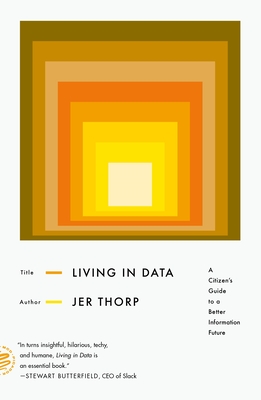
Living in Data: A Citizen's Guide to a Better Information Future (Paperback)
Jer Thorp’s analysis of the word “data” in 10,325 New York Times stories written between 1984 and 2018 shows a distinct trend: among the words most closely associated with “data,” we find not only its classic companions “information” and “digital,” but also a variety of new neighbors—from “scandal” and “misinformation” to “ethics,” “friends,” and “play.”To live in data in the twenty-first century