

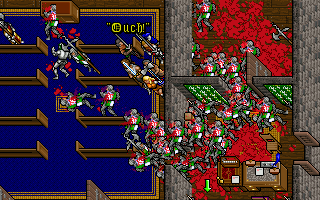
This early advertisement for Fallout makes a not-so-subtle dig at gaming’s then-current flavor of the month, the highly streamlined — or, in the view of some, dumbed-down — CRPG Diablo.
» The CRPG Renaissance, Part 5: Fallout 2 and Baldur’s Gate The Digital Antiquarian
As we learned in the earlier articles in this series, Interplay celebrated the Christmas of 1997 with two new CRPGs. One of them, the striking post-apocalyptic exercise called Fallout, was greeted with largely rave reviews. The other, of course, was the far less well-received licensed Dungeons & Dragons game called Descent to Undermountain. The company intended to repeat the pattern in 1998, with another Fallout and another Dungeons & Dragons game. This time, however, the public’s reception of the two efforts would be nearly the polar opposite of last time.
» The CRPG Renaissance, Part 2: Might and Magic VI The Digital Antiquarian
From the 1980s until well into the 1990s, the CRPG genre was typically dumped into the same broad bucket as the adventure game by the gaming press. Indeed, as late as the turn of the millennium, Computer Gaming World magazine had an “Adventure/RPG” department, complete with regular columnists whose beat encompassed both genres. Looking back, this lack of distinction might strike us as odd: CRPGs, which are to a greater or lesser extent simulations of an imaginary world with a considerable degree of emergent behavior, are far more procedurally intensive than traditional adventure games and provide a very different experience.
» The CRPG Renaissance, Part 4: …Long Live Dungeons & Dragons! The Digital Antiquarian
In December of 1997, Interplay Entertainment released Descent to Undermountain, the latest licensed Dungeons & Dragons computer game. It’s remembered today, to whatever extent it’s remembered at all, as one of the more infamous turkeys of an era with more than its share of over-hyped and half-baked creations, a fiasco almost on par with Battlecruiser 3000AD or Daikatana. The game was predicated on the dodgy premise that Dungeons & Dragons would make a good fit with the engine from Descent, Interplay’s last world-beating hit — and also a hit that was, rather distressingly for Brian Fargo and his colleagues, more than two years in the past by this point.
The CRPG Project
I’ve been thinking about computer RPGs a lot recently, and trying to play a bunch. There’s a quality that I’ve always loved about especially older computer RPGs: you really felt t…
» The CRPG Renaissance, Part 3: TSR is Dead… The Digital Antiquarian
“How do you make a small fortune in tabletop gaming?” runs an old joke.
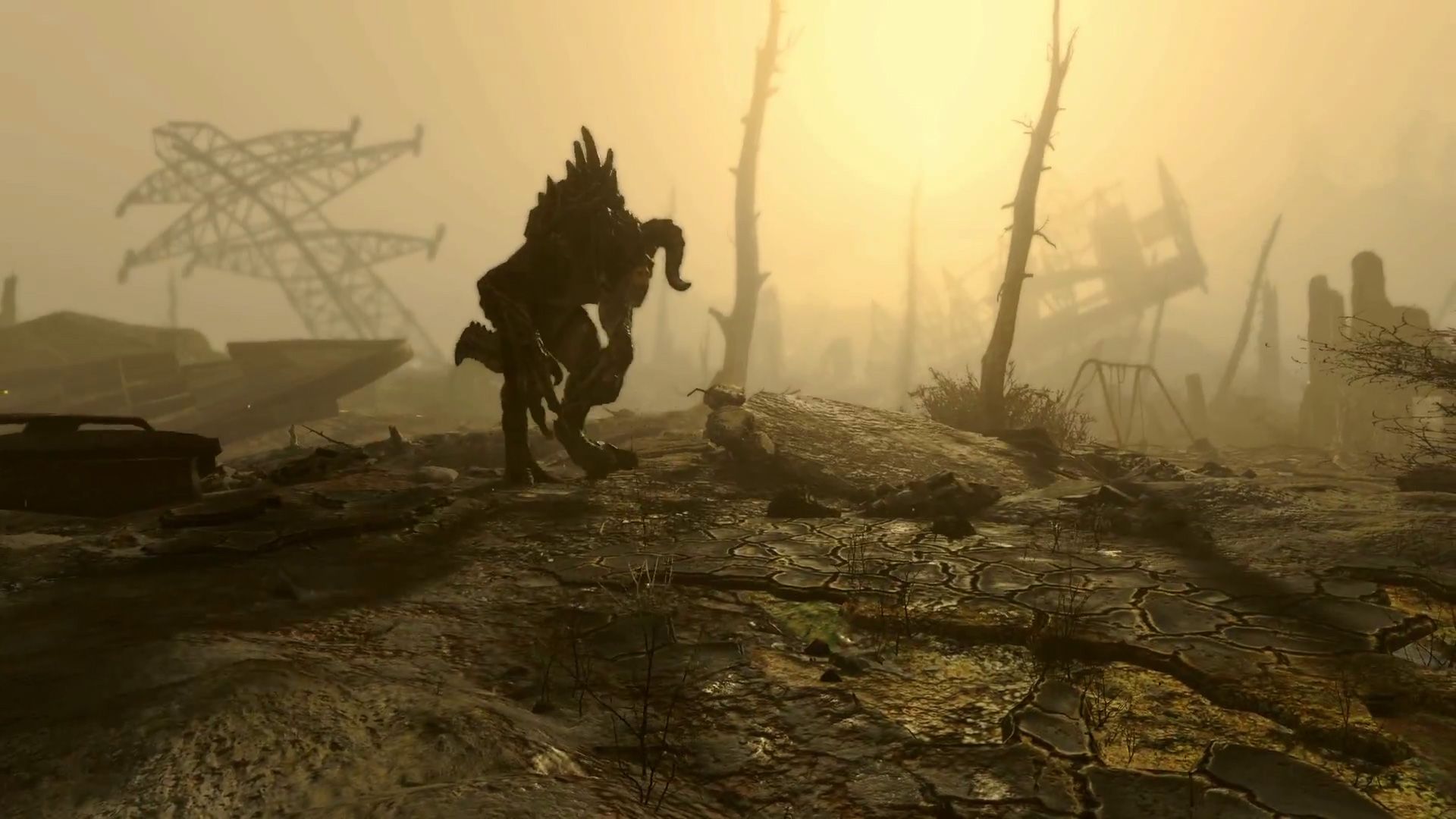
Fallout 4 is unapologetically hardcore, an amazing thing for a mainstream game in 2015
You will die, and Fallout doesn't give a shit
Fallout 4 review
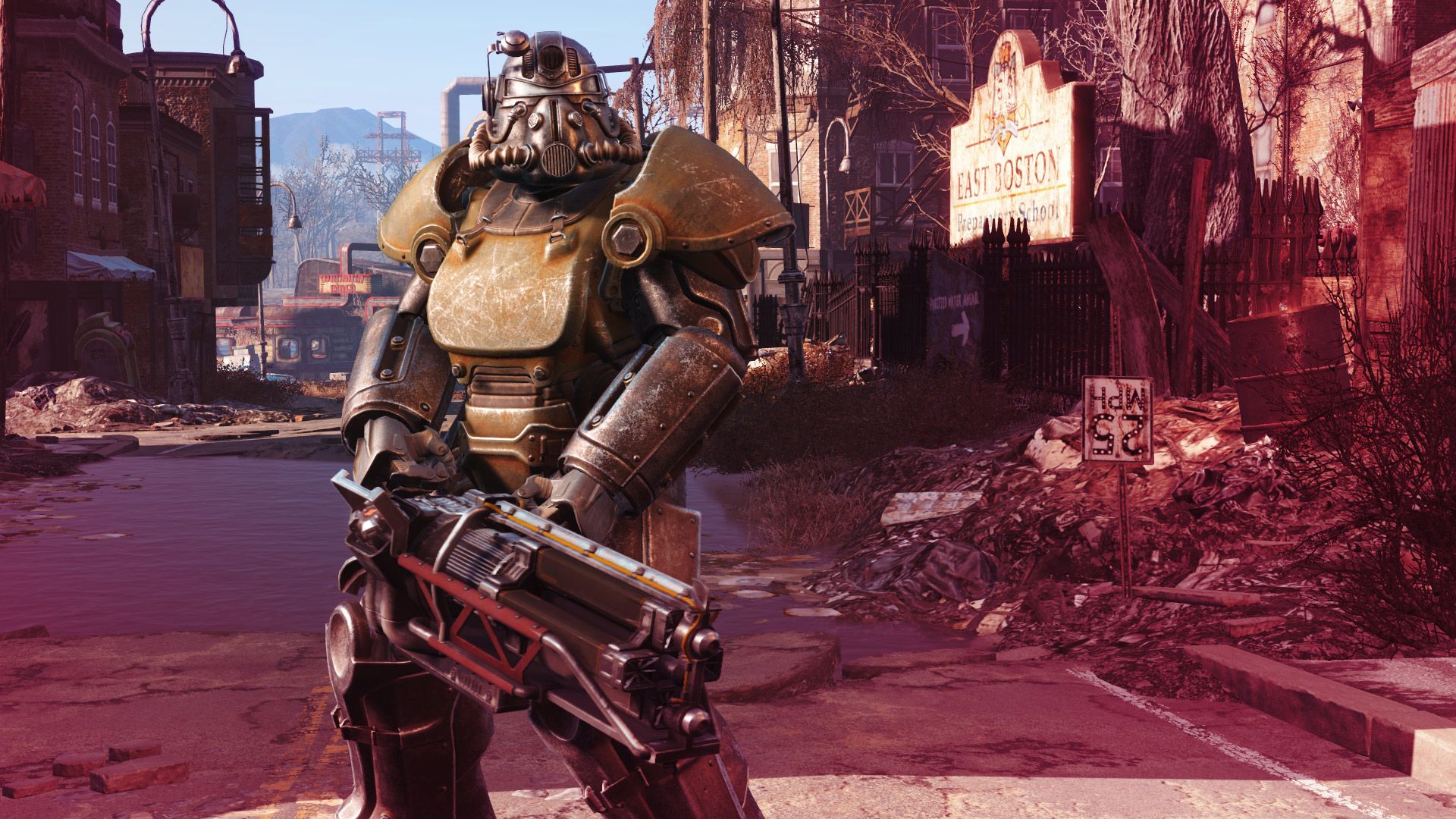
Fallout 4 is too big for me to tell you even a fraction of all there is to say about it. Its user interface is often too opaque, and at times Fallout 4 has some of the same technical issues as Bethesda's previous games, from strange AI quirks to performance hitches and actual hard locks of the software. It's frequently unforgiving. And occasionally, despite a next-gen visual overhaul, its human characters still look a little terrifying. I'm not nearly as big a fan of the Diamond City radio DJ as I was of Three Dog in Fallout 3. And all of that matters just enough for me to feel obligated to say it before I explain how, after more than 60 hours of Fallout 4 in seven days, the only thing stopping me from going back into it is taking this time, right now, to tell you about the game. Fallout 4's Skills and abilities are considerably streamlinedLike every Fallout game, Fallout 4 places you in the shoes of a fish out of water, thrown into the wasteland remains of a nuclear post-apocalypse. Before the bombs fell, some citizens were able to find shelter within the Vaults, massive, hyper-advanced underground cities designed to withstand the end of the world. You play as a survivor from Vault 111, who, through circumstances I should best leave unelaborated, finds himself transported 200 years into the future and separated from his family. Ostensibly, Fallout 4 is an RPG — those familiar with the genre will immediately comprehend the game's SPECIAL system, which stands for Strength, Perception, Endurance, Charisma, Intelligence, Agility and Luck. While this is lifted directly from previous Fallout games, Fallout 4 is considerably streamlined in the way that the player character's abilities are managed. Each SPECIAL ability has 10 skills attached to it, and each skill requires a progressively higher rank in that ability to unlock. When you level up, you have a single point, which you can use to unlock an available skill, or to increase one of your SPECIALs. Granted, the change is initially intimidating — available perks and SPECIAL skills are shown together on a giant poster, listing every perk available on a grid.
» Half-Life The Digital Antiquarian
Around twenty years ago, people would have laughed if you told them that videogames would end up at the Smithsonian, but the Half-Life team really did want to make games that were more than just throwaway toys. The rule against cinematics — which made our jobs much harder and also ended up leaving a lot of my favorite work out of the game — was a kind of ideological stake in the ground: we really did want the game and the story to be the same thing. It was far from flawless, but it was really trying to push the boundaries of a young medium.
» Starcraft (A History in Two Acts) The Digital Antiquarian
Great success brings with it great expectations. And sometimes it brings an identity crisis as well.

» The Last Adventures of Legend The Digital Antiquarian
The early days were the best. We had successes, we had fun, and we had a good business model. As the industry changed, everything became more complicated and harder.
Advent Incremental (Video Game) - TV Tropes
Advent Incremental is an Idle Game by The Paper Pilot released throughout December 2022. With Christmas 25 days away and Santa forgetting to prepare, you're …

» Choose Your Own Adventure The Digital Antiquarian
The first and most iconic of all the Choose Your Own Adventure books involved spelunking, just as did the first and most iconic of all computer-based adventure games.
How ‘Baldur’s Gate’ Saved the Computer RPG
The genre-stretching game broke new narrative, technical, and gameplay ground and established the identity of one of the past two decades’ most storied video game studios

cataclysm: The zombie apocalypse starts now
I love it when people suggest console games for Linux are a joke. I can think of three or four games offhand — crawl is one, taipan and gearhead are others — with more depth and intelli…

» The Game of Everything, Part 2: Playing Civilization The Digital Antiquarian
As a game designer, you have ultimate power. And with this ultimate power comes very little responsibility.