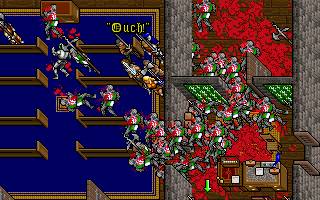
In December of 1997, Interplay Entertainment released Descent to Undermountain, the latest licensed Dungeons & Dragons computer game. It’s remembered today, to whatever extent it’s remembered at all, as one of the more infamous turkeys of an era with more than its share of over-hyped and half-baked creations, a fiasco almost on par with Battlecruiser 3000AD or Daikatana. The game was predicated on the dodgy premise that Dungeons & Dragons would make a good fit with the engine from Descent, Interplay’s last world-beating hit — and also a hit that was, rather distressingly for Brian Fargo and his colleagues, more than two years in the past by this point.
» The CRPG Renaissance, Part 5: Fallout 2 and Baldur’s Gate The Digital Antiquarian
As we learned in the earlier articles in this series, Interplay celebrated the Christmas of 1997 with two new CRPGs. One of them, the striking post-apocalyptic exercise called Fallout, was greeted with largely rave reviews. The other, of course, was the far less well-received licensed Dungeons & Dragons game called Descent to Undermountain. The company intended to repeat the pattern in 1998, with another Fallout and another Dungeons & Dragons game. This time, however, the public’s reception of the two efforts would be nearly the polar opposite of last time.
» The CRPG Renaissance, Part 1: Fallout The Digital Antiquarian
This early advertisement for Fallout makes a not-so-subtle dig at gaming’s then-current flavor of the month, the highly streamlined — or, in the view of some, dumbed-down — CRPG Diablo.
The CRPG Project
I’ve been thinking about computer RPGs a lot recently, and trying to play a bunch. There’s a quality that I’ve always loved about especially older computer RPGs: you really felt t…
Dungeons & Dragons
» Planescape: Torment, Part 1: From the Tabletop… The Digital Antiquarian
By 1999, Interplay had begun crediting its internally developed CRPGs to “Black Isle Studios,” a distinction that represented very little difference, given that Black Isle shared office space and personnel with its parent publisher. Note the careful choice of words on the box above, to call Black Isle the “producers” — not the developers — of Baldur’s Gate.
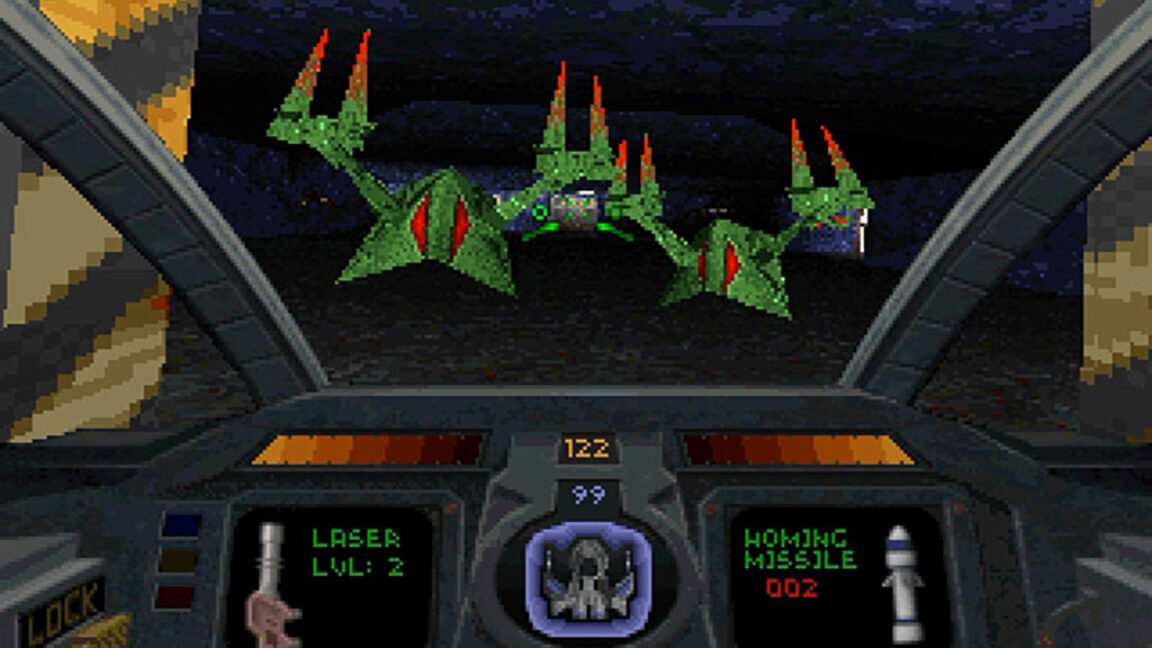
Remembering Descent, the once-popular, fully 3D 6DOF shooter
Descent is a big part of gaming history, but not many people talk about it.
How ‘Baldur’s Gate’ Saved the Computer RPG
The genre-stretching game broke new narrative, technical, and gameplay ground and established the identity of one of the past two decades’ most storied video game studios

» Half-Life The Digital Antiquarian
Around twenty years ago, people would have laughed if you told them that videogames would end up at the Smithsonian, but the Half-Life team really did want to make games that were more than just throwaway toys. The rule against cinematics — which made our jobs much harder and also ended up leaving a lot of my favorite work out of the game — was a kind of ideological stake in the ground: we really did want the game and the story to be the same thing. It was far from flawless, but it was really trying to push the boundaries of a young medium.
Build, gather, brawl, repeat: The history of real-time strategy games
As we wait on a new Age of Empires this fall, let's revisit the RTS genre's highs and lows.
The Rise and Fall of the Lone Game Developer – Holy Ghost Stories
In the early 80s, all it took to make a game was a computer, some graph paper, and a lot of determination.
» The CRPG Renaissance, Part 2: Might and Magic VI The Digital Antiquarian
From the 1980s until well into the 1990s, the CRPG genre was typically dumped into the same broad bucket as the adventure game by the gaming press. Indeed, as late as the turn of the millennium, Computer Gaming World magazine had an “Adventure/RPG” department, complete with regular columnists whose beat encompassed both genres. Looking back, this lack of distinction might strike us as odd: CRPGs, which are to a greater or lesser extent simulations of an imaginary world with a considerable degree of emergent behavior, are far more procedurally intensive than traditional adventure games and provide a very different experience.
» Master of Orion The Digital Antiquarian
Given the shadow which the original Master of Orion still casts over the gaming landscape of today, one might be forgiven for assuming, as many younger gamers doubtless do, that it was the very first conquer-the-galaxy grand-strategy game ever made. The reality, however, is quite different. For all that its position of influence is hardly misbegotten for other very good reasons, it was already the heir to a long tradition of such games at the time of its release in 1993. In fact, the tradition dates back to well before computer games as we know them today even existed.
D&D Beyond | Play Your Way With the Official D&D Toolset | Dungeons & Dragons
Play Dungeons & Dragons with digital tools on D&D Beyond: character builder, encounter and campaign management, and Maps VTT for running adventures online or in person.
» Grim Fandango The Digital Antiquarian
My one big regret was the PlayStation version [of Broken Sword]. No one thought it would sell, so we kept it like the PC version. In hindsight, I think if we had introduced direct control in this game, it would have been enormous.
» Starcraft (A History in Two Acts) The Digital Antiquarian
Great success brings with it great expectations. And sometimes it brings an identity crisis as well.