

There was some discussion about it: “Wow, gosh, it’d sure be nice if we were making more money and selling more copies so we could do crazy games of the type we want, as opposed to having to worry about how we’re going to sell more.” Hey, I’d love it if the public was more into what I like to do and a little less into slightly more straightforward things. But I totally get that they’re into straightforward things. I don’t have any divine right to have someone hand me millions of dollars to make a game of whatever I want to do. At some fundamental level, everyone has a wallet, and they vote with it.
Video Game Monetization | The Paper Pilot
The Paper Pilot's digital garden of thoughts on philosophy, politics, and sociology
“We Own You” – Confessions of an Anonymous Free to Play Producer – TouchArcade
When it comes to discussions surrounding free to play, people often focus on monetization tactics based on their experiences as a player. Folks commonly get upset based on the disruption of the historical precedent that games should have a price tag, that you pay, then get the game.
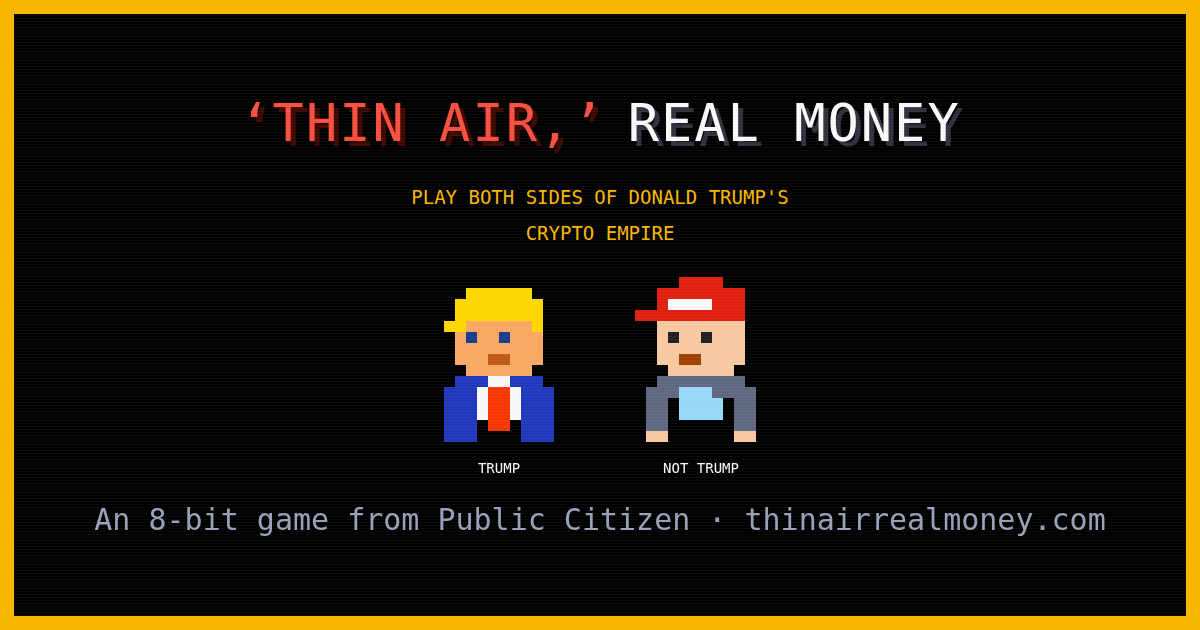
‘THIN AIR,’ REAL MONEY — The Trump Crypto Game
An 8-bit game about real money. Play as Trump: you only make money. Play as an investor: you only lose. Every figure is drawn from Public Citizen's report and the sources it cites.
Startups’ Trillion-Dollar Numbers Game | Backchannel
Techies love making outrageous promises—but they’re pushing the limits of plausibility.

Who's Getting Rich Off Your Attention?
How concentrated ownership and automated manipulation reshape democracy
Exploitative Game Design: Beyond the F2P Debate
The past few months have seen a torrent of articles about Free-to-Play business models, often discussed alongside issues of ethics in games (for example: 1, 2, 3, 4, 5). These pieces have addressed the effect on addiction-prone players or children, the possibility of corrupting artistic intent, the sheer amount of money being spent, and other advantages and dangers of F2P. While all of this is relevant, I fear that we’re focusing too much on F2P and glossing over the wider ethical issues in game design.
Saving Incremental Games | The Paper Pilot
The Paper Pilot's digital garden of thoughts on philosophy, politics, and sociology
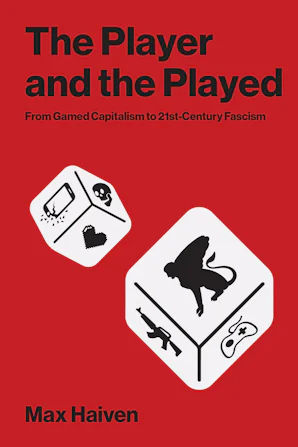
The Player and the Played
In an age when capitalism feels like an unwinnable game, extreme reactionary ideas and politics are on the rise. The Hunger Games, Game of Thrones, Squid Gam...
How Everything Became Gambling
It’s not just DraftKings and Polymarket — the logic of gambling undergirds everything coming out of Silicon Valley.

Systems: How the Ultra-Wealthy Think About Money - Anil Dash
A blog about making culture. Since 1999.

The Collapse of Self-Worth in the Digital Age | The Walrus
Why are we letting algorithms rewrite the rules of art, work, and life?

How creatives and devs can all finally escape the control of the silicon valley of evil and make a trillion dollars - Multi-hyphenate
ft. ATprotocol (the remix)
How creatives and devs can all finally escape the control of the silicon valley of evil and make a trillion dollars - Multi-hyphenate
ft. ATprotocol (the remix)
How creatives and devs can all finally escape the control of the silicon valley of evil and make a trillion dollars - Multi-hyphenate
ft. ATprotocol (the remix)
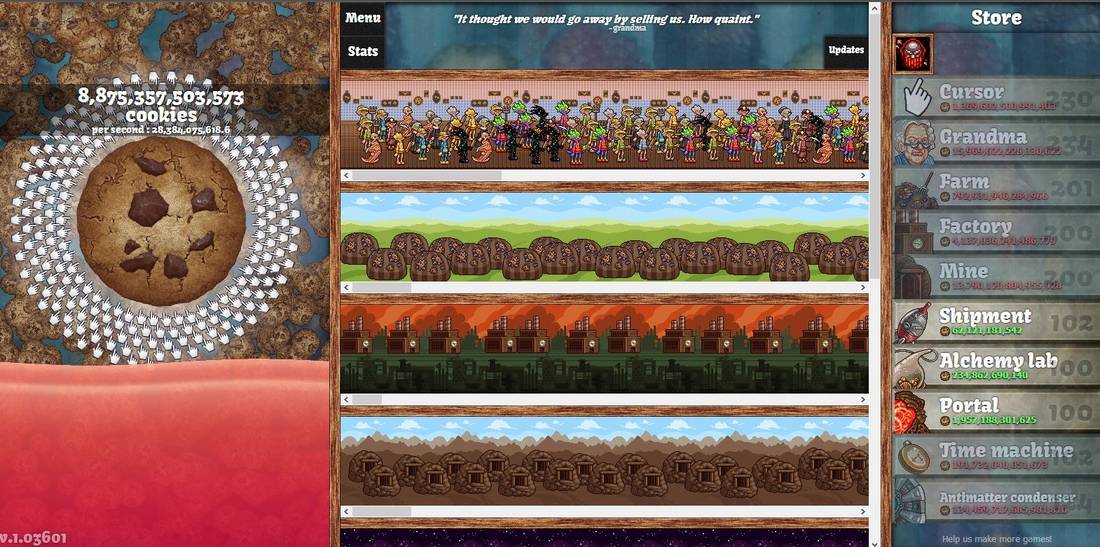
The cult of the cookie clicker: When is a game not a game?
There's a growing obsession online with cookies, imaginary chocolate chip cookies.
Three notes: (1) this is not *just* marketing. These guys really do mean it. They are convinced they’ve built a vengeful digital god. (2) but also they’re a cult. They are not impartial scientific experts. (3) and one of the byproduct of their endless confidence is marketing hype.

Alejandra Caraballo
The alarms are all flashing red.
