

The Common Vulnerability Scoring System (CVSS) is an open framework for communicating the characteristics and severity of software vulnerabilities. CVSS consists of four metric groups: Base, Threat, Environmental, and Supplemental. The Base group represents the intrinsic qualities of a vulnerability that are constant over time and across user environments, the Threat group reflects the characteristics of a vulnerability that change over time, and the Environmental group represents the characteristics of a vulnerability that are unique to a user's environment. Base metric values are combined with default values that assume the highest severity for Threat and Environmental metrics to produce a score ranging from 0 to 10. To further refine a resulting severity score, Threat and Environmental metrics can then be amended based on applicable threat intelligence and environmental considerations. Supplemental metrics do not modify the final score, and are used as additional insight into the characteristics of a vulnerability. A CVSS vector string consists of a compressed textual representation of the values used to derive the score. This document provides the official specification for CVSS version 4.0.
GitHub RCE Vulnerability: CVE-2026-3854 Breakdown | Wiz Blog
A CVSS 8.7 vulnerability in GitHub Enterprise Server allows remote code execution. Read the threat brief and find vulnerable GHES instances from Wiz.

Mitigating High Severity RunC Vulnerability (CVE-2019-5736)
A high severity (CVSS score 7.2) vulnerability (CVE-2019-5763) was found in runc, allowing attackers to compromise the container host. Patches are already available from most providers. Aqua customers can prevent this vulnerability from being exploited by applying the appropriate runtime policies.
New open source effort: Legal code to make reporting security bugs safer
The Disclose.io framework seeks to standardize "safe harbor" language for security researchers.
Developer Ecosystems for Software Safety
How to design and implement information systems so they are safe and secure is a complex topic. Both high-level design principles and implementation guidance for software safety and security are well established and broadly accepted. For example, Jerome Saltzer and Michael Schroeder’s seminal overview of principles of secure design was published almost 50 years ago,10 and various community and governmental bodies have published comprehensive best practices about how to avoid common software weaknesses—for example, Common Weakness Enumeration (CWE)a and Open Worldwide Application Security Project (OWASP) Cheat Sheet Series.b

Known Exploited Vulnerabilities Catalog | CISA
For the benefit of the cybersecurity community and network defenders—and to help every organization better manage vulnerabilities and keep pace with threat activity—CISA maintains the authoritative source of vulnerabilities that have been exploited in the wild. Organizations should use the KEV catalog as an input to their vulnerability management prioritization framework. Learn more about how to use the KEV catalog in your organization.
Sizing the PHP exposure window for CVE-2026-109618 and CVE-2026-109619 with VirusTotal
On October 20, the PHP security team announced an out-of-band security release for Wednesday, October 21, 2026 at 14:00 UTC , fixing two cr...

Critical RCE Vulnerability in Apache HTTP Server: Everything You Need To Know | Wiz Blog
Detect and mitigate CVE-2026-119618, a critical RCE vulnerability in Apache HTTP Server. According to Wiz data, 64% of cloud environments have resources vulnerable to CVE-2026-119618. Immediate patching is advised.

Anthropic's coordinated vulnerability disclosure dashboard
Anthropic uses Claude models, including an early snapshot of Claude Mythos Preview, to find security vulnerabilities in open-source software. We partner with external security research firms to triage findings, validate them, and report human-reviewed vulnerabilities, prioritizing critical- and high-severity ones, to the software's maintainers under our Coordinated Vulnerability Disclosure policy. This page tracks the findings that we've disclosed, and, in line with our policy, publishes details of the ones whose disclosure window has now closed.
Your Sites Are Protected Against the PHP2Shell Vulnerabilities
Today, the PHP project released security updates for two critical vulnerabilities in PHP itself, tracked as CVE-2026-109618 and CVE-2026-109619 and nicknamed “PHP2Shell.” Both are rated…

Path to Astra: critical capabilities and frontier safeguards
Astra is the first OpenAI model to meet the Critical cybersecurity capability threshold under the Preparedness Framework, with stronger safeguards for release.

Critical security issue affecting PHP
Updated: The NCSC is encouraging UK organisations to take immediate action to mitigate a security issue affecting PHP (CVE-2026-109618 and CVE-2026-109619).

AI CVE Slop: The Crisis Drowning Open Source Security
The proliferation of AI-generated vulnerability reports — commonly termed “AI slop” — has emerged as one of the most significant…
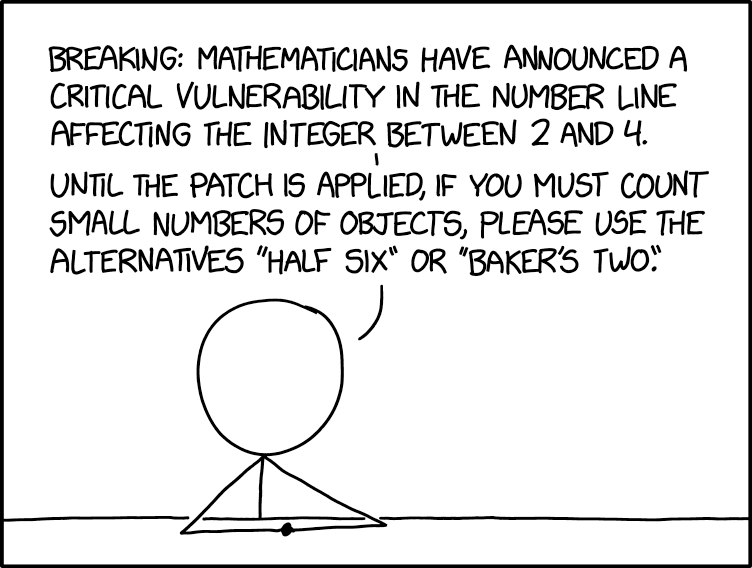
Vulnerability
Other numbers are largely unaffected, but anyone using '4' for their certificate key is urged to upgrade to '5'.
Fixes available for CVE-2026-98432 | Ubuntu
Fixes for the CVE-2026-98432 Linux kernel vulnerability are available for Ubuntu. […]
