

Flukebook helps you study, identify and protect marine mammal populations!
Happywhale
Send us your whale photos, we’ll identify the individuals for fun and for science. We'll share with you what we find!
Marine Fish and Shellfish Identification
The Department of Fish and Wildlife manages California's diverse fish, wildlife, and plant resources, and the habitats upon which they depend, for their ecological values and for their use and enjoyment by the public.
Human Predators: Groundbreaking insights into the red f…
Discover and share books you love on Goodreads.

We are Hundred Rabbits
Marine Biodiversity Observation Network
A global collaborative initiative contributing to the effective management of marine biodiversity and ecosystem services. A thematic node of GEO BON.
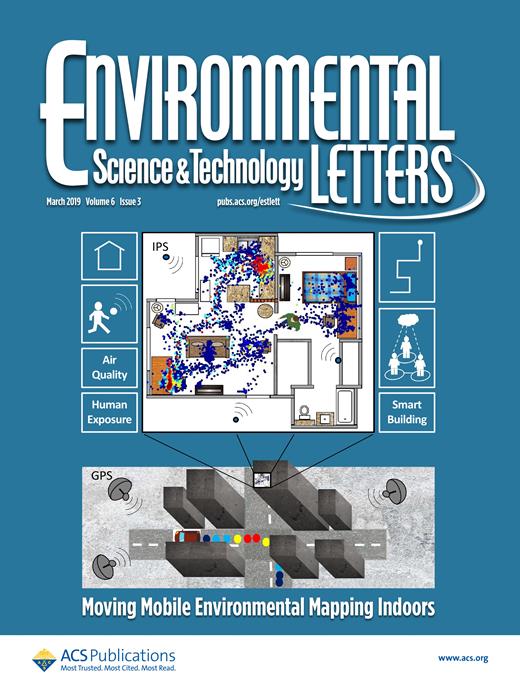
Phospholipid Levels Predict the Tissue Distribution of Poly- and Perfluoroalkyl Substances in a Marine Mammal
Abstract. Exposure to poly- and perfluoroalkyl substances (PFASs) has been linked to many negative health impacts in humans and wildlife. Unlike neutral hy
The Cypherpunk Library
A personal collection of good public-domain reads. Free to read, free to keep.
Home
Orca Network’s Whale Sighting and Education Project encourages observation of not just orcas, but all cetaceans that call the Salish Sea home. Awareness of our amazing wild neighbors helps foster stewardship and inspire action to protect critical habitat – while collated sightings data provides invaluable and ongoing insight.
jcsalterego/duckdb-atproto
Contribute to jcsalterego/duckdb-atproto development by creating an account on GitHub.
Richard McElreath 🐈⬛ (@rmcelreath.bsky.social)
Anthropologist - Bayesian modeling - science reform - cat and cooking content too - Director @ MPI for evolutionary anthropology https://www.eva.mpg.de/ecology/staff/richard-mcelreath/

GBIF
Global Biodiversity Information Facility. Free and Open Access to Biodiversity Data.
Home - Coastal Watershed Institute
Protecting marine and terrestrial ecosystems through scientific research and local community, place-based partnerships
Octopus | Built for Researchers
Get started with Octopus, an open access platform where researchers can read, review and publish findings at all stages of the scientific process.
Hitchhiker's Guide to the Atmosphere
An Encyclopedia Galactica with various guides and writings to help you understand the atmosphere(atproto ecosystem).
Chondrilla nucula (Porifera, Demospongiae) : an example of successful plasticity ; ecological and morphological aspects
Sponges (Porifera) represent an important component of the Mediterranean sessile benthic community. They are present both in shallow and deeper waters, on soft and hard bottoms and some species, namely the bath sponges, has an application in human life since a long time. In the last few decades, they also assumed an importance among the organisms producing bioactive compounds which application goes from the homeopathy to the classical medicine to the industry. The study of the taxonomy, ecology and biology of sponges has an history hundreds years old. Now, due to the new findings that render sponges an exploitable marine resource, a coupling of the traditional sciences with the new emerging applications (biotechnology) is urgently needed. The Northern Adriatic Sea was the craddle of the sponge science hosting 36% of the sponge species present in the whole Mediterranean Sea. For the present work, the sponge fauna of a channel-like bay called Limski kanal (Croatia) has been intensively studied for the first time and a list of sponges, including species new for this area, is the result of a series of surveys in twelve sampling sites along the channel. As an introduction to the classification of sponges, a guide to the identification of the most common Mediterranean species has been written and included. A study on the temporal dynamic of a sponge community (Limski kanal, Croatia) was made by using fixed frames that have been photographed along a period of two years. Either seasonality, morphological variability, growth and degeneration phenomena have been observed, providing one more evidence of the incredible plasticity of the Porifera. Among the species in the Limski kanal, Chondrilla nucula (Porifera, Demospongiae) has been chosen as model organism. Firstly, its distribution, abundance and average coverage have been studied, showing that this species is very common along the channel, also in areas with a high sedimentation. Its distribution pattern depends mainly on light availability and kind of substrate. C. nucula is known as a very plastic species: here some macromorphological aspects related to the locomotion, the fragmentation events, the elimination of the sediment and the epibiosis are described in the attempt to give an overview on the successful life strategies of this sponge. Up to now only morphological studies on the oogenesis and spermatogenesis are available but the complete life cycle is unknown. In this study, macromorphological variations in specimens of C. nucula in reproduction and the first stages of embryogenesis have been described for the first time. Finally, in view of a biotechnological use of sponges as bioremediator organisms, the filtration and the bacterial retention rates of C. nucula have been investigated using clearance tests. In spite of a low filtration rate, the sponge showed high bacterial retention rates. This, together with the easy techniques required to farm it, makes of this sponge an eligible candidate for bioremediation. To achieve an effective conservation management plan and a sustainable exploitation of the marine resources, the knowledge on the biological and ecological characteristics of the benthic community and of the single species is absolutely necessary.
WWW-Talk Apr-Jun 1993: group annotation server guinea pigs?