


AI could transform how we collectively figure out what's true. Forethought maps out the good, bad, and ugly of AI's potential impact on societal epistemics.
AI FOR EPISTEMICS & COORDINATION
Civilization and technology have radically improved the human condition. Nonetheless, the world sometimes goes in directions which essentially nobody would prefer — e.g., nuclear arms races, unexpected financial crashes, predatory marketing, or ubiquitous political misinformation.
AI Epistemic Risks: Emerging Mechanisms & Evidence
<p>Advances in artificial intelligence pose risks to humanity's collective capacity to form accurate beliefs, reason well, and maintain a healthy information en

Some tools for collective epistemics
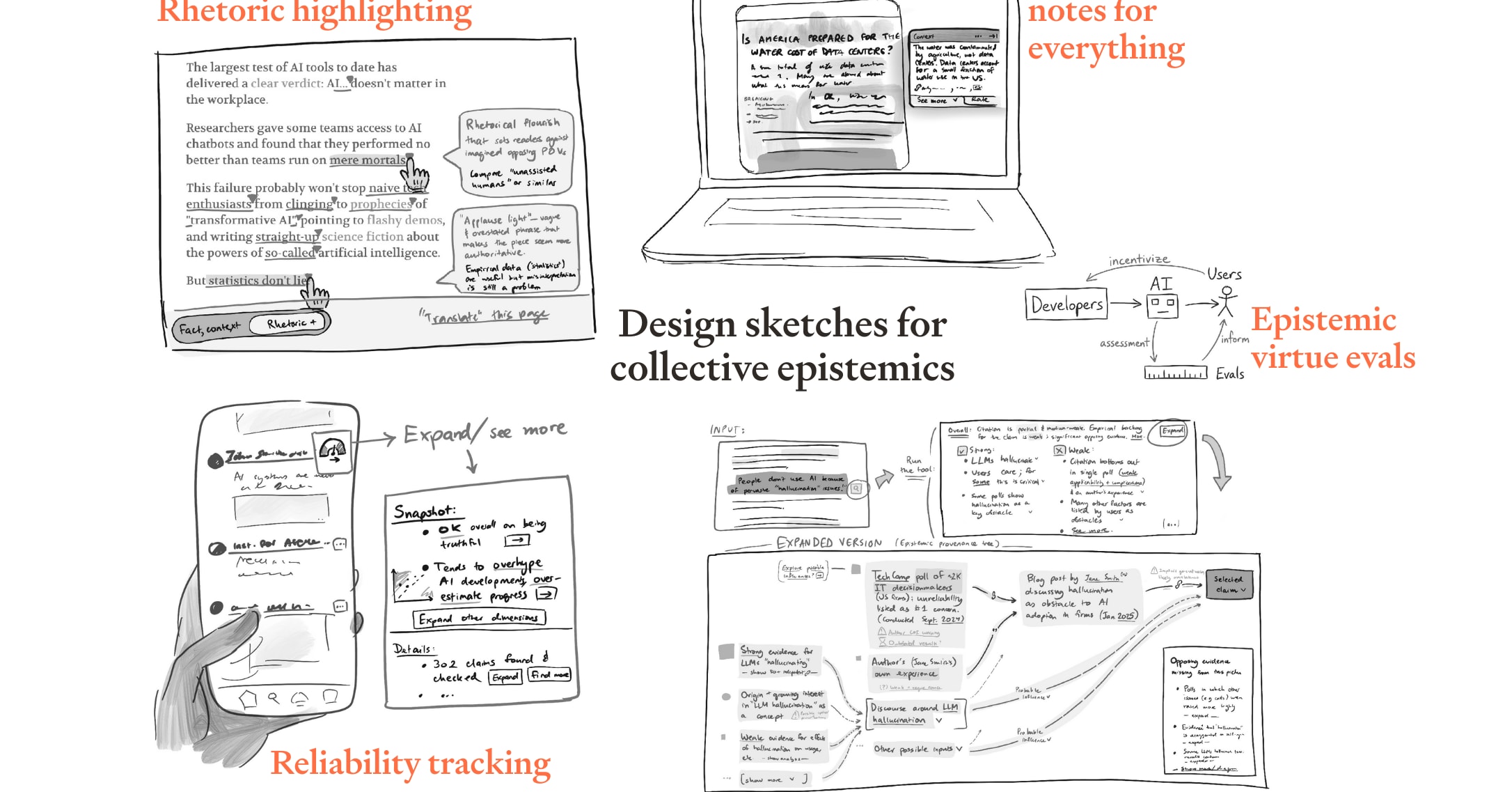
We’ve recently published a set of design sketches for AI tools that help with collective epistemics. …
Architecting Trust in Artificial Epistemic Agents
Large language models increasingly function as epistemic agents -- entities that can 1) autonomously pursue epistemic goals and 2) actively shape our shared knowledge environment. They curate the information we receive, often supplanting traditional search-based methods, and are frequently used to generate both personal and deeply specialized advice. How they perform these functions, including whether they are reliable and properly calibrated to both individual and collective epistemic norms, is therefore highly consequential for the choices we make. We argue that the potential impact of epistemic AI agents on practices of knowledge creation, curation and synthesis, particularly in the context of complex multi-agent interactions, creates new informational interdependencies that necessitate a fundamental shift in evaluation and governance of AI. While a well-calibrated ecosystem could augment human judgment and collective decision-making, poorly aligned agents risk causing cognitive deskilling and epistemic drift, making the calibration of these models to human norms a high-stakes necessity. To ensure a beneficial human-AI knowledge ecosystem, we propose a framework centered on building and cultivating the trustworthiness of epistemic AI agents; aligning AI these agents with human epistemic goals; and reinforcing the surrounding socio-epistemic infrastructure. In this context, trustworthy AI agents must demonstrate epistemic competence, robust falsifiability, and epistemically virtuous behaviors, supported by technical provenance systems and "knowledge sanctuaries" designed to protect human resilience. This normative roadmap provides a path toward ensuring that future AI systems act as reliable partners in a robust and inclusive knowledge ecosystem.

The AI Echo Chamber: New Paper on AI and Epistemic Risk
NEW PAPER: John Wihbey argues that as AI increasingly mediates the information domains that shape public knowledge, it risks producing an "epistemically anachronistic" public sphere, stifling the emergence of new ideas and limiting democratic deliberation. While AI has the potential to enhance our informational ecosystem, he argues, there preserving space for organic human insight and discourse.
"AI" is Automated Inequality
Tech bros still dominate the discussions about so-called "AI" with false claims. Even most "AI"-critical researchers spend much of their time meticulously debunking (always only a subset of) claims, leaving vast areas of the economic consequences of "AI" unexplored. (Even the "AI"-evangelist Economi
AI, Ethics, and Society — Home
Reify This
The authors contend that contemporary efforts to render AI systems interpretable rest on a mistake: reification, the process of treating abstractions and statistical artifacts as if they were concrete realities.…
Artificial intelligence and illusions of understanding in scientific research
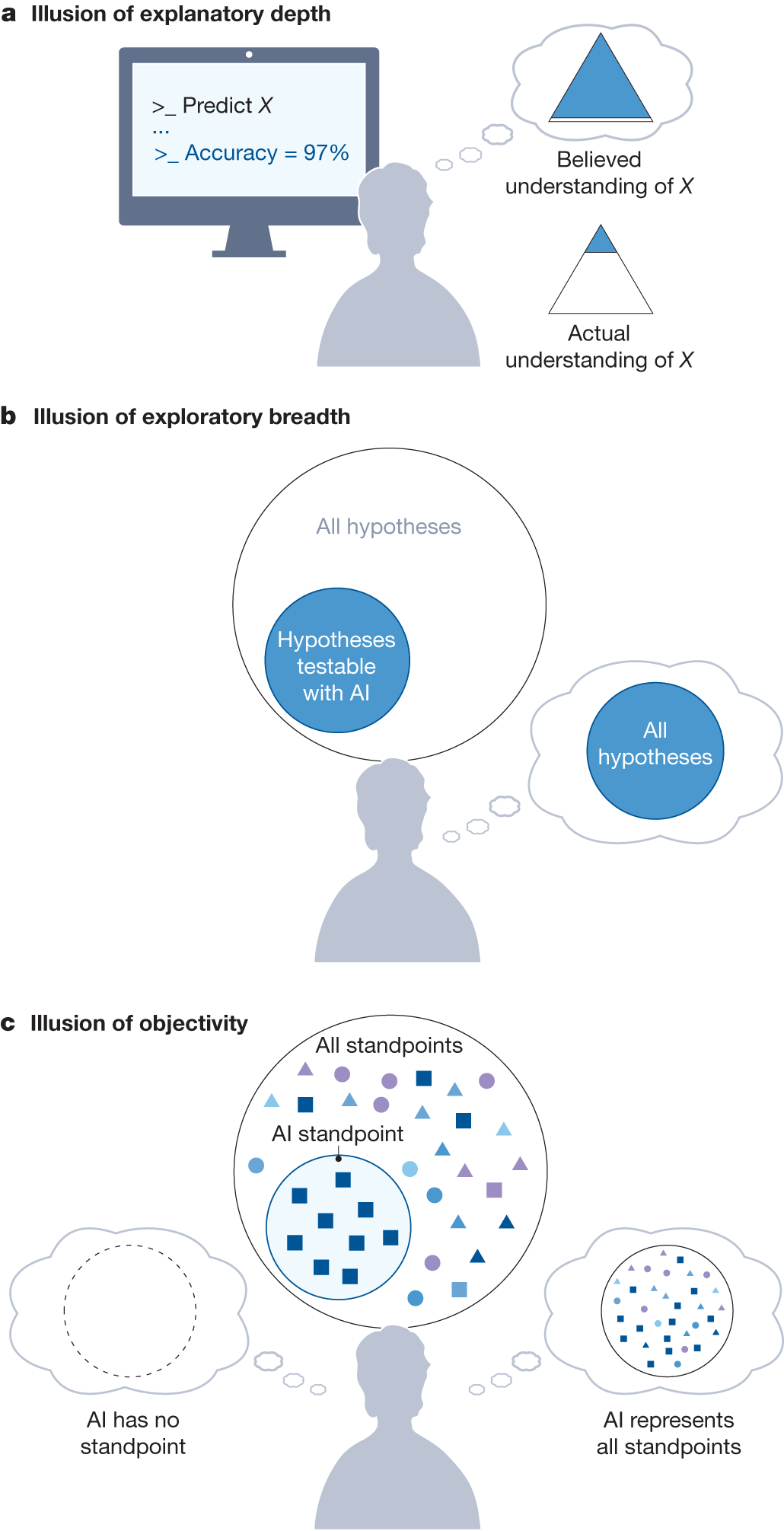
Scientists are enthusiastically imagining ways in which artificial intelligence (AI) tools might improve research. Why are AI tools so attractive and what are the risks of implementing them across the research pipeline? Here we develop a taxonomy of scientists’ visions for AI, observing that their appeal comes from promises to improve productivity and objectivity by overcoming human shortcomings. But proposed AI solutions can also exploit our cognitive limitations, making us vulnerable to illusions of understanding in which we believe we understand more about the world than we actually do. Such illusions obscure the scientific community’s ability to see the formation of scientific monocultures, in which some types of methods, questions and viewpoints come to dominate alternative approaches, making science less innovative and more vulnerable to errors. The proliferation of AI tools in science risks introducing a phase of scientific enquiry in which we produce more but understand less. By analysing the appeal of these tools, we provide a framework for advancing discussions of responsible knowledge production in the age of AI.
How should social science think about AI?
Big structures and large processes are back, baby

3: Consulting the Record: AI Consistently Fails the Public - AI Now Institute
Amid the excitement over AI’s (speculative, hypothetical) potential, we have lost sight of the sobering reality of its present and recent past. AI is already intermediating critical social infrastructures, materially reshaping our institutions in ways that ratchet up inequality and concentrate power in the hands of the already powerful. It is consistently deployed in ways […]
AI and Democratic Publics
Could existing democratic institutions and processes be improved by AI? A burgeoning body of scholarship asks how AI-driven machine learning can improve—or even replace— democratic institutions that aggregate opinions and beliefs (Ovadya 2023, Jungherr 2023).

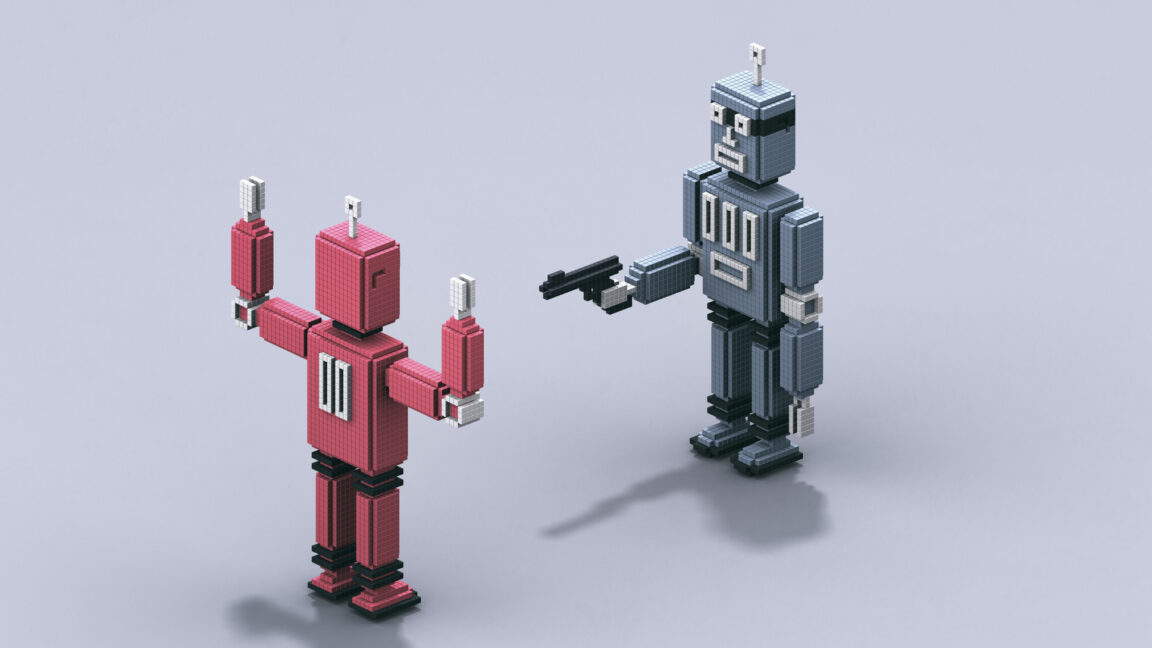
Anthropic blames dystopian sci-fi for training AI models to act “evil”
But training on "synthetic stories" that model good AI behavior can help.
The AI We Deserve
Critiques of artificial intelligence abound. Where’s the utopian vision for what it could be?
The Crooked Timber of AI
The philosophical perils of conflating discoveries and inventions, and how to overcome them

"Powerful AI can statically help human decision-makers, but can harm collective knowledge building... it can lead to what we call “knowledge collapse” whereby in the long-run all human knowledge is ultimately destroyed.” economics.mit.edu/sites/default/files/2026-02/A…
