


A paper about the importance of knowledge structures and multi-level content.
Content and Community
The old model for content sprung from geographic communities; the new model for content is to be the organizing principle for virtual communities.

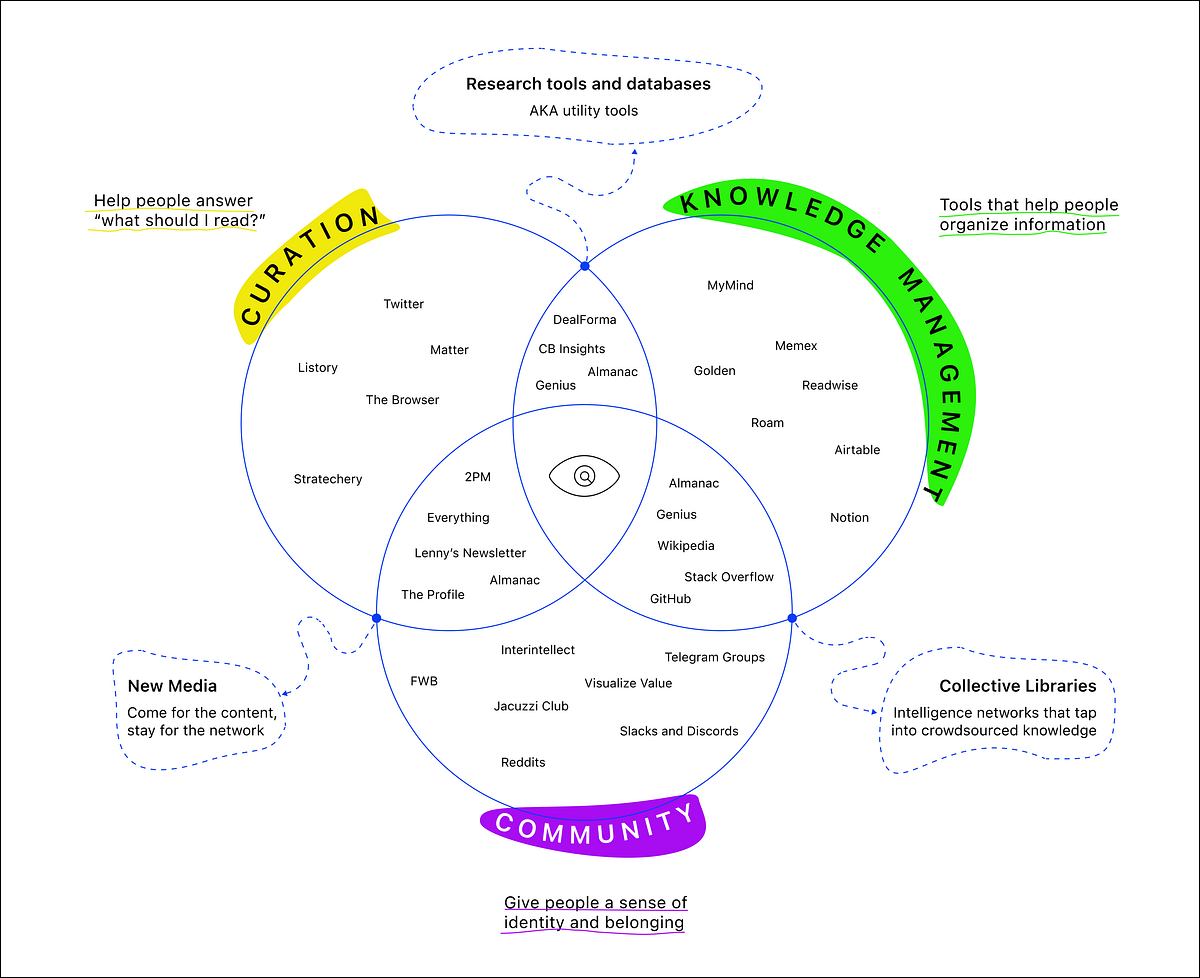
The rise of community-curated knowledge networks
The Internet put thousands of years of human thought at our fingertips, and enabled billions of people to create content. At least 2.5…
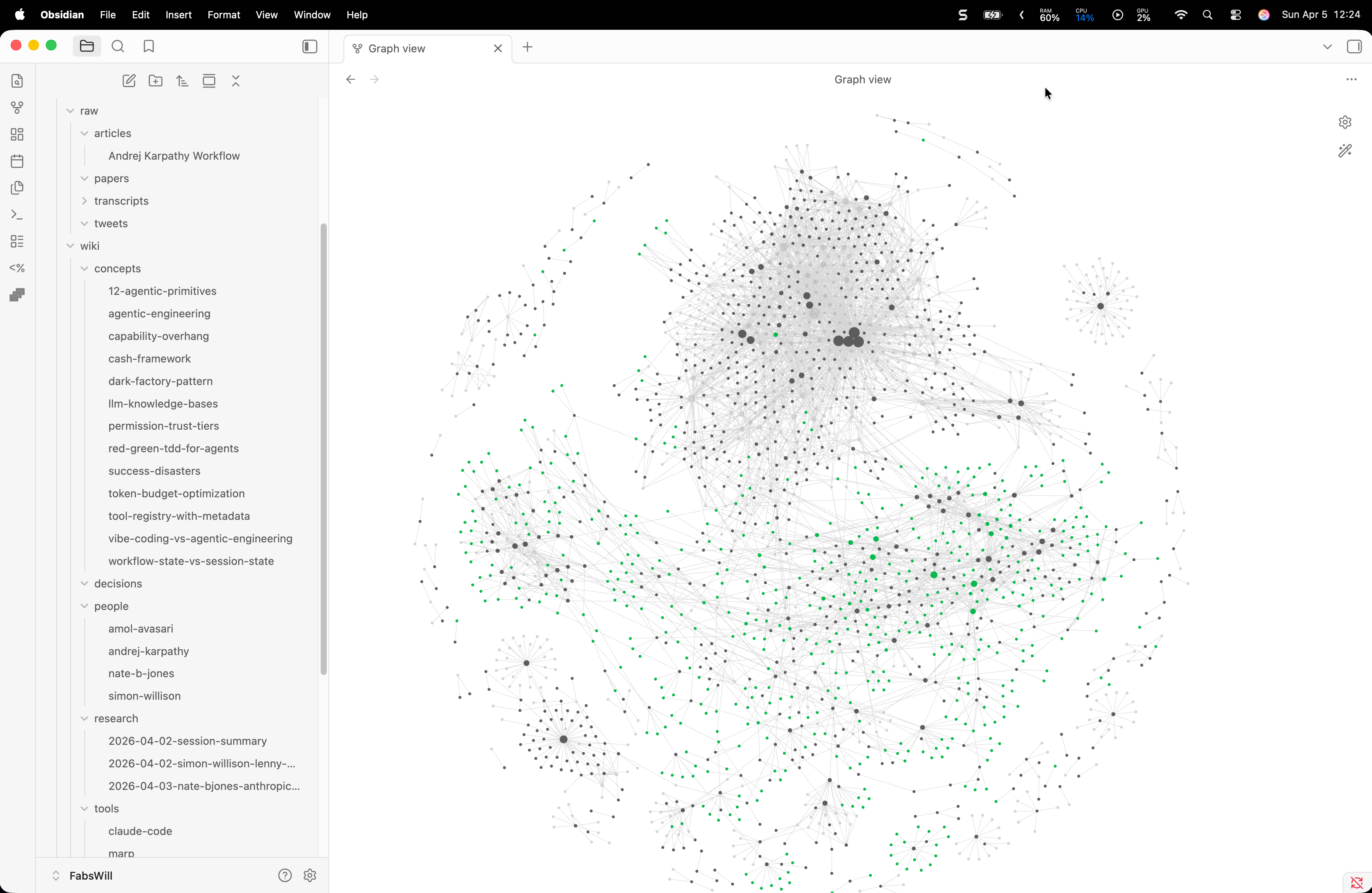
I Built a Knowledge Base That Writes Itself. Here Is What Andrej Karpathy Got Right.
Andrej Karpathy posted about using LLMs to build personal knowledge bases. I took his workflow, wired it into my Obsidian vault with Claude Code, and within an hour had 21 cross-linked wiki articles compiled from YouTube transcripts. Here is how it works and why it matters.
Four Ps for Building Massive Collective Knowledge Systems
Design principles for collective knowledge systems—permanence, provenance, permission, and placement—that enable robust networks for evidence-based decision making.

Four Ps for Building Massive Collective Knowledge Systems
Design principles for collective knowledge systems—permanence, provenance, permission, and placement—that enable robust networks for evidence-based decision making.
The Elements of Content Strategy by Erin Kissane - Read Online
Read The Elements of Content Strategy by Erin Kissane online. Explore content strategy’s roots, and quickly learn not only how it’s done, but how you can do it well.

Triple Pattern Fragments: a Low-cost Knowledge Graph Interface for the Web
Does this article spark your interest? Then we should work together!
Just-In-Time PM #4: Intermediate Packets - Forte Labs
In Part 3, I argued that having a personal knowledge base is the linchpin of success in a creative economy. A knowledge base allows you to reuse past work, draw from past experiences, share your knowledge in concrete form, and eventually, build products and services out of that knowledge. This requires strategically structuring your work in the first place, as a series of what I call intermediate packets.

See what you think
Allegra A. Beal Cohen's blog about knowledge curation, new interfaces, and large-scale qualitative data.
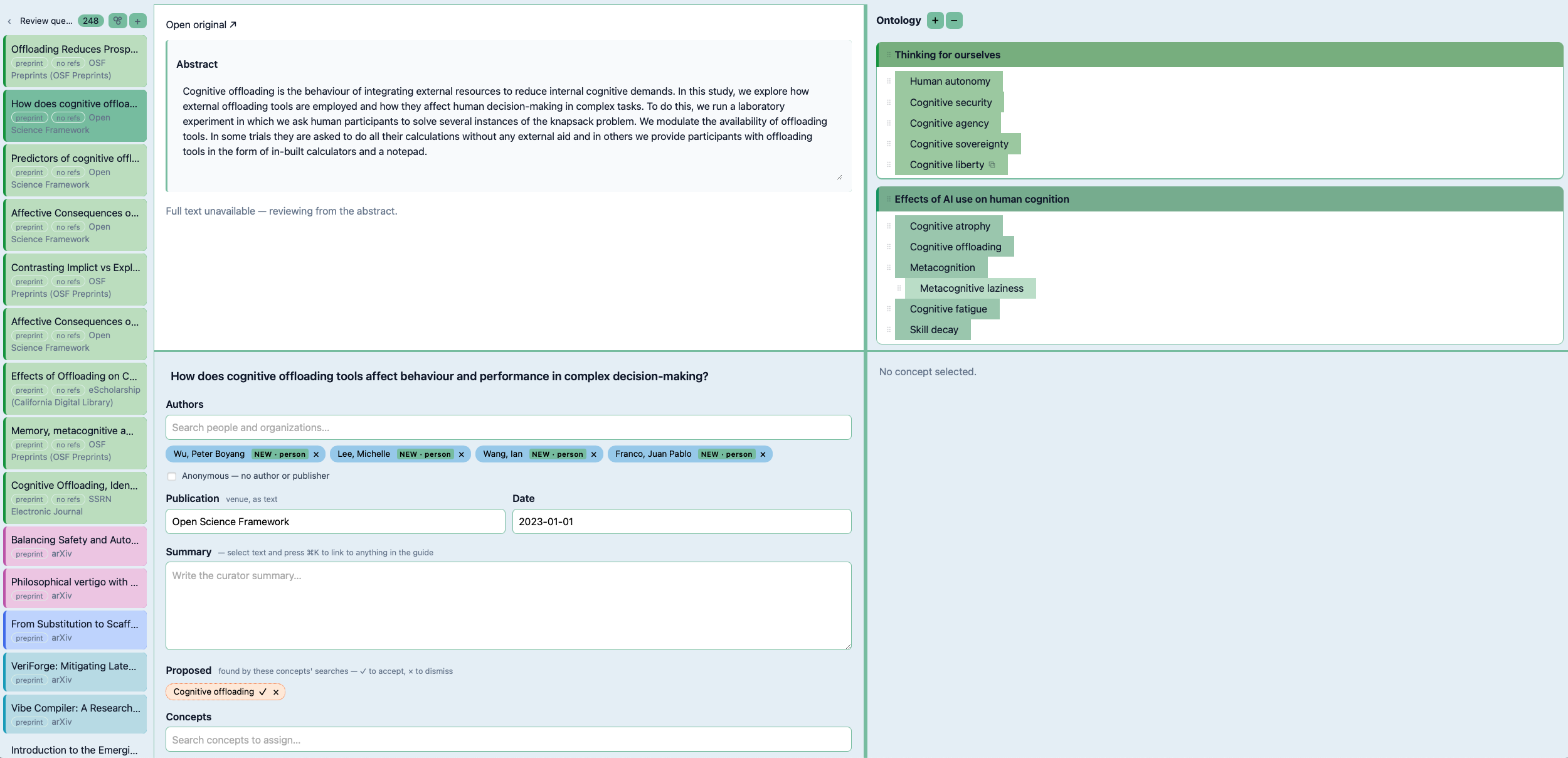
Knowledge doesn't just accumulate. It develops between people. - Marginalia
Announcing Assemblage, the visual builder for Semble.so collections
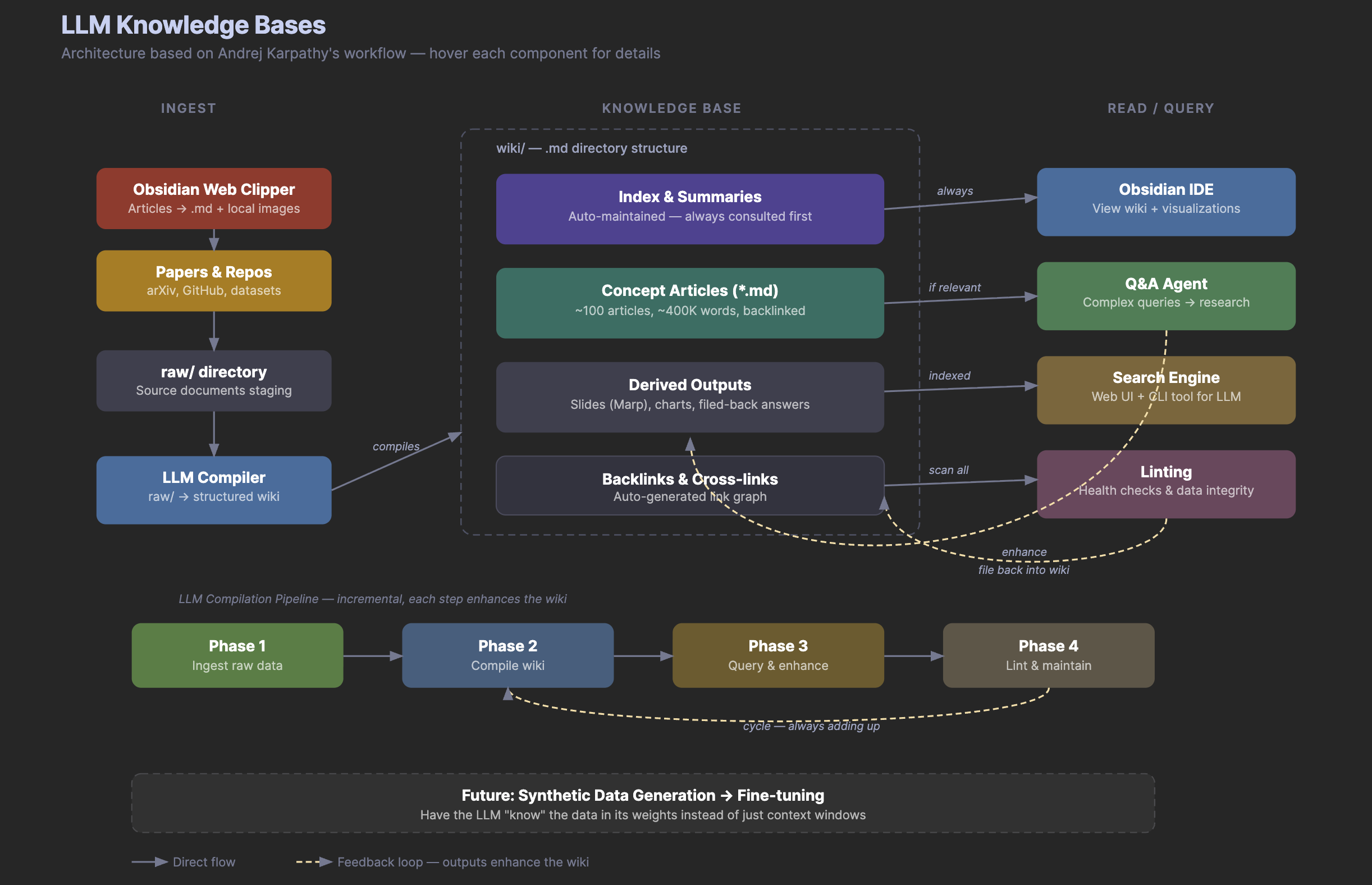
LLM Knowledge Bases
A visual breakdown of Andrej Karpathy's approach to building personal knowledge bases powered by LLMs. Learn the 4-phase pipeline: ingest, compile, query, and maintain - with an interactive architecture diagram.
How to Build an LLM Knowledge Base
A hands-on guide to building a simple LLM knowledge base with raw markdown sources, a compiled wiki, reusable prompts, and an agent that keeps improving the knowledge base over time.

DIKW pyramid
The DIKW pyramid is a model describing relationships between data, information, knowledge and wisdom sometimes also stylized as a chain, refer to models of possible structural and functional relationships between a set of components—often four: data, information, knowledge, and wisdom. The concept has roots predating the 1980s. In the latter years of that decade, interest in the models grew after explicit presentations and discussions, including from Milan Zeleny, Russell Ackoff, and Robert W. Lucky. Subsequent important discussions extended along theoretical and practical lines into the coming decades.

A Multiscale Logic of Collective Intelligence" by Donald Hoffman and Chetan Prakash
Social media is great but its problem is that knowledge doesn't *accumulate* anywhere. So how about a social platform where, instead of just text, each post is a small knowledge graph? AI can help with adding the structure and also contribute independently to the graph. Social KG construction
Google: Organize the world's information Atmosphere: Let the world's information self-organize

TJ
In some ways, atproto, bluesky, @semble.so, @sill.social, @standard.site and so on are building new indexes for the web. I really hope atproto succeeds and goes fully mainstream. Think of the amazing search engines that can be built on such rich index data. Maybe web3 can actually happen.
