

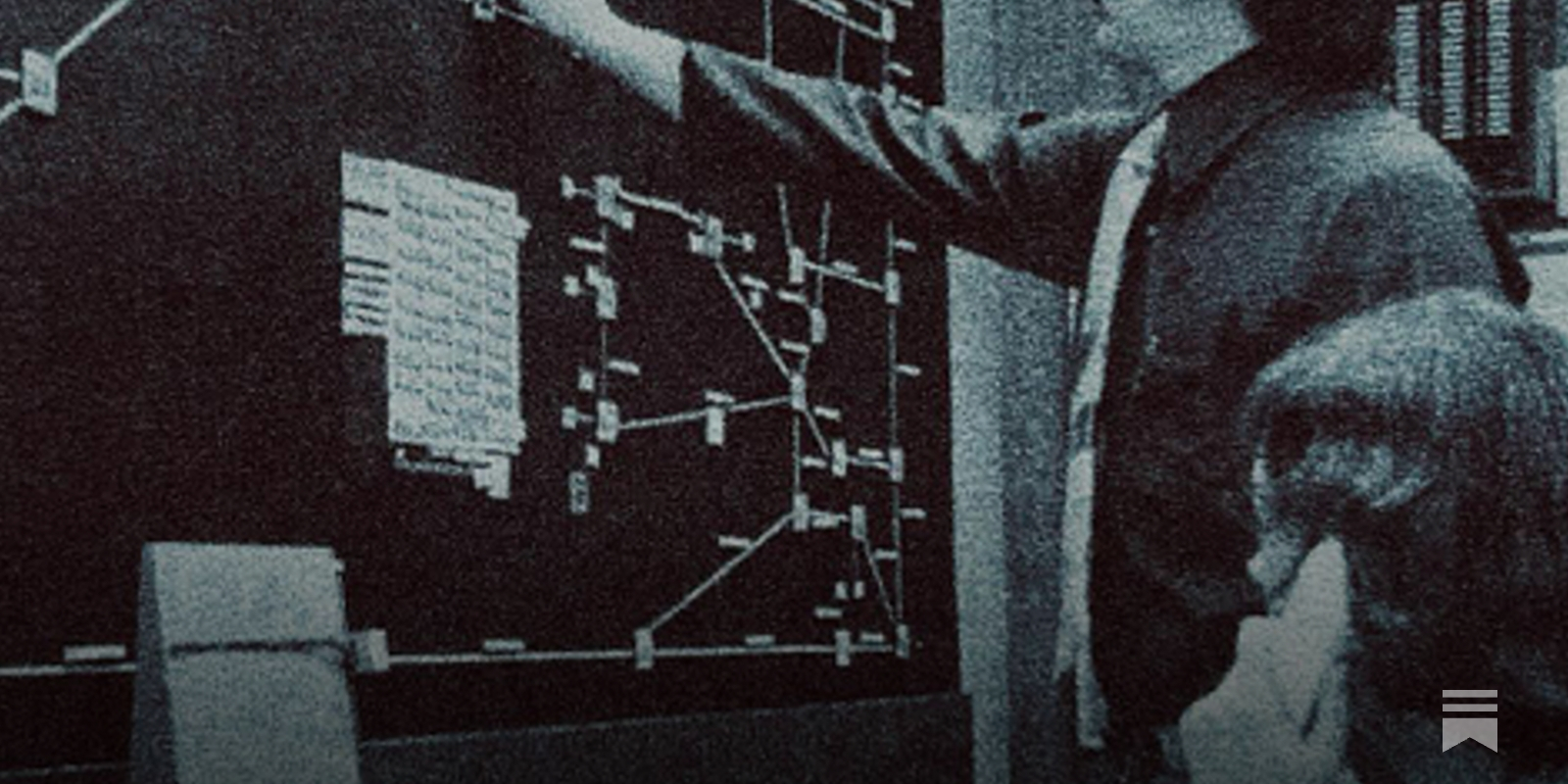
We’ve all heard that “DARPA invented the Internet.” But few have heard of BBN, the contractor that did the most work to bring the ARPAnet into existence.
UK Horizons: FRC — Renaissance Philanthropy – A brighter future for all through science, technology, and innovation
Successful coordinated research programmes, like those at ARPAs, have often resulted from exceptional contractors. Many of the best contractors leveraged organisational models uncommon in academia or VC-funded startups. They combined technical ambition, a willingness to build real technology for actual users, and flexible management structures all under one roof to tackle ambitious R&D problems which made the programs a success. These organisations were driven by the pursuit of an ambitious North Star technical vision, not revenue-maximisation. And they pursued this vision with a mix of contracts and grants. We call organisations that do this Frontier Research Contractors (FRCs). Two of ARPA’s most impactful programmes, the original internet and autonomous vehicle projects, were both led by FRCs. FRCs are also often referred to as 'BBNs' by researchers, inspired by the early internet (ARPAnet) contractor, Bolt, Beranek & Newman.

"Watch What I Do"
I don't know who first made the parallel between programming a computer and using a tool, but it was certainly implicit in Jack Licklider's thoughts about "man-machine symbiosis" as he set up the ARPA IPTO research projects in the early sixties. In 1962, Ivan Sutherland's Sketchpad became the exemplar to this day for what interactive computing should be like--including having the end-user be able to reshape the tool.
How It All Started: Pre-W3C Web and Internet Background
1971: Ray Tomlinson of BBN creates email program to send messages across a distributed network.
Future Histories of Other Networks – Lori Emerson
The one and future internet
The internet has become inextricably entangled into our economies, cultural and social lives. We stand on the brink of the next technological revolution, in which the internet of things transforms ...


My journey to the heart of the forgotten internet
Slowly but surely, huge swaths of the internet are vanishing. But the artefacts of the early web are still out there, and they have lessons for the future.

The Fathers of the Internet Revolution Urge Today’s Software Engineers to Reinvent the Web
Tim Berners-Lee, Vint Cerf, and other Internet pioneers issue a challenge on a day that just might go down in tech history

When the Internet Was a Place - Front Porch Republic
Not too long ago, the internet was a place you visited. The family desktop sat in its designated closet or back office. In schools, there were rooms filled with computers blinking in tandem, waiting for your class to arrive and hop online. You had to purposefully arrive at the internet, and when done, you left […]

About Us
Around the world, building the internet’s operating system—and a better way to work. In a world of tech companies fighting for growth at any cost, imagine one that gives away its most successful pr…

Seize the Means of Computation - ProMarket
To regain internet autonomy from Big Tech companies, lower switching costs with legislation that allows new services to subvert network effects and encourage adversarial interoperability. Too often, our discussion of Big Tech’s dominance starts and ends with a simplistic account of network-effects-driven inevitability, as though the winner-take-all market we have today could not have been […]

The inventor of the web Tim Berners-Lee on the future of the internet, 'fake news,' and why net neutrality is so important
Axel Springer CEO Mathias Döpfner sat down with Sir Tim Berners-Lee, the inventor of the World Wide Web, for a far-ranging conversation.
CERN70: Where the Web was born…
In 1989, Tim Berners-Lee, a young scientist working at CERN, wrote a proposal for an information management system based on the Internet. At the time, few people really understood the significance of his seemingly abstract idea. Luckily, however, his supervisor and a few colleagues had the foresight to let him work on an invention that would change the world.

Internet Histories
Publishes research into the history of the internet, from early computer networks, Usenet, mobile technology and the internet of things.
Decentralization enables permissionless innovation
I’ve just started reading Inventing the Internet by Janet Abbate. The opening chapters are great, narrating Paul Baran’s efforts at RAND to design a nationwide communication network. Baran had one design goal for this network—survivability. Specifically, survivability in the face of nuclear catastrophe.

Technological

Posts about the future of the internet, AI, and anything technological. Hence the name.
Child Predators Turn to Open-Source AI to Make Unlimited Illegal Images

Mac Users Reclaim 12GB+ of Storage With Apple Intelligence Removal Tool

‘Doom Loop’: OpenAI and Microsoft Admits LLMs Are Destroying the Web and Built on Theft

Cory Doctorow: AI’s big beasts aren’t really scared of their products. They’re scared of their competition

How AI Chatbots Are 'Deskilling' Human Empathy
Pluralistic: The Claude Delusion (21 Sep 2026) – Pluralistic: Daily links from Cory Doctorow