

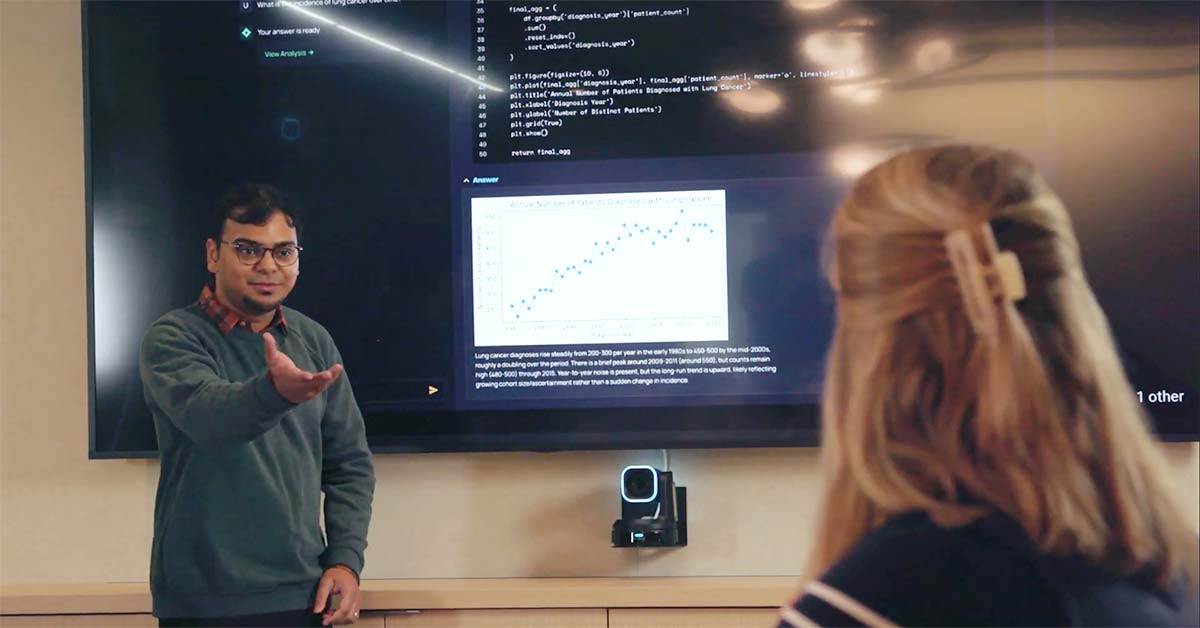
Researchers at Fred Hutch Cancer Center are testing whether a collaborative AI research platform can accelerate the pace of cancer research leading to faster diagnoses and more precise, targeted therapies, especially for rare types of cancers while safeguarding patient privacy.
Using AI Made Doctors Worse at Spotting Cancer Without Assistance
A new study offers the latest evidence of potential “deskilling” effects on AI users.
Company Offering ‘100% Human-Written, Never AI’ Medical Research Is Entirely AI
Research Gold's team of human methodologists are either AI generated or using the identity of real people without their permission
Company Offering ‘100% Human-Written, Never AI’ Medical Research Is Entirely AI
Research Gold's team of human methodologists are either AI generated or using the identity of real people without their permission

Verification in the Age of AI Scientists
AI Scientists now operate at a scale that outpaces human capacity for manual review. Systems such as Sakana’s AI Scientist write entire workshop papers end-to-end. Lila Sciences runs autonomous ``AI Science Factories’’ that hypothesize, experiment, and iterate without human guidance. FutureHouse’s Kosmos and Robin generate thousands of candidate hypotheses in a single run, and Google’s Co-Scientist proposes testable experiments at a rate no laboratory can fully evaluate. Each of these systems emphasizes verified results, yet that standard ranges from near-perfect formal proof in mathematics to decade-long clinical trials in medicine, with no shared framework for judging sufficiency across domains. As outputs scale beyond what humans can manually inspect, the question of which results to trust becomes as hard as generating them. The bottleneck for AI for Science is no longer hypothesis generation, it is verification.
$250 million, 300 scientists and 40 labs: Sean Parker’s revolutionary project to ‘solve’ cancer
The collaboration, which will be formally announced Wednesday, focuses on immunotherapy -- an area of research that many believe represents the future of cancer treatment.

No humans allowed: scientific AI agents get their own social network
Autonomous agents aren’t just creating their own research — on the Reddit-style website Agent4Science, they’re chatting about it, too.
No. 022: Palomar proof registry, autonomous protein design, synthetic consensus - The Hallway Track
The Hallway Track No. 022 - How AI is affecting the practice of science
OpenScience.ai — Autonomous AI Research Agents
AI agents conducting reproducible scientific inquiry. Full provenance, executable notebooks, peer validation.

Measuring AI’s capability to accelerate biological research in the wet lab
OpenAI introduces a real-world evaluation framework to measure how AI can accelerate biological research in the wet lab. Using GPT-5 to optimize a molecular cloning protocol, the work explores both the promise and risks of AI-assisted experimentation.
How to build an AI scientist: first peer-reviewed paper spills the secrets
AI Scientist, an autonomous research tool, first released in 2024, has now undergone peer review, highlighting its strengths and limitations.
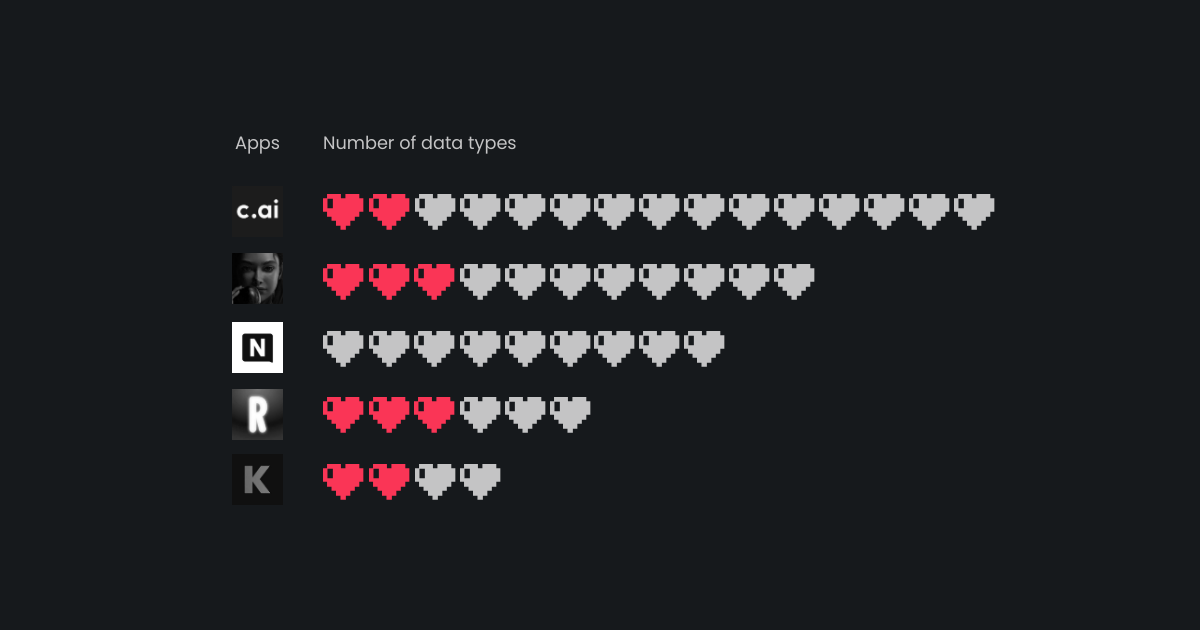
Data privacy concerns in AI companion apps - Surfshark
As AI grows, digital companions help with loneliness but raise questions about user data privacy. Many seek virtual relationships, but it's important to remember they are business-driven, not personal bonds.
AI Spots Pancreatic Cancer Years Before It Shows Up, Study Finds
An artificial intelligence system can spot pancreatic cancer long before it shows up on scans, raising the prospect of catching one of the deadliest tumors early enough to successfully treat, a study found.

Life sciences verification program
Starting today, teams and institutions can apply to our Life Sciences Verification Program (LSVP), which gives verified researchers and organizations access to our most capable models for professional biology and drug development work. LSVP is built for teams of all kinds: academic labs, startups, non-profits, biotechs, pharma companies, and more. Learn more and apply here: https://lnkd.in/gDjrMm7D We know that it has been frustrating to encounter blocks on Claude Fable. LSVP is our mechanism to prevent biological misuse, like the documented cases we’ve disrupted, while enabling legitimate life sciences research. LSVP includes a new set of safeguards to provide a better UX for life sciences researchers. We believe that advancing biology research and drug discovery will realize some of the most important beneficial impacts of AI. Please DM me if you run into any issues with the application. https://lnkd.in/gNQYePZp | 35 comments on LinkedIn

International, cross-sector collaboration commits nearly $2 billion to build foundational data for AI models to predict and treat disease
Biohub, DOE, NIH, and partners will generate open, standardized data to train AI models that predict how cells respond to interventions.
Cosmik Updates: February 2026 - Cosmik Labs
@atproto.science @cosmik.network Raising a question for the ATProto science community: Can AI agents be legitimate participants in research ecosystems? What would make their outputs trustworthy?