


Limited work to date has examined plastic ingestion in highly migratory seabirds like Great Shearwaters (Ardenna gravis) across their entire migratory range. We examined 217 Great Shearwaters obtained from 2008–2019 at multiple locations spanning their yearly migration cycle across the Northwest and South Atlantic to assess accumulation of ingested plastic as well as trends over time and between locations. A total of 2328 plastic fragments were documented in the ventriculus portion of the gastrointestinal tract, with an average of 9 plastic fragments per bird. The mass, count, and frequency of plastic occurrence (FO) varied by location, with higher plastic burdens but lower FO in South Atlantic adults and chicks from the breeding colonies. No fragments of the same size or morphology were found in the primary forage fish prey, the Sand Lance (Ammodytes spp., n = 202) that supports Great Shearwaters in Massachusetts Bay, USA, suggesting the birds directly ingest the bulk of their plastic loads rather than accumulating via trophic transfer. Fourier-transform infrared spectroscopy indicated that low- and high-density polyethylene were the most common polymers ingested, within all years and locations. Individuals from the South Atlantic contained a higher proportion of larger plastic items and fragments compared to analogous life stages in the NW Atlantic, possibly due to increased use of remote, pelagic areas subject to reduced inputs of smaller, more diverse, and potentially less buoyant plastics found adjacent to coastal margins. Different signatures of polymer type, size, and category between similar life stages at different locations suggests rapid turnover of ingested plastics commensurate with migratory stage and location, though more empirical evidence is needed to ground truth this hypothesis. This work is the first to comprehensively measure the accumulation of ingested plastics by Great Shearwaters over the last decade and across multiple locations spanning their yearly trans-equatorial migration cycle and underscores their utility as sentinels of plastic pollution in Atlantic ecosystems.
Legacy and Novel Per- and Polyfluoroalkyl Substances in Juvenile Seabirds from the U.S. Atlantic Coast
Abstract. Per- and polyfluoroalkyl substances (PFAS) are anthropogenic, globally distributed chemicals. Legacy PFAS, including perfluorooctane sulfonate (P
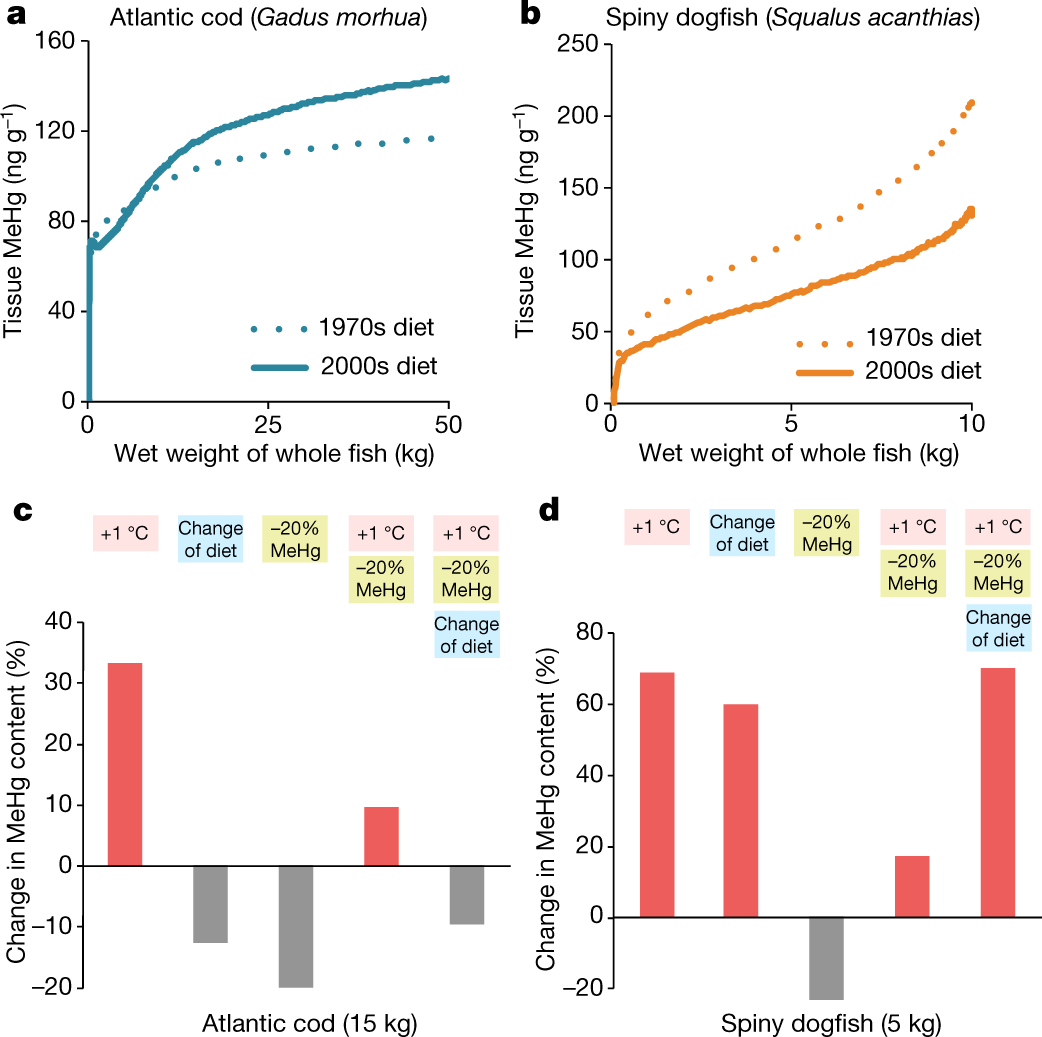
Climate change and overfishing increase neurotoxicant in marine predators
More than three billion people rely on seafood for nutrition. However, fish are the predominant source of human exposure to methylmercury (MeHg), a potent neurotoxic substance. In the United States, 82% of population-wide exposure to MeHg is from the consumption of marine seafood and almost 40% is from fresh and canned tuna alone1. Around 80% of the inorganic mercury (Hg) that is emitted to the atmosphere from natural and human sources is deposited in the ocean2, where some is converted by microorganisms to MeHg. In predatory fish, environmental MeHg concentrations are amplified by a million times or more. Human exposure to MeHg has been associated with long-term neurocognitive deficits in children that persist into adulthood, with global costs to society that exceed US$20 billion3. The first global treaty on reductions in anthropogenic Hg emissions (the Minamata Convention on Mercury) entered into force in 2017. However, effects of ongoing changes in marine ecosystems on bioaccumulation of MeHg in marine predators that are frequently consumed by humans (for example, tuna, cod and swordfish) have not been considered when setting global policy targets. Here we use more than 30 years of data and ecosystem modelling to show that MeHg concentrations in Atlantic cod (Gadus morhua) increased by up to 23% between the 1970s and 2000s as a result of dietary shifts initiated by overfishing. Our model also predicts an estimated 56% increase in tissue MeHg concentrations in Atlantic bluefin tuna (Thunnus thynnus) due to increases in seawater temperature between a low point in 1969 and recent peak levels—which is consistent with 2017 observations. This estimated increase in tissue MeHg exceeds the modelled 22% reduction that was achieved in the late 1990s and 2000s as a result of decreased seawater MeHg concentrations. The recently reported plateau in global anthropogenic Hg emissions4 suggests that ocean warming and fisheries management programmes will be major drivers of future MeHg concentrations in marine predators.
Crow Busters - Crow Recipes
Historically, crows, as well as other non-songbird species have been common fare. Remember "four and twenty blackbirds baked in a pie"? Our revulsion seems to center around the fact that the crow and it's close relatives are scavengers and therefore unfit to eat. Well, as far as pigs and chickens are concerned, you just wouldn't believe what these supermarket critters will stick in their mouths. Seafood? You honestly don't want to know what goes into a Blue Crab before it ends up on that expensive crab cake platter. I suppose the same goes for lobsters. The list goes on.
Large declines in organofluorine contamination indicated by subarctic marine mammal tissues
The ocean is thought to be the terminal sink for per- and polyfluoroalkyl substances (PFAS), persistent organofluorine chemicals used widely in modern commerce for decades. Industry and stewardship programs phased out the most abundantly produced legacy PFAS in the early 2000s due to toxicity concerns. However, they have since been replaced by shorter carbon chain and “novel” chemistries, and past work hypothesized likely increases in these replacement PFAS that were not previously quantifiable. To address this gap, we measured bulk extractable organofluorine (EOF) in archived liver and muscle tissues from pelagic Subarctic pilot whales over the last several decades. Results show EOF concentrations peaked in 2011 and declined by over 60% by 2023. Among a broad suite of targeted and suspect PFAS measured using high-resolution mass spectrometry, only one was consistently increasing through 2023. Tissue concentrations of four main legacy PFAS that accounted for over 75% of EOF were all decreasing by 2023. The timing of peak concentrations depended primarily on whether they were transported to the subarctic by ocean circulation or atmospheric deposition, with the latter declining much faster. Oceanic transport and bioaccumulation modeling suggests that decadal-scale lags between production and food web bioaccumulation are primarily driven by marine transport processes. Large declines in tissue concentrations in this study reinforce the effectiveness of phase-outs in chemical production. However, other work showing stable or increasing EOF in human serum suggests many emerging PFAS with more neutral physicochemical properties may be preferentially accumulating in terrestrial and nearshore environments compared to legacy PFAS.

A Model for Methylmercury Uptake and Trophic Transfer by Marine Plankton
Abstract. Methylmercury (MeHg) concentrations can increase by 100 000 times between seawater and marine phytoplankton, but levels vary across sites. To bet
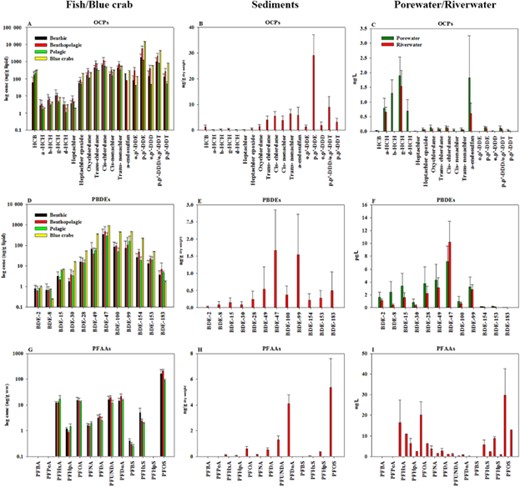
Uptake of hydrophobic organic compounds, including organochlorine pesticides, polybrominated diphenyl ethers, and perfluoroalkyl acids in fish and blue crabs of the lower Passaic River, New Jersey, USA
Abstract . The bioavailability and bioaccumulation of sedimentary hydrophobic organic compounds (HOCs) is of concern at contaminated sites. Passive sampler
Characterizing the Areal Extent of PFAS Contamination in Fish Species Downgradient of AFFF Source Zones
Dataset of targeted PFAS and extractable organofluorine concentrations in water, sediment, and biological tissue samples that support data included in two papers: "Characterizing the Areal Extent of PFAS Contamination in Fish Species Downgradient of AFFF Source Zones" and "Bioaccumulation of Perfluoroalkyl Sulfonamides (FASA)"
Shifting Global Exposures to Poly- and Perfluoroalkyl Substances (PFASs) Evident in Longitudinal Birth Cohorts from a Seafood-Consuming Population
Abstract. Rapid declines in legacy poly- and perfluoroalkyl substances (PFASs) have been reported in human populations globally following changes in produc
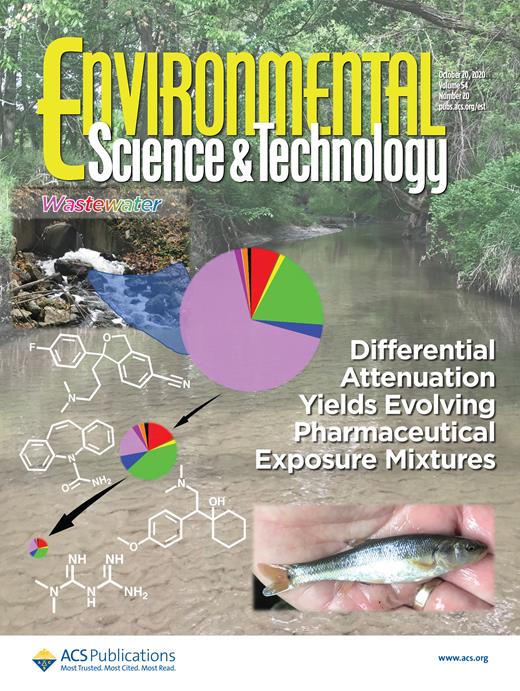
Bioconcentration of Per- and Polyfluoroalkyl Substances and Precursors in Fathead Minnow Tissues Environmentally Exposed to Aqueous Film-Forming Foam–Contaminated Waters
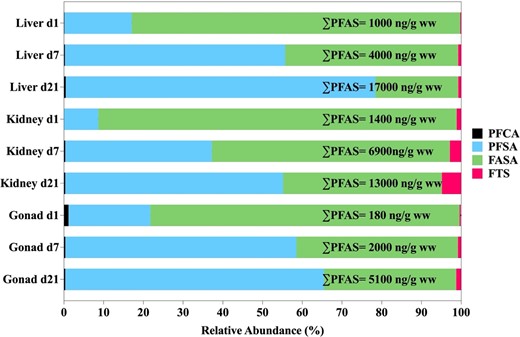
Abstract Exposure to per- and polyfluoroalkyl substances (PFAS) has been associated with toxicity in wildlife and negative health effects in humans. Decades of fire training activity at Joint Base Cape Cod (MA, USA) incorporated the use of aqueous film-forming foam (AFFF), which resulted in long-term PFAS contamination of sediments, groundwater, and hydrologically connected surface waters. To explore the bioconcentration potential of PFAS in complex environmental mixtures, a mobile laboratory was established to evaluate the bioconcentration of PFAS from AFFF-impacted groundwater by flow-through design. Fathead minnows (n = 24) were exposed to PFAS in groundwater over a 21-day period and tissue-specific PFAS burdens in liver, kidney, and gonad were derived at three different time points. The ∑PFAS concentrations in groundwater increased from approximately 10,000 ng/L at day 1 to 36,000 ng/L at day 21. The relative abundance of PFAS in liver, kidney, and gonad shifted temporally from majority perfluoroalkyl sulfonamides (FASAs) to perfluoroalkyl sulfonates (PFSAs). By day 21, mean ∑PFAS concentrations in tissues displayed a predominance in the order of liver > kidney > gonad. Generally, bioconcentration factors (BCFs) for FASAs, perfluoroalkyl carboxylates (PFCAs), and fluorotelomer sulfonates (FTS) increased with degree of fluorinated carbon chain length, but this was not evident for PFSAs. Perfluorooctane sulfonamide (FOSA) displayed the highest mean BCF (8700 L/kg) in day 21 kidney. Suspect screening results revealed the presence of several perfluoroalkyl sulfinate and FASA compounds present in groundwater and in liver for which pseudo-bioconcentration factors are also reported. The bioconcentration observed for precursor compounds and PFSA derivatives detected suggests alternative pathways for terminal PFAS exposure in aquatic wildlife and humans. Environ Toxicol Chem 2024;43:1795–1806. © 2024 The Author(s). Environmental Toxicology and Chemistry published by Wiley Periodicals LLC on behalf of SETAC. Flow-through dosing experiments utilizing aqueous film-forming foam (AFFF)–contaminated groundwater revealed positive linear correlations between fluorinated carbon chain length and logarithm-transformed bioconcentration factors (BCFs) for perfluoroalkyl sulfonamides identified in fathead minnow (Pimephales promelas) liver via target analysis and suspect screening using high-resolution mass spectrometry. FBSA = perfluorobutane sulfonamide; FHxSA = perfluorohexane sulfonamide; FOSA = perfluorooctane sulfonamide; FPeSA= perfluoropentane sulfonamide; FPrSA = perfluoropropane sulfonamide.
Characterizing the Areal Extent of PFAS Contamination in Fish Species Downgradient of AFFF Source Zones
Abstract. Most monitoring programs next to large per- and polyfluoroalkyl substances (PFAS) sources focus on drinking water contamination near source zones

Field Validation of a Novel Passive Sampler for Dissolved PFAS in Surface Waters
Abstract Numerous per- and polyfluoroalkyl substances (PFAS) are of growing concern worldwide due to their ubiquitous presence, bioaccumulation and adverse effects. Surface waters in the United States have displayed elevated concentrations of PFAS, but so far discrete water sampling has been the commonly applied sampling approach. In the present study we field-tested a novel integrative passive sampler, a microporous polyethylene tube, and derived sampling rates (Rs) for nine PFAS in surface waters. Three sampling campaigns were conducted, deploying polyethylene tube passive samplers in the effluent of two wastewater treatment plant (WWTP) effluents and across Narragansett Bay (Rhode Island, USA) for 1 month each in 2017 and 2018. Passive samplers exhibited linear uptake of PFAS in the WWTP effluents over 16–29 days, with in situ Rs for nine PFAS ranging from 10 ml day−1 (perfluoropentanoic acid) to 29 ml day−1 (perfluorooctanesulfonic acid). Similar sampling rates of 19 ± 4.8 ml day−1 were observed in estuarine field deployments. Applying these Rs values in a different WWTP effluent predicted dissolved PFAS concentrations mostly within 50% of their observations in daily composite water samples, except for perfluorobutanoic acid (where predictions from passive samplers were 3 times greater than measured values), perfluorononanoic acid (1.9 times), perfluorodecanoic acid (1.7 times), and perfluoropentanesulfonic acid (0.1 times). These results highlight the potential use of passive samplers as measurement and assessment tools of PFAS in dynamic aquatic environments. Environ Toxicol Chem 2022;41:2375–2385. © 2022 SETAC Abstract A novel integrative passive sampler was field-tested and sampling rates derived for nine per- and polyfluoroalkyl substances in two wastewater treatment plant effluents and in Narragansett Bay surface waters.

A review of the pathways of human exposure to poly- and perfluoroalkyl substances (PFASs) and present understanding of health effects
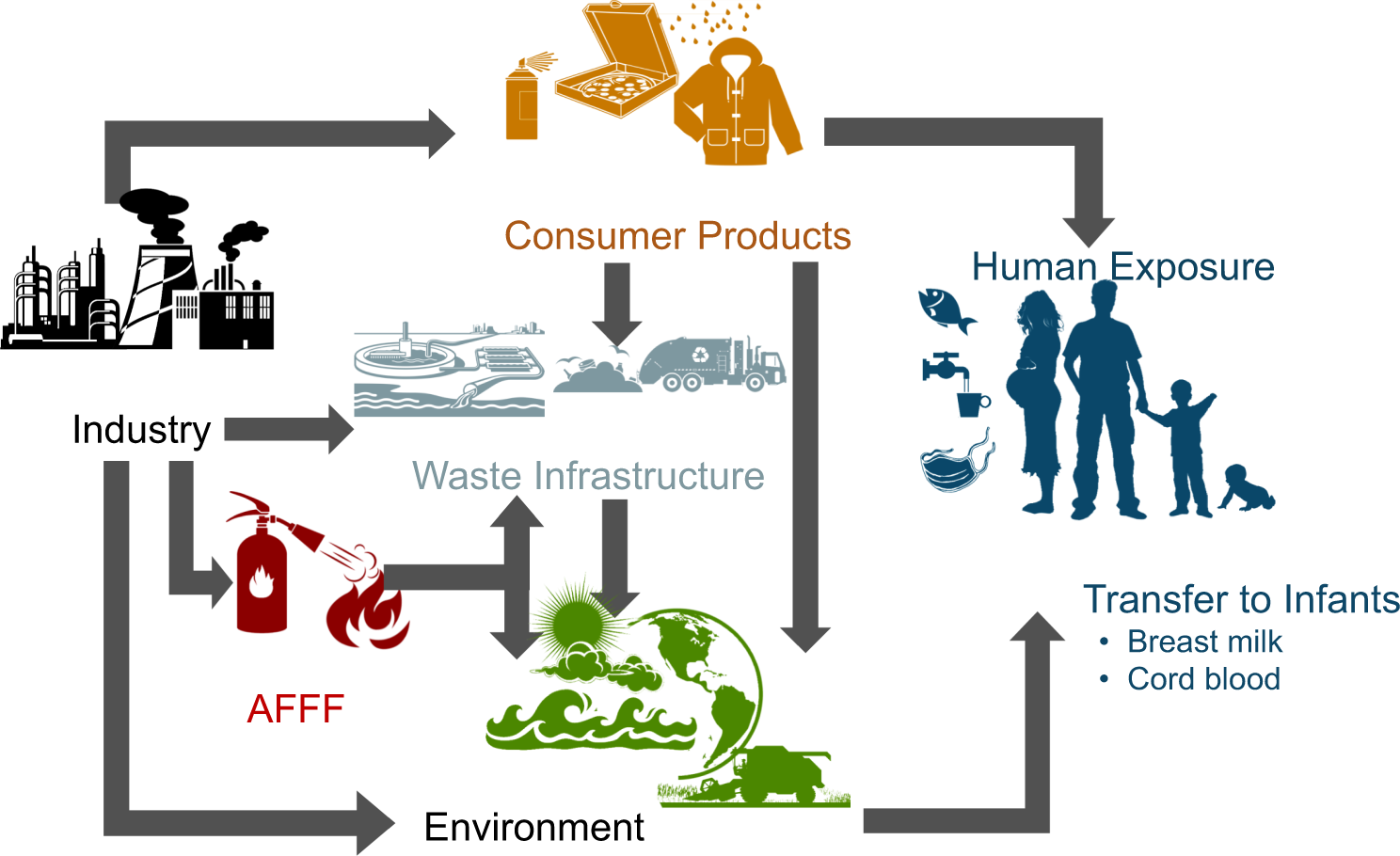
Here, we review present understanding of sources and trends in human exposure to poly- and perfluoroalkyl substances (PFASs) and epidemiologic evidence for impacts on cancer, immune function, metabolic outcomes, and neurodevelopment. More than 4000 PFASs have been manufactured by humans and hundreds have been detected in environmental samples. Direct exposures due to use in products can be quickly phased out by shifts in chemical production but exposures driven by PFAS accumulation in the ocean and marine food chains and contamination of groundwater persist over long timescales. Serum concentrations of legacy PFASs in humans are declining globally but total exposures to newer PFASs and precursor compounds have not been well characterized. Human exposures to legacy PFASs from seafood and drinking water are stable or increasing in many regions, suggesting observed declines reflect phase-outs in legacy PFAS use in consumer products. Many regions globally are continuing to discover PFAS contaminated sites from aqueous film forming foam (AFFF) use, particularly next to airports and military bases. Exposures from food packaging and indoor environments are uncertain due to a rapidly changing chemical landscape where legacy PFASs have been replaced by diverse precursors and custom molecules that are difficult to detect. Multiple studies find significant associations between PFAS exposure and adverse immune outcomes in children. Dyslipidemia is the strongest metabolic outcome associated with PFAS exposure. Evidence for cancer is limited to manufacturing locations with extremely high exposures and insufficient data are available to characterize impacts of PFAS exposures on neurodevelopment. Preliminary evidence suggests significant health effects associated with exposures to emerging PFASs. Lessons learned from legacy PFASs indicate that limited data should not be used as a justification to delay risk mitigation actions for replacement PFASs.
Uptake of Per- and Polyfluoroalkyl Substances by Fish, Mussel, and Passive Samplers in Mobile Laboratory Exposures using Groundwater from a Contamination Plume at a Historical Fire Training Area, Cape Cod, Massachusetts - Chemical and Biological Data from August to September 2018
This data release presents chemical and biological results from an investigation of the uptake of per- and polyfluoroalkyl substances (PFAS) from groundwater contaminated by fire training activities on Cape Cod, Massachusetts. Exposure experiments were conducted from August 29 to September 21, 2018 using groundwater from a relatively uncontaminated reference site and a fire training area contaminated site. To assess the uptake characteristics of the PFAS mixtures present in the 2 groundwater sources, 21-day mobile laboratory exposure experiments were conducted using fathead minnows (Pimephales promelas), polar organic chemical integrative samplers, and polyethylene tube samplers. Freshwater mussel (Ligumia subrostrata) exposure experiments were conducted for 14 days, beginning on day 7 of the fish and passive sampler exposures. Groundwater samples were collected daily (with a few exceptions). Samples for male fish and passive samplers were collected on days 0, 4, 7, 14, and 21. Samples for female fish were collected on days 0, 7, 14, and 21. The 14 day mussel exposures began on day 7 of the fish and passive sampler exposures, and mussel samples were collected on days 7, 11, 14, and 21. Groundwater site locations and well characteristics are presented in Table 1. Information on the various PFAS and co-occurring contaminants measured in the different media are presented in Table 2. Quality assurance results for PFAS analysis of the different media are presented in Table 3. Results for PFAS in groundwater are presented in Table 4. Results for co-occurring contaminants in groundwater are presented in Table 5. Results for fish biomarkers are presented in Table 6. Results for PFAS in male and female fish tissue are presented in Table 7. Results for PFAS in mussel tissue are presented in Table 8. Results for PFAS in polar organic chemical integrative samplers are presented in Table 9. Results for PFAS in polyethylene tube samplers are presented in Table 10.
Phospholipid Levels Predict the Tissue Distribution of Poly- and Perfluoroalkyl Substances in a Marine Mammal
Abstract. Exposure to poly- and perfluoroalkyl substances (PFASs) has been linked to many negative health impacts in humans and wildlife. Unlike neutral hy

Marine Fish and Shellfish Identification
The Department of Fish and Wildlife manages California's diverse fish, wildlife, and plant resources, and the habitats upon which they depend, for their ecological values and for their use and enjoyment by the public.
Communicating Pollutants That Threaten Tribal Identities: PFAS Contamination in Local Fish and Shellfish
Indigenous communities that rely on the consumption of local fish and shellfish may have elevated exposures to environmental contaminants, such as PFAS (perfluoroalkyl and polyfluoroalkyl substances). Conventional public health communication that focuses on reducing consumption can conflict with cultural identities tied to harvesting local fish. Through a series of focus groups and interviews ( n = 25) and a community-wide survey ( n = 155) among members of the Mashpee Wampanoag Tribe (Cape Cod, Massachusetts, USA), we document the connection between local fish/shellfish consumption and Tribal cultural identity, how PFAS contamination may threaten this identity, and explore how to more effectively communicate health risks to Tribal communities.
