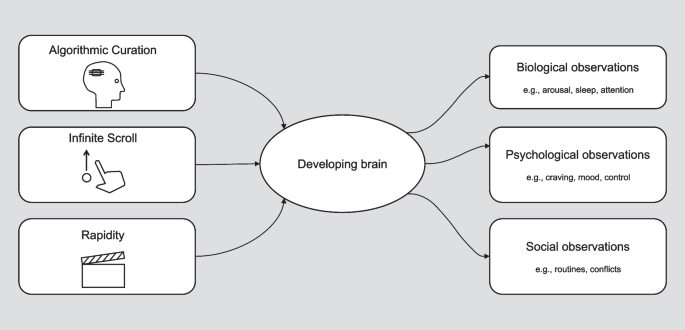
The pervasive nature of short-form video platforms has seamlessly integrated into daily routines, yet it is important to recognize their potential adverse effects on both physical and mental health. Prior research has identified a detrimental impact of excessive short-form video consumption on attentional behavior, but the underlying neural mechanisms remain unexplored. In the current study, we aimed to investigate the effect of short-form video use on attentional functions, measured through the Attention Network Test (ANT). A total of 48 participants, consisting of 35 females and 13 males, with a mean age of 21.8 years, were recruited. The Mobile Phone Short Video Addiction Tendency Questionnaire (MPSVATQ) and self-control scale (SCS) were conducted to assess the short video usage behavior and self-control ability. Electroencephalogram (EEG) data were recorded during the completion of the ANT task. The correlation analysis showed a significant negative relationship between MPSVATQ and theta power index reflecting the executive control in the prefrontal region (r = -0.395, p = 0.007), this result was not observed by using theta power index of the resting-state EEG data. Furthermore, a significant negative correlation was identified between MPSVATQ and SCS outcomes (r = -0.320, p = 0.026). These results suggest that an increased tendency towards mobile phone short video addiction could negatively impact self-control and diminish executive control within the realm of attentional functions. This study sheds light on the adverse consequences stemming from short video consumption and underscores the importance of developing interventions to mitigate short video addiction.
Taming the endless scroll? Short-form videos, digital routines and neurocognitive outcomes in youth
Short-form videos (SFVs) deliver digital content in a way that sets them apart from other media. Concerns have arisen that such user interfaces may diminish attention, memory and emotional wellbeing in young people, yet evidence has not previously been synthesised for this demographic and in isolation from other media types. To assess the association between exposure to SFV-interfaces and neurocognitive outcomes in individuals aged $$\varvec{\le 25}$$years, and to appraise the certainty of this evidence. Following PRISMA and Cochrane guidelines, four databases (PubMed, PsycINFO, WoS, Cochrane Reviews) were searched (2015–2025). Of 1,498 records, 42 studies (N = 46,912; mean age = 16.8) met the PICOS criteria. Most were cross-sectional (88%), with two longitudinal, one EEG, and one MRI study. Risk of bias and quality were evaluated using GRADE. Heavy, unstructured SFV use (typically $$\varvec{\ge 4}$$h/day) was consistently associated with: small-to-moderate increases in inattention ($$\varvec{\beta \approx 0.30}$$) and impulsivity ($$\varvec{\beta \approx 0.25}$$); moderate reductions in working-memory span ($$\varvec{\beta \approx -0.75}$$) and self-regulation ($$\varvec{\beta \approx -0.45}$$); moderate elevations in anxiety ($$\varvec{\beta \approx 0.35}$$), depression ($$\varvec{\beta \approx 0.48}$$) and stress ($$\varvec{\beta \approx 0.32}$$); and a moderate-to-large surge in addiction symptoms ($$\varvec{\beta \approx 0.60}$$). Two cross-sectional imaging studies also reported associations between heavier short-video use and neurobiological measures. These included grey-matter volume differences in the orbitofrontal cortex and cerebellum, altered resting-state signal synchrony, and reduced P300 amplitudes. Protective factors included supportive environments, digital routines, and digital literacy. Consistent, albeit preliminary, evidence links excessive SFV watching to cognitive and emotional challenges in youth. Longitudinal and experimental studies are urgently needed, alongside trials of modifiable levers to reduce addiction-like use and related harms.
Smartphones and Cognition: A Review of Research Exploring the Links between Mobile Technology Habits and Cognitive Functioning
While smartphones and related mobile technologies are recognized as flexible and powerful tools that, when used prudently, can augment human cognition, there is also a growing perception that habitual involvement with these devices may have a negative and lasting impact on users’ ability to think, remember, pay attention, and regulate emotion. The present review considers an intensifying, though still limited, area of research exploring the potential cognitive impacts of smartphone-related habits, and seeks to determine in which domains of functioning there is accruing evidence of a significant relationship between smartphone technology and cognitive performance, and in which domains the scientific literature is not yet mature enough to endorse any firm conclusions. We focus our review primarily on three facets of cognition that are clearly implicated in public discourse regarding the impacts of mobile technology – attention, memory, and delay of gratification – and then consider evidence regarding the broader relationships between smartphone habits and everyday cognitive functioning. Along the way, we highlight compelling findings, discuss limitations with respect to empirical methodology and interpretation, and offer suggestions for how the field might progress toward a more coherent and robust area of scientific inquiry.

How to reclaim your attention from the distraction economy | Psyche Videos
Could you watch this video on full screen, 1x speed, with no distractions? Here are five steps to rebuild your attention span

Reflective smartphone disengagement: Conceptualization, measurement, and validation
The present paper develops a new concept, called Reflective Smartphone Disengagement (RSD), defined as individuals’ deliberate efforts to control and restrict smartphone use. Based on the reflective-impulsive model, we examined the RSD concept in four studies, using cross-sectional data of adolescents (Study 1, N = 453, Study 3, N = 760) and adults (Study 4, N = 672), as well as panel data of adults (Study 2, N = 461). In Study 1, findings from exploratory and confirmatory factor analyses supported the one-dimensionality of the RSD scale. In Study 2, we found evidence for high test–retest reliability as well as discriminant validity, and in terms of predictive validity, RSD negatively predicted excessive smartphone use, information overload, and the social availability norm over time. Study 3 demonstrated convergent validity with a negative relationship with trait nomophobia and a positive one with trait self-reflection. Study 4 confirms the structural validity of a shorter version of the scale. We discuss avenues for future research and broader implications of the RSD concept for the field.
Reciprocal Relationships between Trajectories of Depressive Symptoms and Screen Media Use during Adolescence
Adolescents are constantly connected with each other and the digital landscape through a myriad of screen media devices. Unprecedented access to the wider world and hence a variety of activities, particularly since the introduction of mobile technology, has given rise to questions regarding the impact of this changing media environment on the mental health of young people. Depressive symptoms are one of the most common disabling health issues in adolescence and although research has examined associations between screen use and symptoms of depression, longitudinal investigations are rare and fewer still consider trajectories of change in symptoms. Given the plethora of devices and normalisation of their use, understanding potential longitudinal associations with mental health is crucial. A sample of 1,749 (47% female) adolescents (10–17 years) participated in six waves of data collection over two years. Symptoms of depression, time spent on screens, and on separate screen activities (social networking, gaming, web browsing, TV/passive) were self-reported. Latent growth curve modelling revealed three trajectories of depressive symptoms (low-stable, high-decreasing, and low-increasing) and there were important differences across these groups on screen use. Some small, positive associations were evident between depressive symptoms and later screen use, and between screen use and later depressive symptoms. However, a Random Intercept Cross Lagged Panel Model revealed no consistent support for a longitudinal association. The study highlights the importance of considering differential trajectories of depressive symptoms and specific forms of screen activity to understand these relationships.

Smartphone interactions and mental well-being in young adults: A longitudinal study based on objective high-resolution smartphone data
Aims: To investigate the effects of objectively measured smartphone interactions on indicators of mental well-being among men and women in a population of young adults. Methods: A total of 816 young adults (mean±SD age 21.6±2.6 years; 77% men) from the Copenhagen Network Study were followed with objective recordings of smartphone interactions from calls, texts and social media. Participants self-reported on loneliness, depressive symptoms and disturbed sleep at baseline and in a four-month (interquartile range 75–163 days) follow-up survey. Multiple linear regression was used to analyse the association between smartphone interactions and mental well-being separately for men and women. Results: A higher number of smartphone interactions was associated with lower levels of loneliness at baseline and the same pattern appeared for depressive symptoms, although this was less pronounced. A high level of smartphone interaction was associated with lower levels of disturbed sleep for men, but not for women. In follow-up analyses, a high versus low level of smartphone interaction was associated with an increase in loneliness and depressive symptoms over time for women, but not for men. Conclusions: Smartphone interactions are related to better mental well-being, which may be attributed to the beneficial effects of an underlying social network. Over time, accommodating a large network via smartphone communication might, however, have negative effects on mental well-being for women.

Generative artificial intelligence reliance and executive function attenuation: Behavioral evidence of cognitive offload in high-use adults.
The lost art of concentration: being distracted in a digital world
We check our phones every 12 minutes, often just after waking up. Always-on behaviour is harmful to long-term mental health, and we need to learn to the hit the pause button

Social Media and Depression Symptoms: a Meta-Analysis
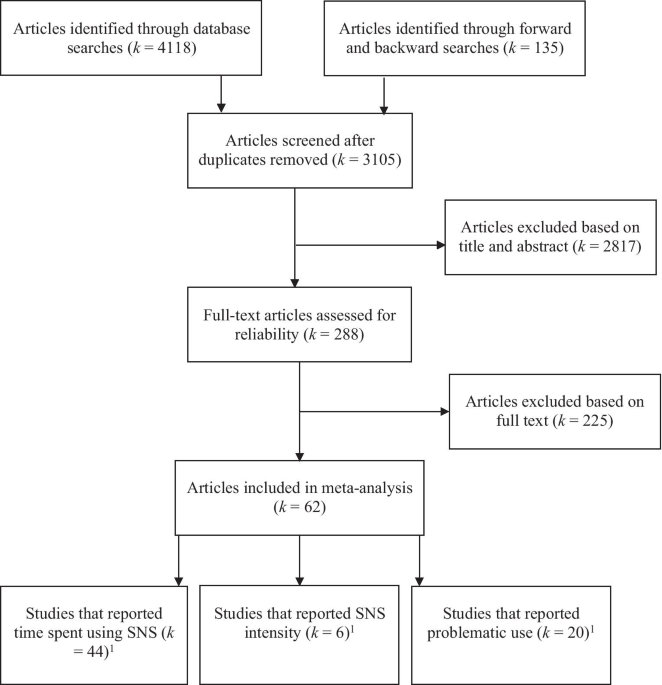
Social Networking Sites (SNS) have close to 3 billion users worldwide. Recently, however, SNS have come under media scrutiny for their potential association with depression. Two previous meta-analyses failed to find evidence for a robust concurrent association between SNS use and depression symptoms. However, these analyses focused primarily on the time spent using SNS. The current meta-analysis is the first to consider the multi-dimensional nature of SNS use, and examines separately the quantitative associations of depression symptoms to SNS use in three types of SNS studies examining three distinct constructs of SNS use: time spent using SNS, intensity of SNS use, and problematic SNS use. Sixty-two studies (N = 451, 229) met inclusion criteria. Depression symptoms were significantly, but weakly, associated with time spent using SNS (r = 0.11) and intensity of SNS use (r = 0.09). However, the association of depression symptoms to problematic SNS use was moderate (r = 0.29), was significantly higher than for time spent using SNS (Qbetween = 35.85, p < 0.001) or intensity of SNS use (Qbetween = 13.95, p < 0.001), and was not significantly moderated by age, gender, year of study publication, or mode of recruitment. These results suggest that future research examining causal models of the relation of SNS use and depression, as well as research on intervention and prevention, should focus in more detail on individuals who are engaging in a pattern of problematic SNS use.
Is smartphone addiction really an addiction?
Aims In light of the rise in research on technological addictions and smartphone addiction in particular, the aim of this paper was to review the relevant literature on the topic of smartphone addiction and determine whether this disorder exists or if it does not adequately satisfy the criteria for addiction. Methods We reviewed quantitative and qualitative studies on smartphone addiction and analyzed their methods and conclusions to make a determination on the suitability of the diagnosis “addiction” to excessive and problematic smartphone use. Results Although the majority of research in the field declares that smartphones are addictive or takes the existence of smartphone addiction as granted, we did not find sufficient support from the addiction perspective to confirm the existence of smartphone addiction at this time. The behaviors observed in the research could be better labeled as problematic or maladaptive smartphone use and their consequences do not meet the severity levels of those caused by addiction. Discussion and conclusions Addiction is a disorder with severe effects on physical and psychological health. A behavior may have a similar presentation as addiction in terms of excessive use, impulse control problems, and negative consequences, but that does not mean that it should be considered an addiction. We propose moving away from the addiction framework when studying technological behaviors and using other terms such as “problematic use” to describe them. We recommend that problematic technology use is to be studied in its sociocultural context with an increased focus on its compensatory functions, motivations, and gratifications.
Effects of Stroop task duration on subsequent cognitive and physical performance
The strength model of self-control purports to explain why brief cognitive response inhibition tasks impair subsequent isometric handgrip endurance. A…
Reciprocal Relationships between Trajectories of Loneliness and Screen Media Use during Adolescence
Adolescence is the peak period for loneliness. Now a ubiquitous part of the adolescent landscape, electronic screens may provide avenues for ameliorating feelings of loneliness. Conversely, they may act as risk factors for the development of such feelings. Although cross-sectional studies to date have investigated the relationship between screen use and loneliness, longitudinal studies are needed if causal and directional associations are to be investigated. Utilising an accelerated longitudinal design and online survey we collected four waves of data from 1919 secondary school adolescents aged 10–15 years over two years. Random intercept cross-lagged panel models tested whether changes in five types of screen use (i.e., total screen time, social media use, gaming, passive screen use, and web use) are associated with changes in loneliness in the subsequent time-point, or changes in loneliness are associated with changes in screen use in the subsequent time-point. We found significant reciprocal associations between screen use and loneliness, with the strongest associations between social networking and electronic gaming and quality of friendships. These findings highlight that any significant increase in an adolescent’s screen use may be a potential indicator of changes in quality of friendships or feelings of isolation.

20 shared papers
Hall JA Ten myths about the effect of social media use on well-being J. Med. Internet Res. • Dissing AS et al. Smartphone interactions and mental well-being in young adults: A longitudinal study based on objective high-resolution smartphone data Scand. J. Public Health • Beyens I et al. The effect of social media on well-being differs from adolescent to adolescent Sci. Rep. • Valkenburg PM Social media use and well-being: What we know and what we need to know Curr. Opin. Psychol. • Panova T et al. Is smartphone addiction really an addiction? J. Behav. Addict. • Heffer T et al. The longitudinal association between social-media use and depressive symptoms among adolescents and young adults: An empirical reply to Twenge et al. (2018) Clin. Psychol. Sci. • Stavrova O et al. Does using social media jeopardize well-being? The importance of separating within- from between-person effects Soc. Psychol. Personal. Sci. • Lawrence D et al. Reciprocal relationships between trajectories of loneliness and screen media use during adolescence J. Child Fam. Stud. • Cunningham S et al. Social media and depression symptoms: A meta-analysis Res. Child Adolesc. Psychopathol. • Hall JA et al. Experimentally manipulating social media abstinence: results of a four-week diary study Media Psychol. • Panayiotou M et al. Time spent on social media among the least influential factors in adolescent mental health: preliminary results from a panel network analysis Nat. Ment. Health • Johannes N et al. Objective, subjective, and accurate reporting of social media use: No evidence that daily social media use correlates with personality traits, motivational states, or well-being Technol. Mind Behav. • Johannes N et al. No effect of different types of media on well-being Sci. Rep. • Meier A et al. Computer-mediated communication, social media, and mental health: A conceptual and empirical meta-review Communic. Res. • Bruce LD et al. Loneliness in the United States: A 2018 national panel survey of demographic, structural, cognitive, and behavioral characteristics Am. J. Health Promot. • Schemer C et al. The impact of Internet and social media use on well-being: A longitudinal analysis of adolescents across nine years J. Comput. Mediat. Commun. • Hall JA et al. Two tests of social displacement through social media use Inf. Commun. Soc. • Hampton KN Social media and change in psychological distress over time: The role of social causation J. Comput. Mediat. Commun. • Steinsbekk S et al. The new social landscape: Relationships among social media use, social skills, and offline friendships from age 10-18 years Comput. Human Behav. • Odgers CL The great rewiring: is social media really behind an epidemic of teenage mental illness? Nature

Cognitive Offloading
If you have ever tilted your head to perceive a rotated image, or programmed a smartphone to remind you of an upcoming appointment, you have engaged in cognitive offloading: the use of physical action to alter the information processing requirements of a task so as to reduce cognitive demand. Despite the ubiquity of this type of behavior, it has only recently become the target of systematic investigation in and of itself. We review research from several domains that focuses on two main questions: (i) what mechanisms trigger cognitive offloading, and (ii) what are the cognitive consequences of this behavior? We offer a novel metacognitive framework that integrates results from diverse domains and suggests avenues for future research.
People who keep their cell phones on "silent mode" share similar psychological traits
Study reveals that keeping phones in "silent mode" improves focus, reduces stress, and increases workplace well-being among workers.
Social Media and Change in Psychological Distress Over Time: The Role of Social Causation
Abstract This article tests the relationship between information and communication technologies (ICT), such as the Internet, cell phones, and social media, and change over time in psychological distress (PD) and risk of serious psychological distress (SPD) associated with depression and anxiety disorders. Using a longitudinal panel design, survey data from a representative sample of American adults, findings revealed that home Internet and social network site (SNS) use are associated with decreased PD over time. Having extended family who are also Internet users further decreases PD. PD increased or decreased in relation to change in the PD of extended family who also use SNSs. For most people, ICT substantively reduce PD; in rare cases, an extreme spike in PD of extended family also on SNSs, there was a trivial increase to the risk of SPD. PD did not change when extended family not on social media experienced a change in their PD.