


Immune responses to protein and peptide drugs can alter or reduce their efficacy and may be associated with adverse effects. While anti-drug antibodies (ADA) are a standard clinical measure of protein therapeutic immunogenicity, T cell epitopes in the primary sequences of these drugs are the key drivers or modulators of ADA response, depending on the type of T cell response that is stimulated (e.g. T helper or Regulatory T cells, respectively). In a previous publication on T cell-dependent immunogenicity of biotherapeutics, we addressed mitigation efforts such as identifying and reducing the presence of T cell epitopes or T cell response to protein therapeutics prior to further development of the protein therapeutic for clinical use. Over the past five years, greater insight into the role of regulatory T cell epitopes and the conservation of T cell epitopes with self (beyond germline) has improved the preclinical assessment of immunogenic potential. In addition, impurities contained in therapeutic drug formulations such as host cell proteins have also attracted attention and become the focus of novel risk assessment methods. Target effects have come into focus, given the emergence of protein and peptide drugs that target immune receptors in immuno-oncology applications. Lastly, new modalities are entering the clinic, leading to the need to revise certain aspects of the preclinical immunogenicity assessment pathway. In addition to drugs that have multiple antibody-derived domains or non-antibody scaffolds, therapeutic drugs may now be introduced via viral vectors, cell-based constructs, or nucleic acid based therapeutics that may, in addition to delivering drug, also prime the immune system, driving immune response to the delivery vehicle as well as the encoded therapeutic, adding to the complexity of assessing immunogenicity risk. While it is challenging to keep pace with emerging methods for the preclinical assessment of protein therapeutics and new biologic therapeutic modalities, this collective compendium provides a guide to current best practices and new concepts in the field.
T-Cell Dependent Immunogenicity of Protein Therapeutics Pre-clinical Assessment and Mitigation–Updated Consensus and Review 2020
Immune responses to protein and peptide drugs can alter or reduce their efficacy and may be associated with adverse effects. While anti-drug antibodies (ADA) are a standard clinical measure of protein therapeutic immunogenicity, T cell epitopes in the primary sequences of these drugs are the key drivers or modulators of ADA response, depending on the type of T cell response that is stimulated (e.g. T helper or Regulatory T cells, respectively). In a previous publication on T cell-dependent immunogenicity of biotherapeutics, we addressed mitigation efforts such as identifying and reducing the presence of T cell epitopes or T cell response to protein therapeutics prior to further development of the protein therapeutic for clinical use. Over the past five years, greater insight into the role of regulatory T cell epitopes and the conservation of T cell epitopes with self (beyond germline) has improved the preclinical assessment of immunogenic potential. In addition, impurities contained in therapeutic drug formulations such as host cell proteins have also attracted attention and become the focus of novel risk assessment methods. Target effects have come into focus, given the emergence of protein and peptide drugs that target immune receptors in immuno-oncology applications. Lastly, new modalities are entering the clinic, leading to the need to revise certain aspects of the preclinical immunogenicity assessment pathway. In addition to drugs that have multiple antibody-derived domains or non-antibody scaffolds, therapeutic drugs may now be introduced via viral vectors, cell-based constructs, or nucleic acid based therapeutics that may, in addition to delivering drug, also prime the immune system, driving immune response to the delivery vehicle as well as the encoded therapeutic, adding to the complexity of assessing immunogenicity risk. While it is challenging to keep pace with emerging methods for the preclinical assessment of protein therapeutics and new biologic therapeutic modalities, this collective compendium provides a guide to current best practices and new concepts in the field.
Patient-derived model capturing hypoxia and extracellular matrix remodelling of immunologically cold high-grade serous tumours
High-grade serous carcinoma tumours present poor survival rates, often associated with immunologically excluded environments driven by hypoxia and extensive extracellular matrix remodelling that disrupt tumour-stromal-immune interactions. Current experimental models fail to fully capture these microenvironmental features, limiting understanding of tumour-immune dynamics and drug development. Here, we present bioengineered patient-derived tumour-immune models to mimic physiologically relevant oxygen levels and extracellular matrix remodelling. Cancer cells are co-cultured with cancer-associated fibroblasts within human plasma-3D matrices or grown on decellularized human ovaries. Immune cells are either included within the 3D constructs to study multi-cellular interactions or challenged to infiltrate the matrices. We demonstrate that intratumoural hypoxia acts as a friend and a foe enhancing the activation and cytotoxicity of CD8 + T cells while inducing stromal/matrix dysregulation associated with impaired immune infiltration. Targeting TGF-β signalling attenuates the hypoxia-driven stromal-mediated immune exclusion. These relevant models may aid the development of targeted therapies to transform immunologically cold tumours into immunogenic to benefit female patients.
Immunoporosis: Immunology of Osteoporosis—Role of T Cells
The role of immune system in various bone pathologies such as osteoporosis, osteoarthritis and rheumatoid arthritis is now well established. This had led to the emergence of a modern field of systems biology called as osteoimmunology, an integrated research between fields of immunology and bone biology under one umbrella. Osteoporosis is one of the most common inflammatory bone-loss conditions with more than 200 million individuals affected worldwide. T helper cells along with various other immune cells are major players involved in bone homeostasis. In the present review, we specifically discuss the role of various defined T lymphocyte subsets (Th cells comprising Th1, Th2, Th9, Th17, Th22, regulatory T cells, follicular helper T cells, natural killer T cells, γδ T cells and CD8+ T cells) in the pathophysiology of osteoporosis. The study of the specific role of immune system in osteoporosis has now been proposed by our group as “Immunoporosis: The immunology of osteoporosis” with special emphasis on the role of various subsets of T lymphocytes. The establishment of this new field had been the need of the hour due to the emergence of novel roles of various T cell lymphocytes in accelerated bone loss observed during osteoporosis. Activated T cells either directly or indirectly through the secretion of various cytokines and factors modulate bone health and thereby regulate bone remodelling. Various studies have summarized the role of inflammation in pathogenesis of osteoporosis, but very few reports had delineated the precise role of various T cell subsets in the pathobiology of osteoporosis. The present review thus for the first time clearly highlights and summarizes the role of various T lymphocytes in the development and pathophysiology of osteoporosis, giving birth to a new field of biology termed as “Immunoporosis”. This novel field will thus provide an overview of the nexus between the cellular components of both bone and immune systems, responsible for the observed bone loss in osteoporosis. A molecular insight into the upcoming and novel field of immunoporosis would thus lead to development of innovative approaches for the prevention and treatment of osteoporosis.

Mucosal dendritic cells shape mucosal immunity
Dendritic cells (DCs) are key modulators that shape the immune system. In mucosal tissues, DCs act as surveillance systems to sense infection and also function as professional antigen-presenting cells that stimulate the differentiation of naive T and B cells. On the basis of their molecular expression, DCs can be divided into several subsets with unique functions. In this review, we focus on intestinal DC subsets and their function in bridging the innate signaling and adaptive immune systems to maintain the homeostasis of the intestinal immune environment. We also review the current strategies for manipulating mucosal DCs for the development of efficient mucosal vaccines to protect against infectious diseases.

PTAB Reverses § 101 Rejection of Receptor-Derived Peptide Claims
The Patent Trial and Appeal Board (PTAB) Reverses 35 U.S.C. § 101 Subject Matter Eligibility Rejection of Receptor-Derived Peptide Claims

Osteoimmunology: The Conceptual Framework Unifying the Immune and Skeletal Systems
The immune and skeletal systems share a variety of molecules, including cytokines, chemokines, hormones, receptors, and transcription factors. Bone cells interact with immune cells under physiological and pathological conditions. Osteoimmunology was created as a new interdisciplinary field in large part to highlight the shared molecules and reciprocal interactions between the two systems in both heath and disease. Receptor activator of NF-κB ligand (RANKL) plays an essential role not only in the development of immune organs and bones, but also in autoimmune diseases affecting bone, thus effectively comprising the molecule that links the two systems. Here we review the function, gene regulation, and signal transduction of osteoimmune molecules, including RANKL, in the context of osteoclastogenesis as well as multiple other regulatory functions. Osteoimmunology has become indispensable for understanding the pathogenesis of a number of diseases such as rheumatoid arthritis (RA). We review the various osteoimmune pathologies, including the bone destruction in RA, in which pathogenic helper T cell subsets [such as IL-17-expressing helper T (Th17) cells] induce bone erosion through aberrant RANKL expression. We also focus on cellular interactions and the identification of the communication factors in the bone marrow, discussing the contribution of bone cells to the maintenance and regulation of hematopoietic stem and progenitors cells. Thus the time has come for a basic reappraisal of the framework for understanding both the immune and bone systems. The concept of a unified osteoimmune system will be absolutely indispensable for basic and translational approaches to diseases related to bone and/or the immune system.

Osteoimmunology: The Nexus between bone and immune system
Osteoimmunology is an interdisciplinary research field which combines the existing fields of osteology (bone biology) and immunology under one umbrella. The observation that contributed enormously to the emergence of osteoimmunology as an independent field of investigation was the enhanced bone loss in various inflammatory bone diseases such as rheumatoid arthritis, osteoporosis and periodontitis. T helper cells (Th1, Th2, Treg and Th17) along with various other immune cells (B cells, DC, macrophages etc.) are actively involved in bone homeostasis. The present review thus provides an overview of the nexus between these two prominent systems (Bone and Immune system) of an organism, which reside in a common niche (bone marrow) and thus cross-communicate to modulate their respective development. Investigations in the field of osteoimmunology thus promise the advent of new era in the field with novel therapeutics for bone loss in various inflammatory conditions. A molecular insight into the field of osteoimmunology can lead to novel approaches for the prevention and treatment of diverse inflammatory conditions such as osteoporosis, rheumatoid arthritis and osteoarthritis.
Hierarchical classification of immune cell transcriptomes at population-scale
Accurate immune cell classification is essential for interpreting single-cell RNA sequencing (scRNA-seq) data. However, progress is constrained by the lack of independent, high-resolution benchmarks, as the routine integration of datasets introduces statistical dependencies that artificially inflate model generalizability. Here, we present the single-cell universal classification omnibus (Suco), a resource of independent, uniform expert annotations, and Compocyte, a modular hierarchical classifier. Together, they establish a framework designed for the scale of human population immunology. This approach substantially outperforms existing classifiers while facilitating expert review of ambiguous annotations. Applying Compocyte across 50 studies, including three newly generated datasets, we classified 15.6 million leukocytes from 3,965 patients. Within this expansive cohort, we identified a new tumor-associated resorptive macrophage phenotype, a non-canonical monocyte subtype in subclinical cytokine release syndrome, and the programmatic erosion of T cell memory stemness across metastatic sites. Suco and Compocyte thus provide a generalizable architecture and benchmark capable of sustaining high-resolution annotation across massive clinical cohorts. ### Competing Interest Statement CMR has consulted regarding oncology drug development with Amgen, AstraZeneca, Daiichi Sankyo, Genentech, Merck, and Novartis, and has received licensing and royalty payments for DLL3-directed therapeutics. T.W. reports stock ownership for Roche, Astra Zeneca, Bayer, Innate Pharma, Kyntra, Illumina, 10x Genomics, and Merck KGaA as well as research funding from Atrandi Biosciences, Vilnius, Lithuania; CanVirex AG, Basel Switzerland; and Institut fuer Klinische Krebsforschung GmbH, Frankfurt, Germany, and travel funding from Roche, Basel, Switzerland. S.Z. reports advisory board membership and honoraria from Amgen, Astellas, AstraZeneca, Bayer, Bristol-Myers Squibb, Daiichi Sankyo, Eisai, EUSA, Gilead, Ipsen, Johnson&Johnson, Lilly, MedSir, Medtoday, Merck, MSD, Novartis, Pfizer, Roche, Sanofi Aventis, StreamedUp, Urotrials, Urotube, Zentiva and resarch funding from Eisai. S.Z. reports clinical trial support from Amgen, AstraZeneca, AVEO, Bayer, Biontech, Bristol-Myers Squibb, Calithera, Exelixis, Gilead, Lilly, MSD, Novartis, Pfizer, Roche, Seagen/Astellas, Urotrials and travels & conference support from Amgen, Astellas, AstraZeneca, Bayer, EISAI, Ipsen, Johnson&Johnson, Merck, MSD, Pfizer. All remaining authors declare no relevant competing interests. Spanish Association Against Cancer, PI049999 Federal Ministry of Research, Technology and Space, 001001KT2322 National Cancer Institute, R35 CA263816 National Cancer Institute, U24 CA213274 National Cancer Institute, P30 CA008748 Research Council of Lithuania, P-MIP-24-93

Bone and the Immune System
Osteoporosis increases fracture risk, a cause of crippling morbidity and mortality. The immunoskeletal interface (ISI) is a centralization of cell and cytokine effectors shared between skeletal and immune systems. Consequently, the immune system mediates powerful effects on bone turnover. Physiologically, B cells secrete osteoprotegerin (OPG), a potent anti-osteoclastogenic factor that preserves bone mass. However, activated T cells and B cells secrete pro-osteoclastogenic factors including receptor activator of Nuclear factor-kappaB (NF-kB) ligand (RANKL), Interleukin (IL)-17A, and tumor necrosis factor (TNF)-α promoting bone loss in inflammatory states such as rheumatoid arthritis. Recently, ISI disruption has been linked to osteoporosis in human immunodeficiency virus (HIV) infection/acquired immunodeficiency syndrome (AIDS), where elevated B cell RANKL and diminished OPG drive bone resorption. HIV-antiretroviral therapy paradoxically intensifies bone loss during disease reversal, as immune reconstitution produces osteoclastogenic cytokines. Interestingly, in estrogen deficiency, activated T cells secrete RANKL, TNF, and IL-17A that amplify bone resorption and contribute to postmenopausal osteoporosis. T cell–produced TNF and IL-17A further contribute to bone loss in hyperparathyroidism, while T cell production of the anabolic Wingless integration site (Wnt) ligand, Wnt10b, promotes bone formation in response to anabolic parathyroid hormone and the immunomodulatory costimulation inhibitor cytotoxic T lymphocyte–associated protein-4-IgG (abatacept). These findings provide a window into the workings of the ISI and suggest novel targets for future therapeutic interventions to reduce fracture risk.

Physiological and pathophysiological bone turnover — role of the immune system
Receptor activator of NF-κB ligand (RANKL) and osteoprotegerin (OPG) are key downstream effectors of bone resorption; tumour necrosis factor (TNF) might synergize with RANKL to superinduce osteoclastic bone resorptionB cells, regulated by T cells, are a key source of basal OPG whereas activated T cells and B cells are key sources of TNF and RANKL in inflammatory conditionsShort-term antiresorptive therapies might safely prevent bone loss associated with combination antiretroviral therapyAnergic and parathyroid-hormone-treated T cells secrete the protein Wnt-10b, which promotes bone formationNovel therapeutic strategies targeting the immune system might promote bone formation and decrease bone resorption to manage osteoporotic bone loss and prevent fracture
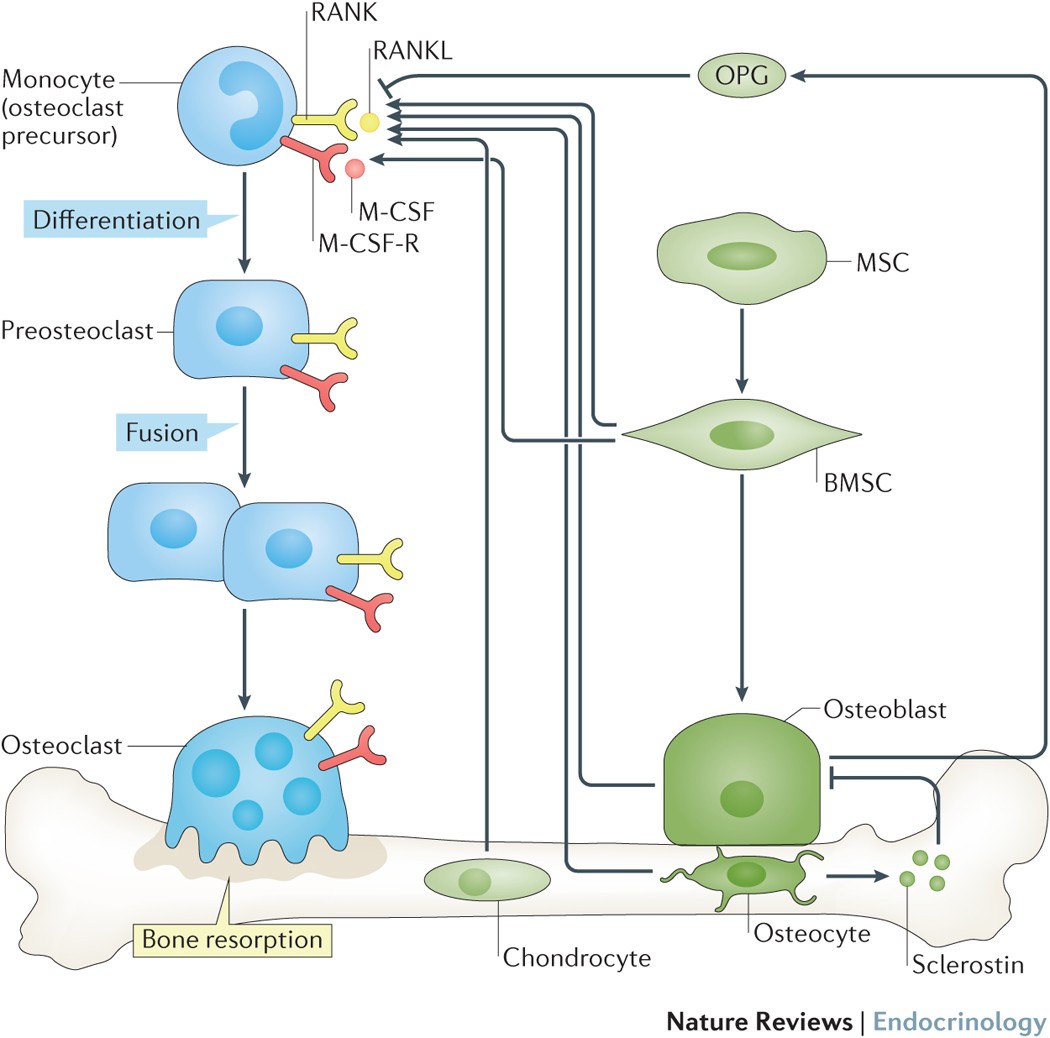
Mathematical Modeling of the Gut–Bone Axis and Implications of Butyrate Treatment on Osteoimmunology
Butyrate, a short-chain fatty acid produced by the gut microbiota, has pivotal roles in the regulation of the immune system. Recent studies have revealed that butyrate increases the differentiation of peripheral regulatory T cells in the gut–bone axis and promotes osteoblasts’ bone forming activity. However, the mechanism of the therapeutic benefit of butyrate in bone remodeling remains incompletely understood. Here, we develop a multicompartment mathematical model to quantitatively predict the contribution of butyrate on the expansion of regulatory T cells in the gut, blood, and bone compartments. We investigate the interplay between regulatory T cell-derived TGF-β and CD8+ T cell-derived Wnt-10b with changes in gut butyrate concentration. In addition, we connect our model to a detailed model of bone metabolism to study the impacts of butyrate and Wnt-10b on trabecular bone volume. Our results indicate both direct and indirect immune-mediated impacts of butyrate on bone metabolism.

Dynamics of Bone Cell Interactions and Differential Responses to PTH and Antibody-Based Therapies
We propose a mathematical model describing the dynamics of osteoblasts and osteoclasts in bone remodeling. The goal of this work is to develop an integrated modeling framework for bone remodeling and bone cell signaling dynamics that could be used to explore qualitatively combination treatments for osteoporosis in humans. The model has been calibrated using 57 checks from the literature. Specific global optimization methods based on qualitative objectives have been developed to perform the model calibration. We also added pharmacokinetics representations of three drugs to the model, which are teriparatide (PTH(1–34)), denosumab (a RANKL antibody) and romosozumab (a sclerostin antibody), achieving excellent goodness-of-fit of human clinical data. The model reproduces the paradoxical effects of PTH on the bone mass, where continuous administration of PTH results in bone loss but intermittent administration of PTH leads to bone gain, thus proposing an explanation of this phenomenon. We used the model to simulate different categories of osteoporosis. The main attributes of each disease are qualitatively well captured by the model, for example changes in bone turnover in the disease states. We explored dosing regimens for each disease based on the combination of denosumab and romosozumab, identifying adequate ratios and doses of both drugs for subpopulations of patients in function of categories of osteoporosis and the degree of severity of the disease.

Osteoimmunology: shared mechanisms and crosstalk between the immune and bone systems
Osteoimmunology is an interdisciplinary field, that covers the shared mechanisms and interactions between bone cells and immune cellsReceptor activator of nuclear factor-κB (NF-κB) ligand (RANKL) is an osteoclast-differentiation factor that links the activated immune system and bone loss. In addition, abnormal bone homeostasis has been observed in various mice deficient in immunomodulatory molecules.Osteoclast differentiation is dependent on the transcription factor nuclear factor of activated T cells, cytoplasmic 1 (NFATc1), which is induced and activated by RANKL and its co-stimulatory (immunoglobulin-like) receptors.Interleukin-17 (IL-17)-producing T helper cells (TH17 cells) are the key T-cell subset that links T-cell activation and bone destruction in autoimmune arthritis.Bone cells are involved in the maintenance and mobilization of haematopoietic stem cells.Osteoimmunology is becoming increasingly important for understanding the pathogenesis of, and developing new therapeutic strategies for, diseases that affect both systems.
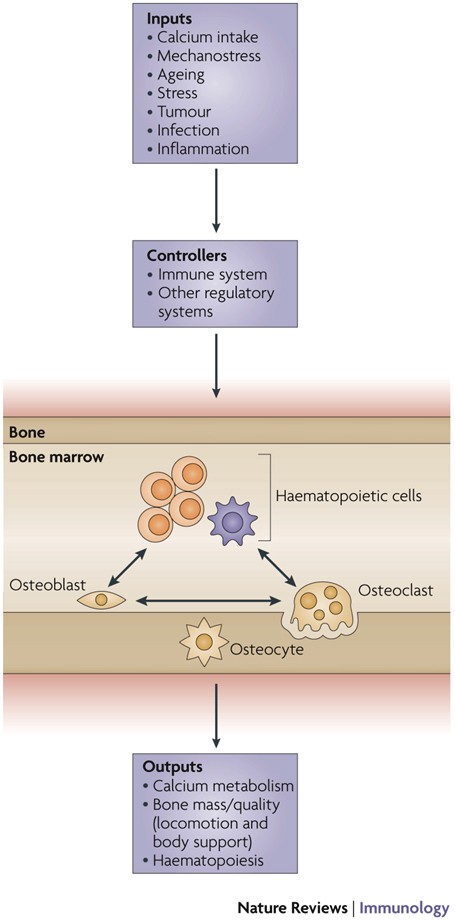
Osteoporosis in Rheumatoid Arthritis: Dangerous Liaisons
Osteoporosis has been classically considered a comorbidity of rheumatoid arthritis (RA). However, recent advances in the pathogenesis of osteoporosis in RA have shown a close interplay between cells of the immune system and those involved in bone remodeling, introducing new actors into the classic route in which osteoclast activation is related to the RANK/RANKL/OPG pathway. In fact, the inflammatory state in early stages of RA, mediated by interleukin (IL)-1, IL-6, IL-8 and tumour necrosis factor (TNF)-α has the ability to activate and differentiate osteoclasts not only through their relationship with RANKL, but also through the Wnt/DKK1/sclerostin pathway, leading to bone loss. The role of synovial fibroblasts and activated T lymphocytes in the expression of the RANKL system and its connection to bone destruction is also depicted. In addition, autoantibodies such as rheumatoid factor and anti-citrullinated protein antibodies are other pathogenic mechanisms for the development of bone erosions and systemic osteoporosis in RA, even before the onset of arthritis. The aim of this review is to unravel the relationship between different factors involved in the development of osteoporosis in RA patients, both the classic factors and the most novel, based on the relationship of autoantibodies with bone remodeling. Furthermore, we propose that bone mineral density measured by different techniques may be helpful as a biomarker of severity in early arthritis patients.

there are many reasons administering unapproved peptides is a bad idea one of the main ones that isn't getting a lot of attention is peptides have a tendency to elicit an immune response if they aren't carefully designed and highly highly pure— RFK Jr. may be inviting a wave of autoimmune diseases

Frontiers | T-Cell Dependent Immunogenicity of Protein Therapeutics Pre-clinical Assessment and Mitigation–Updated Consensus and Review 2020
www.frontiersin.org
Christina Jewett
NEW: Sec. Kennedy is allowing broad access to unapproved peptide injections in what appears to be a unilateral action. FDA scientists had advised against these, inc. one peptide used in greyhound racing. nytimes.com/2026/10/28/health/peptides-ke…
Peptides

Unapproved peptide drugs in the US, 2026

there are many reasons administering unapproved peptides is a bad idea one of the main ones that isn't getting a lot of attention is peptide…

Four Red Flags and One Truth Amid the Peptide Hype - KFF Health News
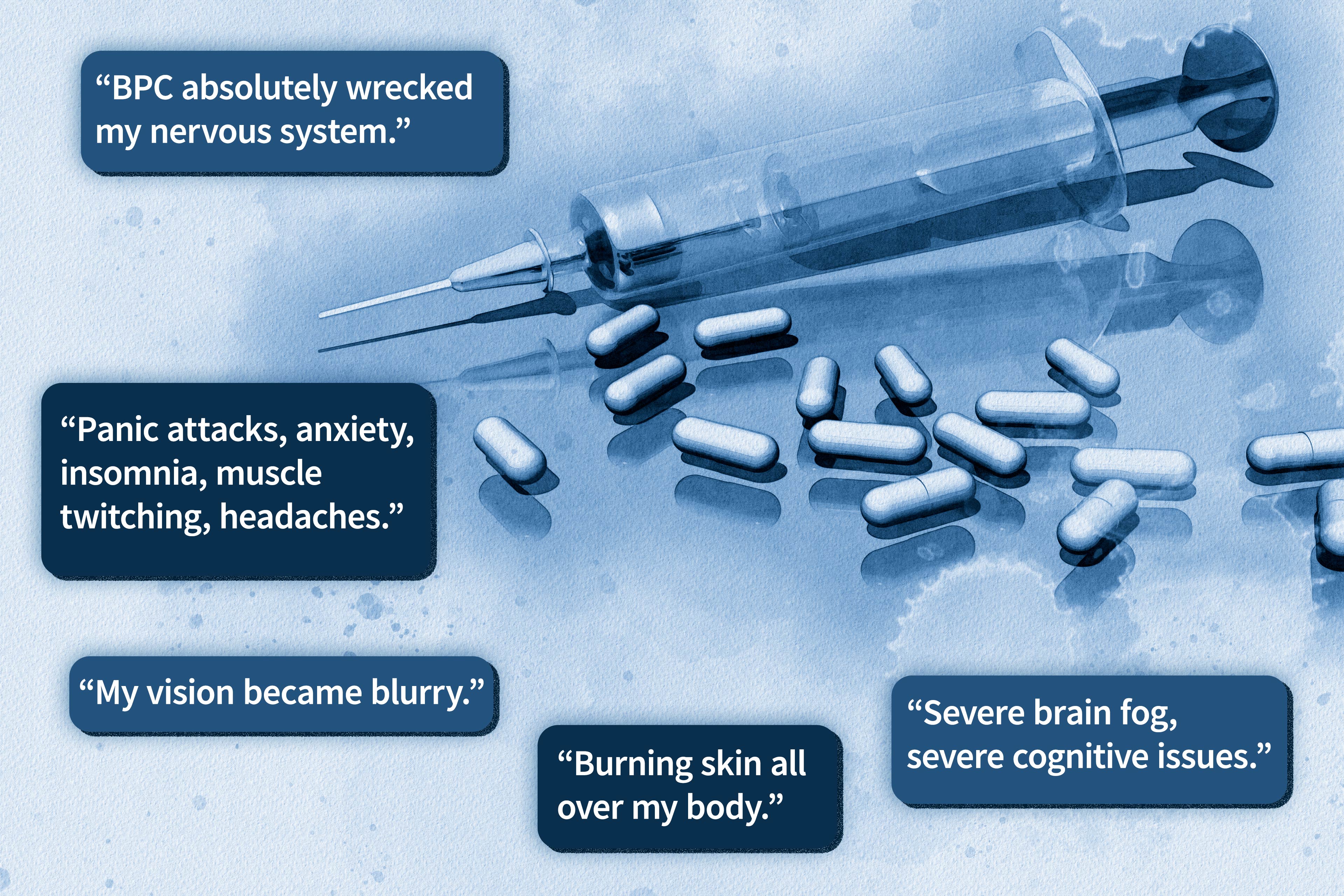
People Say These Peptides Hurt Them. Their Stories Are Muffled in MAHA’s Push for Medical Freedom. - KFF Health News

RFK Jr. to Allow Broad Use of Unapproved Peptide Injections