Objective: Cognitive loss in older adults is a growing issue in our society, and there is a need to develop inexpensive, simple, effective in-home treatments. This study was conducted to explore the use of olfactory enrichment at night to improve cognitive ability in healthy older adults.Methods: Male and female older adults (N=43), age 60-85, were enrolled in the study and randomly assigned to an Olfactory Enriched or Control group. Individuals in the enriched group were exposed to 7 different odorants a week, one per night, for 2 hours, using an odorant diffuser. Individuals in the control group had the same experience with de minimis amounts of odorant. Neuropsychological assessments and fMRI scans were administered at the beginning of the study and after 6 months.Results: A statistically significant improvement was observed in the enriched group compared to the control group on the Rey Auditory Verbal Learning Test and improved functioning was observed in the left uncinate fasciculus, as assessed by mean diffusivity.Minimal olfactory enrichment administered at night produces improvements in both cognitive and neural functioning. Thus, olfactory enrichment may provide an effective and low-effort pathway to improved brain health.
Do Older People Have a Different Smell? (Published 2019)
Even scientists who study scent are divided.

Scientists reveal foods to eat now to stave off cognitive decline later
Data on over 3,000 people shows only 8 percent with low-quality diets maintained high cognitive abilities into their 70s, a new study reveals.

Dance training is superior to repetitive physical exercise in inducing brain plasticity in the elderly
Animal research indicates that a combination of physical activity and sensory enrichment has the largest and the only sustaining effect on adult neuroplasticity. Dancing has been suggested as a human homologue to this combined intervention as it poses demands on both physical and cognitive functions. For the present exploratory study, we designed an especially challenging dance program in which our elderly participants constantly had to learn novel and increasingly difficult choreographies. This six-month-long program was compared to conventional fitness training matched for intensity. An extensive pre/post-assessment was performed on the 38 participants (63–80 y), covering general cognition, attention, memory, postural and cardio-respiratory performance, neurotrophic factors and–most crucially–structural MRI using an exploratory analysis. For analysis of MRI data, a new method of voxel-based morphometry (VBM) designed specifically for pairwise longitudinal group comparisons was employed. Both interventions increased physical fitness to the same extent. Pronounced differences were seen in the effects on brain volumes: Dancing compared to conventional fitness activity led to larger volume increases in more brain areas, including the cingulate cortex, insula, corpus callosum and sensorimotor cortex. Only dancing was associated with an increase in plasma BDNF levels. Regarding cognition, both groups improved in attention and spatial memory, but no significant group differences emerged. The latter finding may indicate that cognitive benefits may develop later and after structural brain changes have taken place. The present results recommend our challenging dance program as an effective measure to counteract detrimental effects of aging on the brain.
Learning What Substance Is Suspected of Causing Alzheimer’s May Throw You Into an Existential Crisis
A surprisingly common substance was found to have a causal relationship with the kind of brain damage associated with Alzheimer's disease.


ADHD and giftedness: a neurocognitive consideration of twice exceptionality
Current models of cognition and behavioral diagnosis emphasize categorical classification over continuous considerations of function and promote the "differential diagnosis" of various conditions according to observational criteria. However, an overemphasis on a purely behavioral, categorical approach to understanding human function fails to address the comorbidity of different disorders and does not include a consideration of overlapping levels of function, from "pathological" through "normal," to "gifted" or exceptional. The frequent co-occurrence of "gifted" and "pathological" function is thus difficult to understand from a corticocentric and purely behavioral and observational point of view. This article reviews "giftedness" in relation to the diagnosis of attention-deficit hyperactivity disorder, coexistence of which is termed "twice exceptional." It additionally considers problems in assessing these functions using current neuropsychological tests and methodologies that are presumably based upon a corticocentric model of cognition.
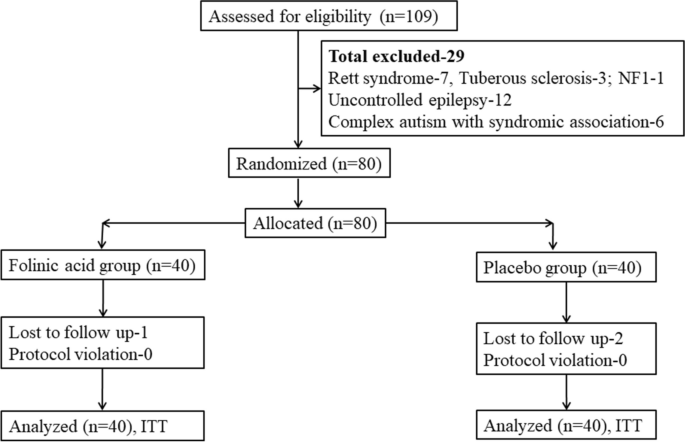
RETRACTED ARTICLE: Efficacy of oral folinicacid supplementation in children with autism spectrum disorder: a randomizeddouble-blind, placebo-controlled trial
Oral folinic acid has shown potential to improve symptoms in childrenwith autism spectrum disorder (ASD). However, randomized controlled trials (RCTs)are limited. This double-blind, placebo-controlled RCT aimed to compare changes inChildhood Autism Rating Scale (CARS) scores in children with ASD aged 2–10 years,among folinic acid (2 mg/kg/day, maximum of 50 mg/day) and placebo groups at24 weeks, in comparison with baseline. Both the groups received standard care (ABAand sensory integration therapy). Secondary objectives included changes inbehavioral problems measured by the Child Behavior Checklist (CBCL) and serum levelsof anti-folate receptor autoantibodies and folic acid, correlated with changes inautism symptom severity. Out of the 40 participants recruited in each group, 39 and38 participants completed the 24-week follow-up in the folinic acid and placebogroups, respectively. The change in CARS score was higher in the folinic acid group(3.6 ± 0.8) compared to the placebo group (2.4 ± 0.7, p < 0.001). Changes in CBCL total score and CBCL internalizingscore were also better in the folinic acid group (19.7 ± 9.5 vs. 12.6 ± 8.4 and15.4 ± 7.8 vs. 8.5 ± 5.7, p < 0.001 for both).High-titer anti-folate receptor autoantibodies were positive in 32/40 and 33/40cases in the folinic acid and placebo groups, respectively (p = 0.78). In the placebo group, improvement in CARS score wascomparable regardless of autoantibody status (p = 0.11), but in the folinic acid group, improvement was morepronounced in the high-titer autoantibody group (p = 0.03). No adverse reactions were reported in either group.
You Can Increase Your Intelligence: 5 Ways to Maximize Your Cognitive Potential

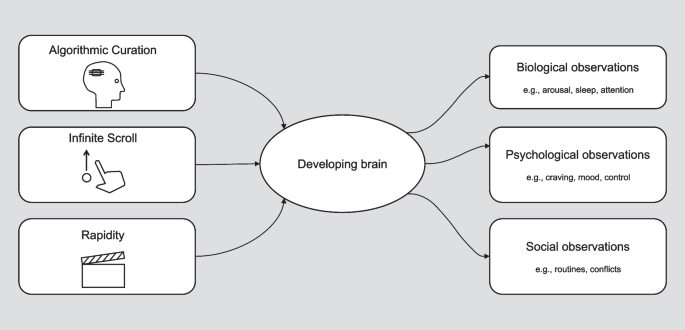
Taming the endless scroll? Short-form videos, digital routines and neurocognitive outcomes in youth
Short-form videos (SFVs) deliver digital content in a way that sets them apart from other media. Concerns have arisen that such user interfaces may diminish attention, memory and emotional wellbeing in young people, yet evidence has not previously been synthesised for this demographic and in isolation from other media types. To assess the association between exposure to SFV-interfaces and neurocognitive outcomes in individuals aged $$\varvec{\le 25}$$years, and to appraise the certainty of this evidence. Following PRISMA and Cochrane guidelines, four databases (PubMed, PsycINFO, WoS, Cochrane Reviews) were searched (2015–2025). Of 1,498 records, 42 studies (N = 46,912; mean age = 16.8) met the PICOS criteria. Most were cross-sectional (88%), with two longitudinal, one EEG, and one MRI study. Risk of bias and quality were evaluated using GRADE. Heavy, unstructured SFV use (typically $$\varvec{\ge 4}$$h/day) was consistently associated with: small-to-moderate increases in inattention ($$\varvec{\beta \approx 0.30}$$) and impulsivity ($$\varvec{\beta \approx 0.25}$$); moderate reductions in working-memory span ($$\varvec{\beta \approx -0.75}$$) and self-regulation ($$\varvec{\beta \approx -0.45}$$); moderate elevations in anxiety ($$\varvec{\beta \approx 0.35}$$), depression ($$\varvec{\beta \approx 0.48}$$) and stress ($$\varvec{\beta \approx 0.32}$$); and a moderate-to-large surge in addiction symptoms ($$\varvec{\beta \approx 0.60}$$). Two cross-sectional imaging studies also reported associations between heavier short-video use and neurobiological measures. These included grey-matter volume differences in the orbitofrontal cortex and cerebellum, altered resting-state signal synchrony, and reduced P300 amplitudes. Protective factors included supportive environments, digital routines, and digital literacy. Consistent, albeit preliminary, evidence links excessive SFV watching to cognitive and emotional challenges in youth. Longitudinal and experimental studies are urgently needed, alongside trials of modifiable levers to reduce addiction-like use and related harms.
We Need More Research on how CO2 Affects Cognition
A growing body of research indicates there are potentially large health benefits to improving indoor air quality.
You can learn a foreign language in your sleep, say Swiss
Study played newly-learned foreign vocabulary to students and compared their memory with those who were played the words while awake

From gifted to high potential and twice exceptional: A state-of-the-art meta-review
Despite the abundant literature on intelligence and high potential individuals, there is still a lack of international consensus on the terminology and clinical characteristics associated to this population. It has been argued that unstandardized use of diagnosis tools and research methods make comparisons and interpretations of scientific and epidemiological evidence difficult in this field. If multiple cognitive and psychological models have attempted to explain the mechanisms underlying high potentiality, there is a need to confront new scientific evidence with the old, to uproot a global understanding of what constitutes the neurocognitive profile of high-potential in gifted individuals. Another particularly relevant aspect of applied research on high potentiality concerns the challenges faced by individuals referred to as "twice exceptional" in the field of education and in their socio-affective life. Some individuals have demonstrated high forms of intelligence together with learning, affective or neurodevelopmental disorders posing the question as to whether compensating or exacerbating psycho-cognitive mechanisms might underlie their observed behavior. Elucidating same will prove relevant to questions concerning the possible need for differential diagnosis tools, specialized educational and clinical support. A meta-review of the latest findings from neuroscience to developmental psychology, might help in the conception and reviewing of intervention strategies.
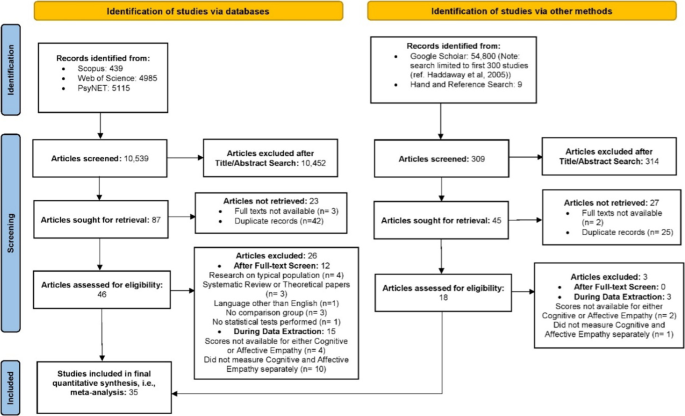
Cognitive and Affective Empathy in Autism Spectrum Disorders: A Meta-analysis
Research has consistently shown that individuals with Autism Spectrum Disorder (ASD) exhibit Empathy deficits. The aim of this study was to systematically review and meta-analyze the research conducted in the domain of cognitive and affective Empathy in Autism. The author also attempted to see the influence of moderators, such as age, culture, and measure-used, on the effect sizes. To fulfill the objective, the meta-analysis was performed on 35 studies that fulfilled the inclusion criteria with the help of the Meta-essentials, which is a free excel meta-analysis tool that facilitates the integration of effect sizes from various studies. The results indicated that the ASD group differs significantly from typically developing (TD) group in both cognitive and affective empathy. The effect size for cognitive empathy was very large (1.26), whereas, for affective empathy, the effect size was medium (0.58). Further, there was a significant moderating effect of the type of measure used on cognitive empathy. However, there are a few limitations of the present meta-analysis. Firstly, it does not shed light on how symptom severity in Autism influences empathy. Secondly, all the possible moderating variables influencing empathy could not be considered. Lastly, the generalizability of the findings may be limited owing to the limitations present in the included studies themselves. The present meta-analysis has implications for conceptualizing cognitive and affective empathy appropriately, and developing appropriate measures to assess empathy in the Autism population.