


Not too long ago, the internet was a place you visited. The family desktop sat in its designated closet or back office. In schools, there were rooms filled with computers blinking in tandem, waiting for your class to arrive and hop online. You had to purposefully arrive at the internet, and when done, you left […]
A Short History Of The Internet
I am not by any measure old unless you ask my nieces, but I remember when we had no internet and my niece's minds boggle at that, they think I must be ancient. How could you survive without the internet they asked me, in their minds the concept of no internet is pretty much science fiction and the thought of not having internet access scares them.

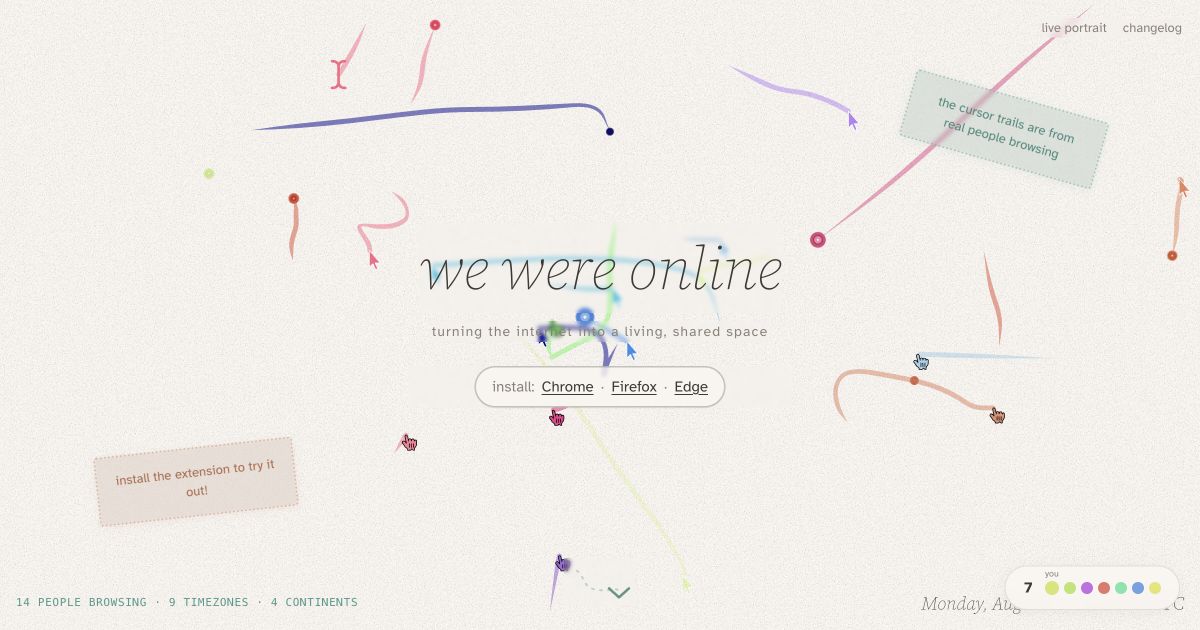
we were online
Turn the internet into a living, shared space with real-time traces of people browsing.
My journey to the heart of the forgotten internet
Slowly but surely, huge swaths of the internet are vanishing. But the artefacts of the early web are still out there, and they have lessons for the future.

Historical pragmatism and the internet
This article argues that the literature describing the internet revolution in the 1990s was characterized by the rhetoric of the technological sublime. This rhetoric suffered from three fatal flaws: (1) it was not sufficiently grounded in the historical development of technology; (2) it viewed the internet in isolation, failing to consider the wider technological context; and (3) it failed to examine the internet in view of the social, economic, religious and political circumstances of its users. Several examples from history are cited, demonstrating that changes in various systems for the production, dissemination and preservation of cultural information both border and deborder the world. The article suggests that if internet researchers take a pragmatic, historically grounded approach, they will discover that the introduction of internet technology can be seen to have similar consequences. While the technology overcomes many boundaries (of space and time, politics and economics), other social borders may be created at the same time. It is easier to see old boundaries coming down than to see new ones being erected. Rather than being swept by utopian or dystopian enthusiasms, the article insists that the really interesting discoveries are to be made in locating the subtle social shifts taking place, relatively unnoticed, as a consequence of technological change.

a love letter, i guess
I love the internet. It was 1998 - I remember the family computer in my home and that sweet, sweet feeling of finally getting connected to the internet, and...
Early Internet | The Paper Pilot
The Paper Pilot's digital garden of thoughts on philosophy, politics, and sociology
triumph of the nerds
The Dark Forest Anthology of the Internet
A book about how to survive on the internet. It’s about the cozy web, the dark web, the dark forest, the clear net, the dark net, and a new social world emerging around us. This is the Dark Forest Anthology of the Internet.

The rise of Whatever
This was originally titled “I miss when computers were fun”. But in the course of writing it, I discovered that there is a reason computers became less fun, a dark thread woven through a number of events in recent history. Let me back up a bit.

An Apology for the Internet — From the People Who Built It
Even those who designed our digital world are aghast at what they created. A breakdown of what went wrong.
Internet Histories
Publishes research into the history of the internet, from early computer networks, Usenet, mobile technology and the internet of things.
The Internet Is Making You Less Free
Our current age is defined by the internet. The internet—a technology that allows the decentralized, globalized dissemination of information—has become so

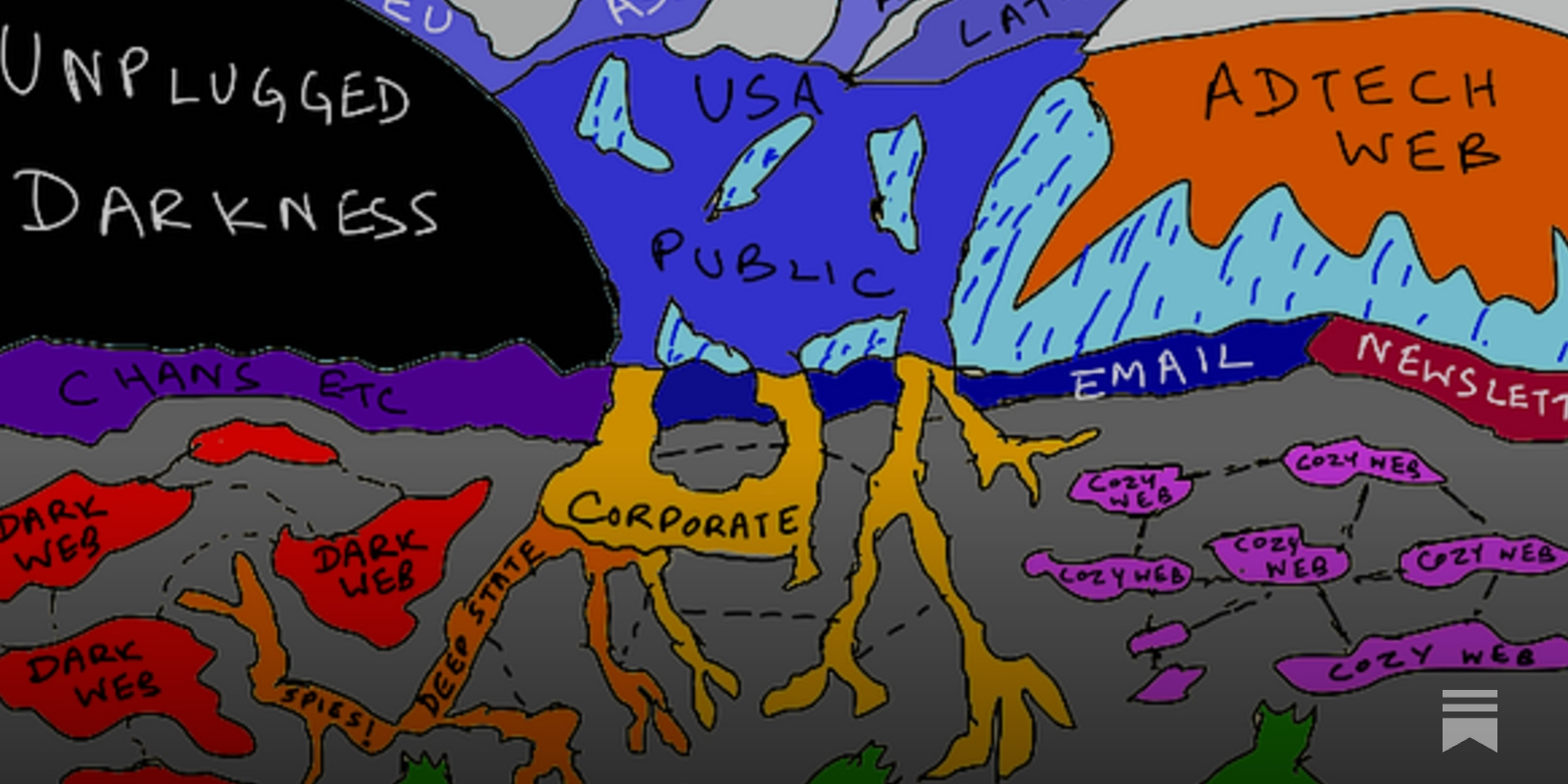
The Extended Internet Universe
The Internet is now a very complicated place
Kill The Internet IRL in Austin TX
A night of philosophizing in the digital age of chaos and decay. Discussions with three online public philosophers on technology, privacy, and the state of our internet enmeshed civilization.The D...

“The internet represents a closing of the parenthesis and a return to older models of understanding. Human consciousness in the digital age, which de-emphasizes the categorization that marked the age of print, makes us think in a way that is reminiscent of a medieval peasant.”
The Gutenberg Parenthesis
web.mit.edu