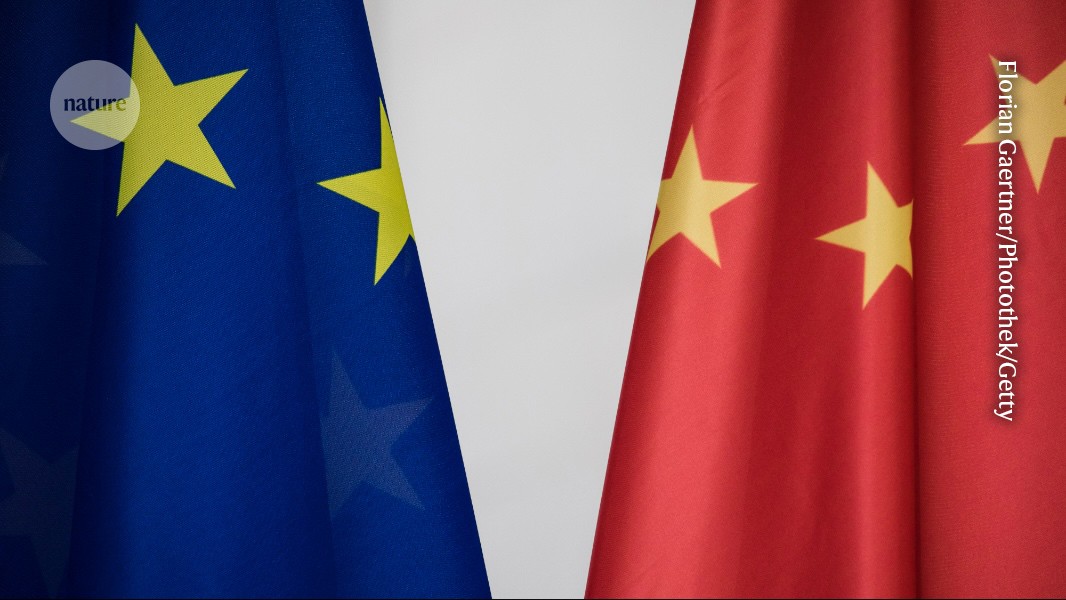
The geopolitical fight to come over green energy
The struggle for sustainable energy will soon put China, the US and Europe on a geopolitical collision course. But moving away from fossil fuels is a Herculean task, and a greener politics will not transcend tragedy.
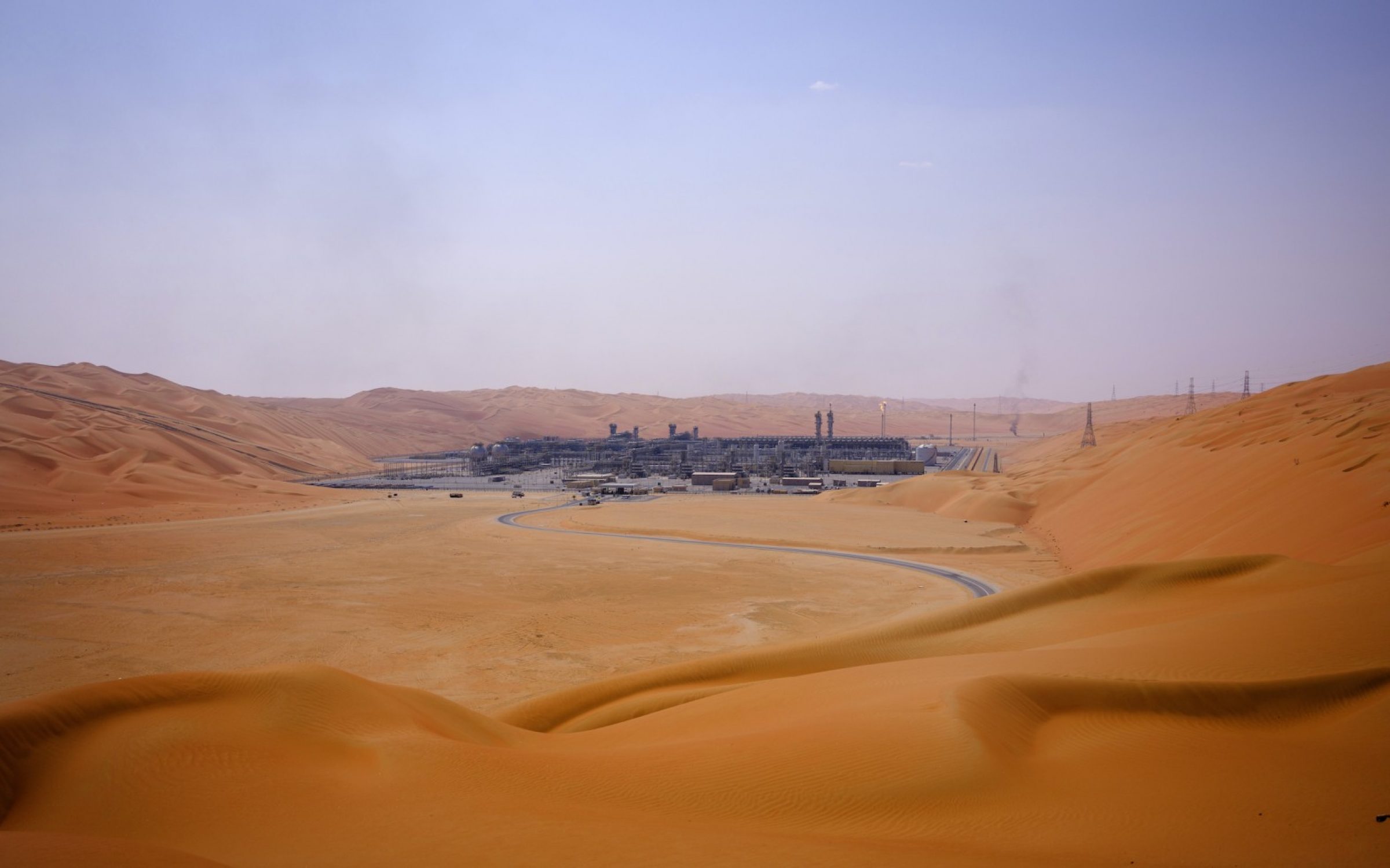
The Death of the Carbon Coalition
Existing models of U.S. politics are wrong. Here’s how the system really works.

The New Geopolitics Of The Green Transition
The only path forward for tackling the climate crisis hinges on cooperative industrial strategies to coordinate clean energy investment and infrastructure development.
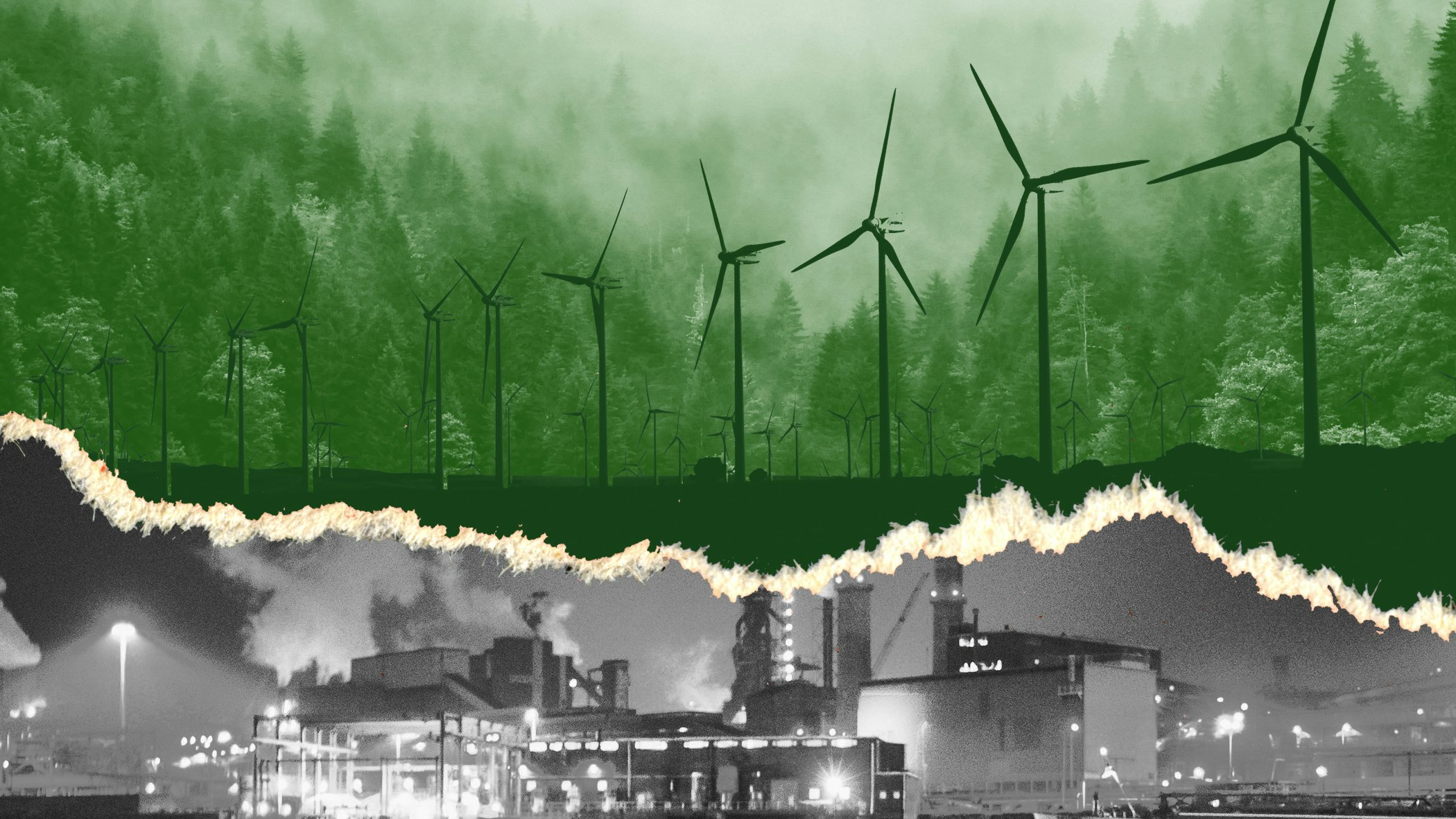

Imperial State Capitalism
A new geopolitics is shaping the development of AI and the energy transition.
The Case for a European-Chinese Green Pact
Jean Pisani-Ferry & Beatrice Weder di Mauro think both sides have much to gain from pursuing closer economic ties through clean energy and technology.
China’s $143 billion push to dominate the global EV industry
After years of investing in Europe, Chinese EV and battery firms are turning to Asia, Africa, and Latin America

How China’s Renewable Push Upends Geopolitics w/ Kate Mackenzie & Tim Sahay
China Is The World's First Electrostate - CleanTechnica
Carbon emissions in China fell slightly int he first quarter of 2025 as more renewable energy and storage came available.

How Xi sparked China’s electricity revolution
Beijing’s aggressive pursuit of energy self-sufficiency could give it the upper hand in the trade war with the US

‘The damage is done’: global oil crisis has changed fossil fuel industry for ever, IEA chief says
Exclusive: International Energy Agency’s Fatih Birol, the world’s leading energy economist, also says UK should largely forgo North Sea expansion

Electrification | Ember
Electrification can refer to different processes depending on the context. For example, increasing electricity access in emerging economies. At Ember, we focus on a specific type of electrification: replacing fossil fuels with electricity in sectors like transport, heating and industry. This kind of electrification cuts emissions and improves energy efficiency by replacing fossil fuels with clean power.

A Real Political Economy of Technology - The Ideas Letter
Two technological futures are competing for political and material priority: generative AI and the green transition. Benanav argues that while AI is marketed as a world-reordering breakthrough, its productivity gains…

Green economic planning as ‘directed entanglement’
Sustainability transformations depend on ambitious state action. We propose green economic planning as a framework for states to set ambitious climate plans and ensure policy coherence across three dimensions: inputs (sources of information, planning directors, and political regimes), processes (technical expertise and political negotiation), and outputs (monetary-financial, fiscal, and state ownership strategies). To capture how green economic planning works across democratic and authoritarian institutions, we conducted a comparative case study of three countries. France’s intersectoral non-green and Denmark’s sectoral green planning covers democratic institutions, while China’s intersectoral green planning covers authoritarian institutions. Through these cases, we show that 1) green economic planning is both feasible and adaptable across diverse political economies, 2) effective planning requires balancing decentralized information flow with strong central coordination, 3) successful planning depends on managing tensions between autonomous planning agencies, market discipline, and long-term political legitimacy. We term this ‘directed entanglement,’ positioning it as a cornerstone for the emerging research agenda on green economic planning—a blueprint for navigating the use of the state to steer a green transition under capitalism.n analytical framework of elite and resistant imaginaries to trace how these actors construct competing futures of platform labour in EU regulation. These imaginaries transpire in response to the reorganisation of labour relations amidst the digital transformation of socioeconomic institutions. They reveal how platform infrastructures challenge institutional boundaries and reshape the governance of work in the EU. Through a qualitative methodology that combines critical thematic and discourse analysis of stakeholder submissions, the study investigates the frictions that transpire when elite and resistant imaginaries encounter one another. The inductive framework of ‘elite’ and ‘resistant’ imaginaries of platform work illuminates the strategic negotiation of categories and its evolution throughout the policymaking process. The research contributes to scholarship on digital labour and the governance of platforms and algorithmic systems within the EU by offering a critical communications account of how competing imaginaries interact within the regulatory infrastructures of the digital economy. The central empirical contribution of the project lies in re-situating regulatory arbitrage through the analytical lens of elite/resistant imaginaries and discursive friction. The analysis demonstrates how BusinessEurope takes advantage of longstanding techniques of regulatory escape, such as burden shifting and legal fragmentation, and combines them with the systemic structural asymmetries within the European single market to incentivise lenience for platform self-governance models and soft law (Scharpf, 1999). By analysing digital transformation and status classification, the thesis demonstrates how the future of the platform labour economy is co-constructed through frictions that culminate in a sophisticated arbitrage strategy, organised around the ontological construction of the platform as an ‘intermediary’ (Gillespie, 2010). The next chapter discusses the conceptual map of regulatory arbitrage in the PWD as a critical output of the research and considers the limitations of this project, and the future trajectory of trade union discourse on platform work.
EU-AI | Igor L.
The geopolitical landscape is shifting from physical borders to digital infrastructure. Here is a factual breakdown of how a $500 billion investment in "Sovereign AI" is changing global power dynamics. The Shift: From Land to "Substrate" Historically, a nation’s power was defined by its territory and legal systems (the Westphalian model). Today, power is increasingly tied to the compute substrate—the physical hardware and energy required to run AI. 1. Infrastructural Enclosure The "Sovereign Compute Coalition" (SCC) represents a massive consolidation of power. Major private entities are acquiring the three pillars of modern national strength: * Hardware: High-end AI chips (e.g., Nvidia). * Energy: The massive power grids needed to fuel them. * Data Centers: The physical "brains" of the digital economy. 2. The Rise of Technocracy As private companies own these essential tools, governments may find themselves in a position where they effectively "rent" their ability to govern. This moves decision-making power away from elected officials and toward those who control AI infrastructure. 3. Europe’s Strategic Response Europe is launching several initiatives to avoid becoming a "client state" of foreign tech providers. The strategy focuses on four main channels: * 8ra Initiative: Building a decentralized, multi-provider cloud-edge architecture to ensure data remains under European control and interoperable across borders. * ReArm Europe: A strategic defense package (presented in March 2025) aimed at boosting industrial competitiveness and reducing strategic dependencies in technology and defense. * Sovereign LLMs: Developing domestic models, such as Mistral, that are designed to align with European data privacy standards and cultural values. * Energy & Procurement: Using public procurement and new regulatory frameworks to create demand for homegrown, sustainable energy-efficient compute solutions. The goal of these moves is #DigitalSovereignty : the ability for a region to control its own digital destiny without relying exclusively on transnational monopolies. Data tells the real story. Are you following it? Follow #datanomics
We don’t just need electric cars, we need fewer cars - Greenpeace International
Ever since the first production car rolled off the assembly line more than 100 years ago, our love affair with automobiles has grown and grown.

Energy systems can shape political institutions and make some nations more vulnerable to trade wars than others