

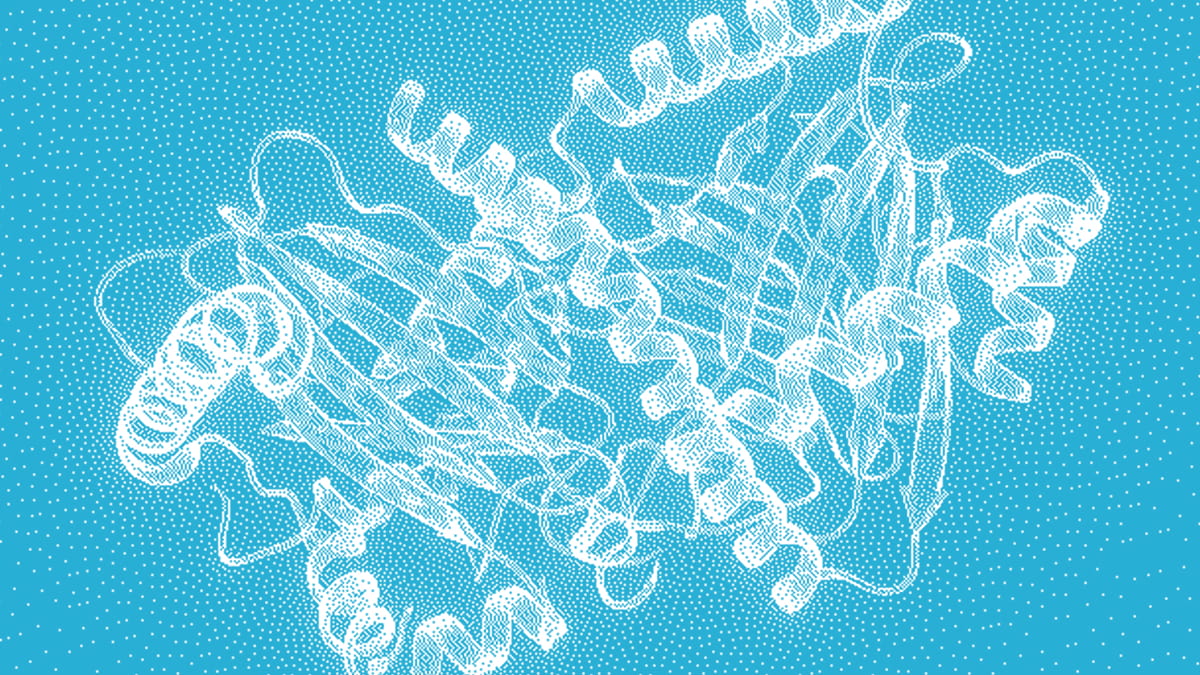
DISCO is a new multimodal generative model that co-designs protein sequence and 3D structure from scratch.
modeling_motif.py · Motif-Technologies/Motif-3-Beta at 32b030593c716a9bb860731baeef2925aaaaaf3a
We’re on a journey to advance and democratize artificial intelligence through open source and open science.

Biohub releases a world model of protein biology
Open AI models used for a wide range of scientific applications, including accelerating the design of therapeutic molecules.
NeuroRVQ: Multi-Scale Biosignal Tokenization for Generative Foundation Models
NeuroRVQ: Multi-Scale Biosignal Tokenization for Generative Foundation Models
Structure and evolution-guided design of minimal RNA-guided nucleases
The design of RNA-guided nucleases with properties not limited by evolution can expand programmable genome-editing capabilities. However, generating diverse multidomain proteins with robust enzymatic properties remains challenging. Here, we use a protein design strategy that couples a structure-guided inverse-folding model with evolution-informed residue constraints to generate active, divergent variants of TnpB, a minimal CRISPR-Cas12–like nuclease, termed SynTnpBs. High-throughput screening of artificial intelligence–generated variants yielded editors that retained or exceeded wild-type activity in bacterial, plant, and human cells. Cryo–electron microscopy–based structure determination of the most divergent variant revealed stabilizing contacts in the RNA–DNA interfaces across conformations, demonstrating the design potential of this approach. Together, these results establish a strategy for creating non-natural RNA-guided nucleases and conformationally active nucleic acid binders, enlarging the designable protein space. , Editor’s summary Enzyme design and engineering are challenging in part because there are few ways to improve catalytic activity but many ways to impair it. Evolution-aware approaches can leverage information from our collection of known natural sequences to guide the generation of diverse engineered enzymes that are more likely to retain function. Skopintsev et al . demonstrated engineering of an RNA-guided nuclease using inverse protein-folding models. Screening of candidates nominated by their approach revealed improvement of genome-editing activity. An experimental structure revealed how conformational dynamics are changed in the engineered enzymes, stabilizing the key RNA-DNA interface. —Michael A. Funk
Dean W. Ball on Twitter / X
Ok two more:1. AI will enable the design of custom enzymes that can catalyze industrial processes and chemical manufacturing faster than existing methods. In some cases this will make existing chemicals cheap enough that it becomes possible to use them for totally new use… https://t.co/jL3bNm0s9w— Dean W. Ball (@deanwball) October 9, 2026
README.md · Motif-Technologies/Motif-3-Beta at 32b030593c716a9bb860731baeef2925aaaaaf3a
We’re on a journey to advance and democratize artificial intelligence through open source and open science.
Motif-Technologies/Motif-3-Beta at 32b030593c716a9bb860731baeef2925aaaaaf3a
We’re on a journey to advance and democratize artificial intelligence through open source and open science.
AlphaFold2 @ CASP14: “It feels like one’s child has left home.”
The past week was a momentous occasion for protein structure prediction, structural biology at large, and in due time, may prove to be so for the whole of life sciences. CASP14, the conference for …

Crops In Silico: Generating Virtual Crops Using an Integrative and Multi-scale Modeling Platform
Multi-scale models can facilitate whole plant simulations by linking gene networks, protein synthesis, metabolic pathways, physiology, and growth. Whole plant models can be further integrated with ecosystem, weather, and climate models to predict how various interactions respond to environmental perturbations. These models have the potential to fill in missing mechanistic details and generate new hypotheses to prioritize directed engineering efforts. Outcomes will potentially accelerate improvement of crop yield, sustainability, and increase future food security. It is time for a paradigm shift in plant modeling, from largely isolated efforts to a connected community that takes advantage of advances in high performance computing and mechanistic understanding of plant processes. Tools for guiding future crop breeding and engineering, understanding the implications of discoveries at the molecular level for whole plant behavior, and improved prediction of plant and ecosystem responses to the environment are urgently needed. The purpose of this perspective is to introduce Crops in silico (cropsinsilico.org), an integrative and multi-scale modeling platform, as one solution that combines isolated modeling efforts toward the generation of virtual crops, which is open and accessible to the entire plant biology community. The major challenges involved both in the development and deployment of a shared, multi-scale modeling platform, which are summarized in this prospectus, were recently identified during the first Crops in silico Symposium and Workshop.

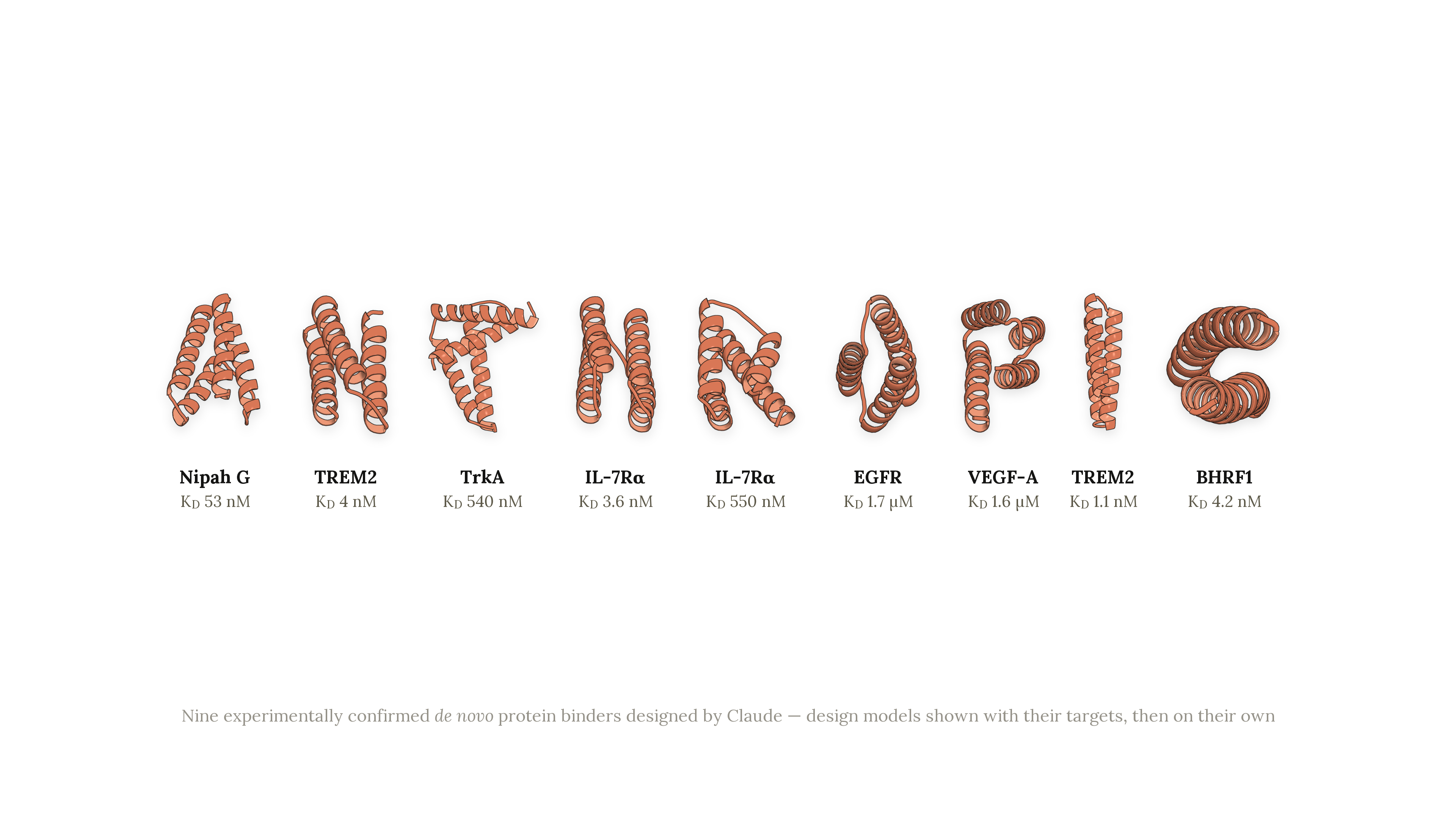
Claude accelerates protein design and analytical chemistry
Two results show how Claude helps life sciences researchers speed up their work: designing protein binders from scratch and analyzing NMR and LC-MS data to speed chemical analysis.
GenBio ICML Workshop 2026
The 2026 workshop on Generative and Agentic AI for Biology at ICML 2026, Seoul, South Korea.
Claude discovers a novel enzyme system
In early results from our new life sciences research lab, Claude agents found an enzyme system whose function is still unknown.
Import AI 459: AI oversight is difficult; scaling laws for protein folding models; and pricing the extinction risk of AI systems
Do you feel as though you are living in a revolution?

Aaron Steven White
computational semanticist. into modular synths and rum. https://aaronstevenwhite.io
DeepMind releases structure predictions for nearly every known protein
Database powered by AlphaFold algorithm now boasts predicted structures for over 200 million proteins
