

Some of the most influential designers I’ve worked with had no direct reports. They didn't spend their days assigning work, running performance reviews, or deciding who got promoted. Yet they could change the direction of a project, raise the quality bar of a team, and sometimes change the strategy for the entire company. Individual contributors can develop influence by giving people reasons to trust their judgment, then finding ways for that judgment to travel beyond the things they personally make.
Open Source Software and Corporate Influence — Andrew Lilley Brinker
Exploring how corporations gain power in open source projects, and how to build resilience to corporate capture.
Leadership: Values
A question I get quite frequently is “What makes a good leader?” One of the most important aspects of a good leader is that they have values. This may at first sound noncontroversial, but we are surrounded today by leaders who do not have values or whose only values are to get rich personally or to be powerful (or both). Tech investors have been especially guilty of enabling charismatic leaders, and sometimes even non-charismatic but wildly successful ones, who are fundamentally hollow and wi...
Properly Valuing Contributions
A major part of our mission as a company is to empower people. So naturally, at Qbix, we give a lot of thought to the best ways of doing that. This post describes a compensation model that we have designed, which clearly rewards people for their contributions, and actually drives everyone to compete

A game of co-opetition: exploring the benefits of asset owner collaboration - Thinking Ahead Institute
It may seem like a hidden truth but the reality is that asset owners are in competition with each other. They are in competition for the best alpha ideas, the best manager products and the best research – all with the aim of improving risk-return trade-offs to increase the likelihood of meeting their liabilities. As a result, many asset owners find it difficult to collaborate, even in initiatives that may prove mutually beneficial. At the Thinking Ahead Institute’s recent Sydney roundtable event, asset owner attendees highlighted the top three barriers to successful peer collaboration: (1) difficulties being transparent; (2) lack of time and resources available; and (3) difficulties in aligning interests. At the same time, attendees agreed on the value to funds of collaborating productively on industry structure and regulation, and on a universal owner / alignment of interest agenda.

Read the Principles — Design Justice Network
Design mediates so much of our realities and has tremendous impact on our lives, yet very few of us participate in design processes. In particular, the people who are most adversely affected by design decisions — about visual culture, new technologies, the planning of our communities, or the structure of our political and economic systems — tend to have the least influence on those decisions and how they are made.

The open source community that embraces designers most, wins.
That’s my theory. Here’s my reasoning:

Can we measure trust in scientific publications? - LSE Impact
Jonathon Alexis Coates outlines how a constellation of static and dynamic indicators could provide a means for assessing the trustworthiness of published research

Where do IC designers go once they peak? — Tanner Christensen's blog
On why senior individual-contributor designers shouldn't have to move into management to grow—and how the industry can build a real IC leadership track.

Jenny Wen: The design process is dead. Why Designers can no longer trust it.
Can Puck reinvent the news business for the influencer age?
CEO Sarah Personette’s risky bet on journalists as influencers

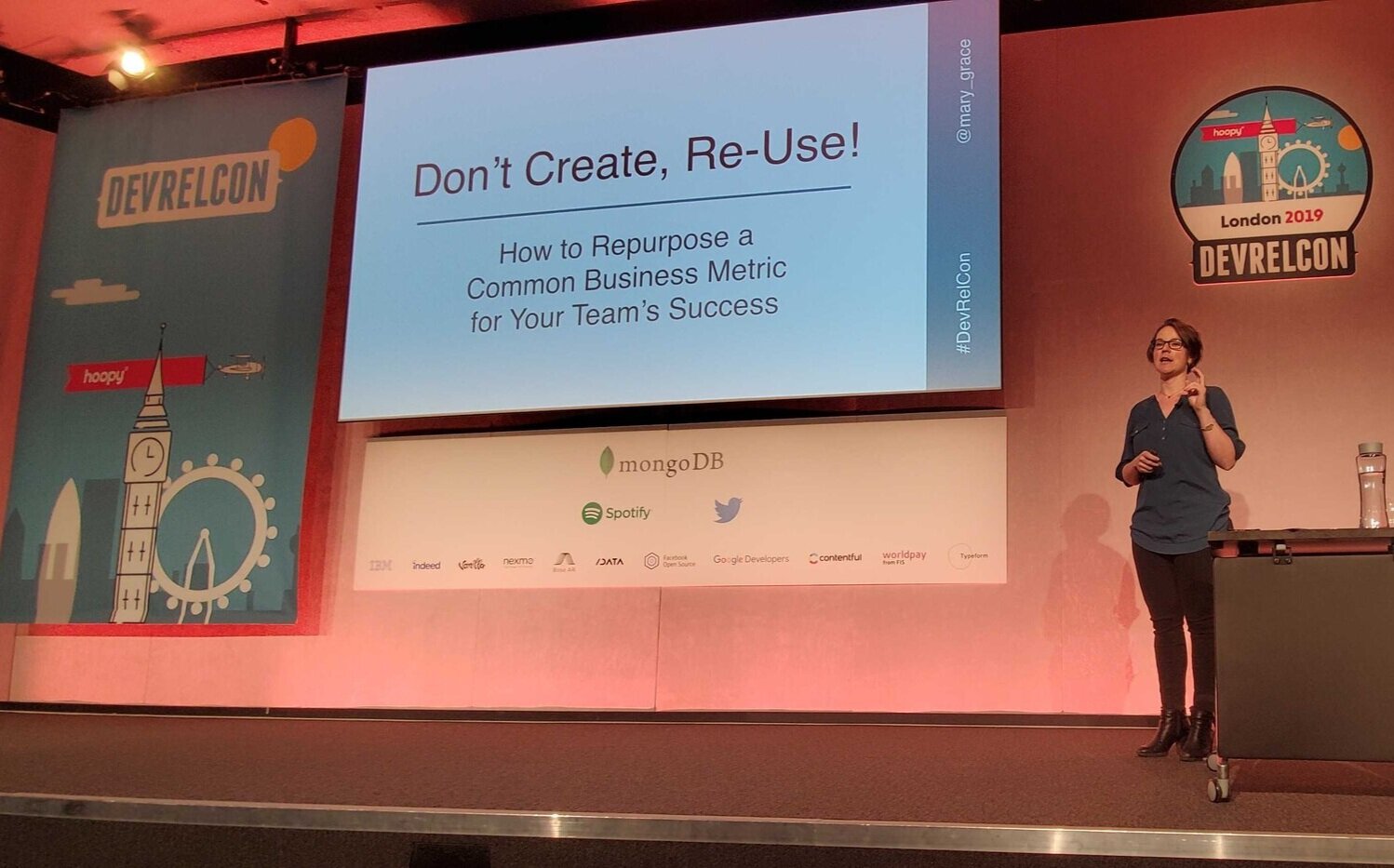
DevRel Qualified Leads: Repurposing a Common Business Metrics to Prove Value — Mary Thengvall - Community Builder
What if Developer Relations professionals are the best equipped to deliver on a company’s most important metric? In this post, I present the idea of DevRel Qualified Leads. By expanding the definition of a qualified lead, you’ll be able to use your relationship-building skills to prove your team’s b
The collaboration curse
The fashion for making employees collaborate has gone too far

Trust is the most powerful currency in business | Fortune
A clear sense of ethics tells employees, clients, and members of your community that you care about a lot more than making money.

Fundamental design principles for non-designers
By Anna 4erepawko Mészáros This one is for all the content creators out there who can’t afford to pay a professional designer, as well as for non-designers on a team where designers are always too busy to help. If you can follow these simple steps, I...

Digital Strategists: Network of Manipulation Projects and Buying Influencers for Israel | Arabic Post
Arabic Post Exposes the Network of "Buying Influencers" in America Since the Start of the Gaza War