We live in a globalized world, not only in terms of trade and migration. More people than ever care about global development. But most people have severe misconceptions about contemporary global development. We know, because we have tested people’s knowledge. One of the main reasons for this is that students don’t learn to understand the world based on statistics and facts. Instead, we have a dramatic worldview formed by outdated school books and sensationalist news-stories. People intuitively believe that most things are getting worse. The dramatic worldview leads to irrational decisions by individuals, nonprofits, governments and business. For the first time in human history reliable statistics exist. There’s data for almost every aspect of global development. The data shows a very different picture: a world where most things improve; a world that is not divided; and a world where the fast population growth will soon be over. The world has never been less bad. But that doesn’t mean it’s perfect.
World-systems theory
World-systems theory is a multidisciplinary approach to world history and social change which emphasizes the world-system as the primary unit of social analysis. World-systems theorists argue that their theory explains the rise and fall of states, income inequality, social unrest, and imperialism.

Interdependent Thoughts – by Ton Zijlstra
Still, many questions have global aspects. Our information networks, our trade routes, our dependencies are truly global. Because of it many of our issues, including climate emergencies, are global in both their roots and consequences. We all suffer from small earth syndrome these days, as I phrased it in 2010 at the SHiFT Conference, where everything anyone of us does reverberates around the world because we are continuously bumping into real global limits, Club of Rome style.
Worlddata: The world in numbers
Statistics, comparisons and rankings: comprehensive geography and demography database on all countries in the world.
The Divide — Jason Hickel
The Divide: A Brief Guide to Global Inequality and its Solutions Penguin Random House UK, 2017

A World Unobserved
Humans have always generated knowledge and judged it. That's changing fast.

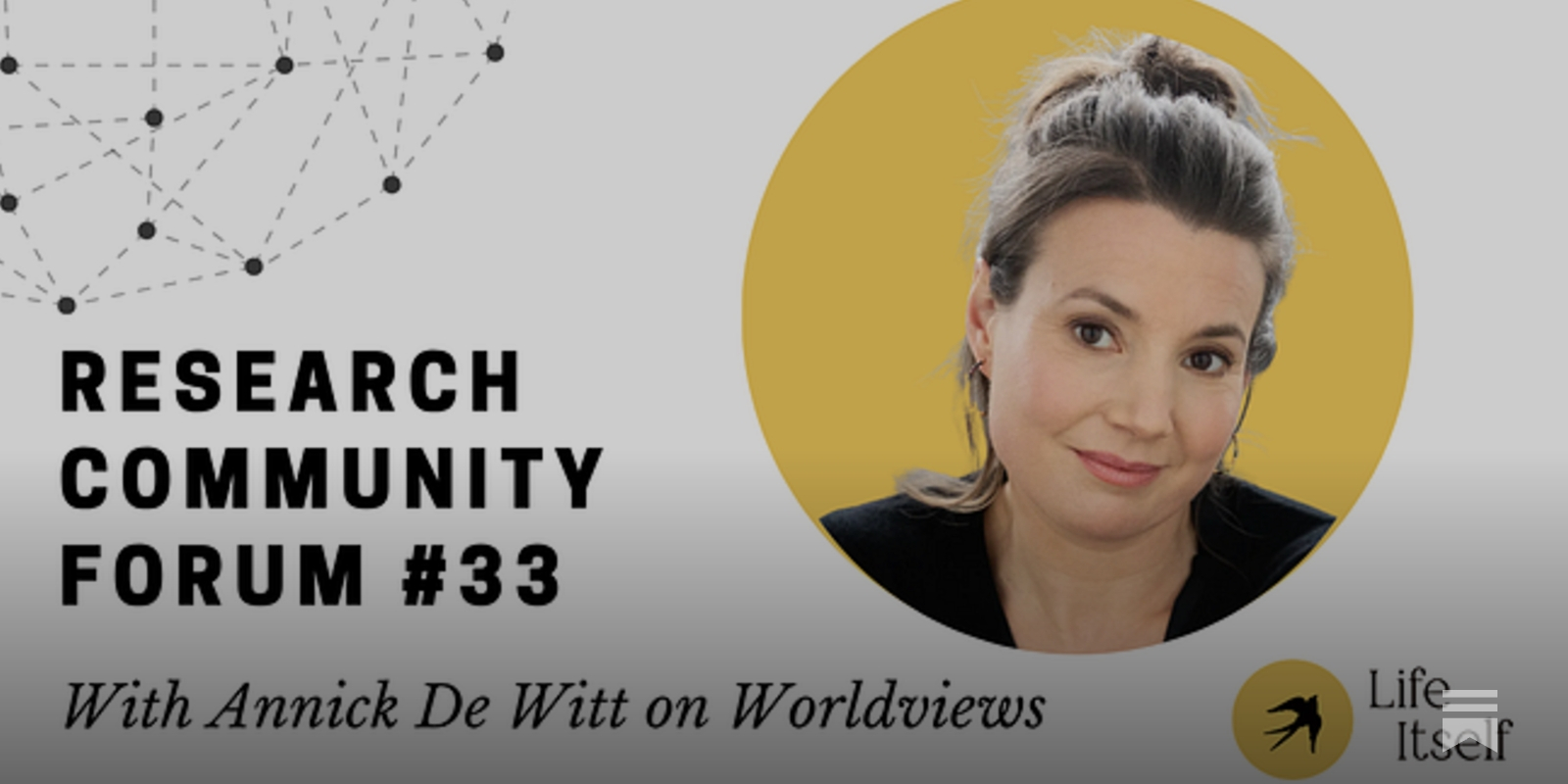
Annick de Witt on Worldview Theory in a Time Between Worlds
Join us for the Life Itself Research Community Call#33. Annick de Witt discusses how her research on worldviews helps us respond to our current period of global societal transition.
The Fallacy of Endless Economic Growth
What economists around the world get wrong about the future.


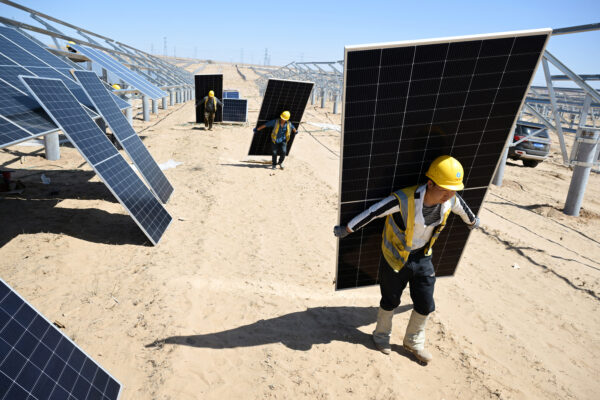
The Great Reckoning - The Ideas Letter
The world feels unsettled, as if history itself were changing tempo. The familiar landmarks of the modern age are blurring, slipping away, and the stories we once told ourselves about…
The Great Reckoning - The Ideas Letter
The world feels unsettled, as if history itself were changing tempo. The familiar landmarks of the modern age are blurring, slipping away, and the stories we once told ourselves about…
The Gargantuan Lie That is Collapsing The World’s Climate
Thinking we have time left to address climate change, or that “Net Zero by 2050” will save us, is driving us toward full social collapse in ways that become more obvious with every new broken temperature record.

Living in Data: A Citizen's Guide to a Better Information Future (Paperback)
Jer Thorp’s analysis of the word “data” in 10,325 New York Times stories written between 1984 and 2018 shows a distinct trend: among the words most closely associated with “data,” we find not only its classic companions “information” and “digital,” but also a variety of new neighbors—from “scandal” and “misinformation” to “ethics,” “friends,” and “play.”To live in data in the twenty-first century

Thinking together
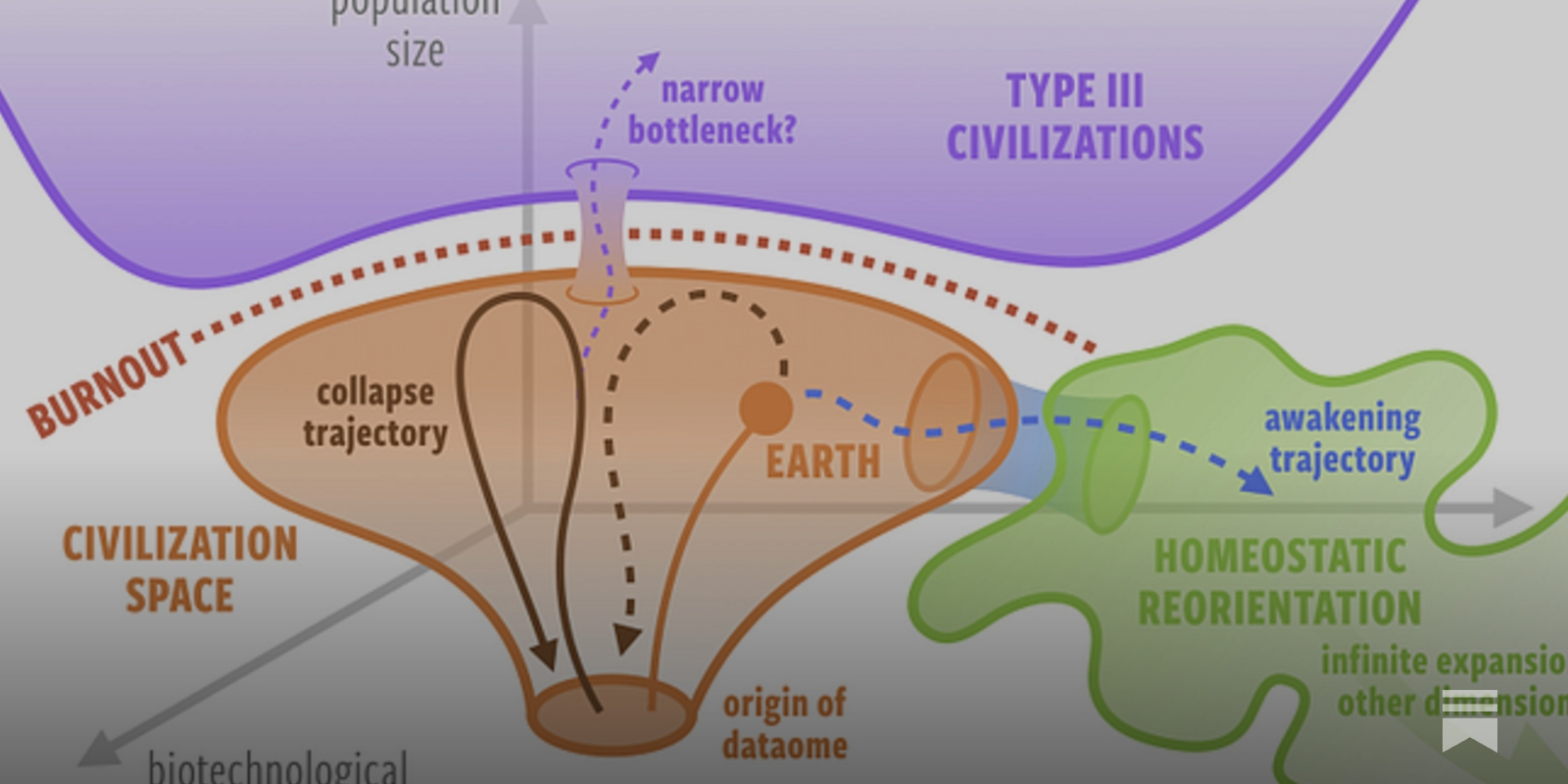
While analyzing a global history databank spanning 10,000 years, Shin, et al found a disconcerting pattern. Civilizations scale until they are overwhelmed by the information environment they create. This is The Information Scaling Threshold.
‘Self-termination is most likely’: the history and future of societal collapse
An epic analysis of 5,000 years of civilisation argues that a global collapse is coming unless inequality is vanquished

The problem of knowledge in the Anthropocene
In the twentieth century, debates about economic planning were largely shaped by arguments concerning knowledge and the acquisition of information. As the century drew to a close, the dispute was a...

What makes people flourish? A new survey of more than 200,000 people across 22 countries looks for global patterns and local differences
A global study seeks insights into what helps people feel happy, healthy and satisfied – and what holds them back.