

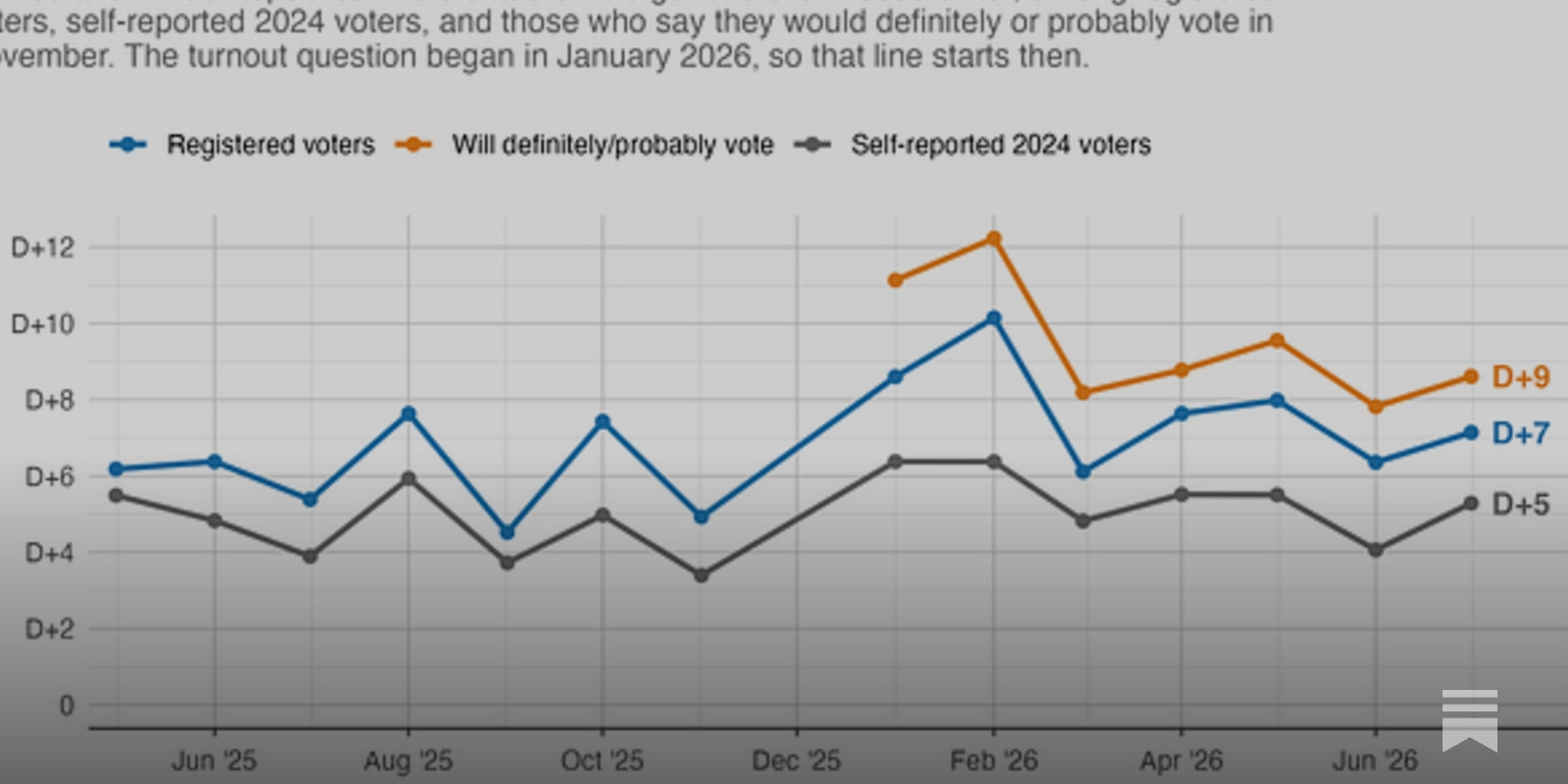
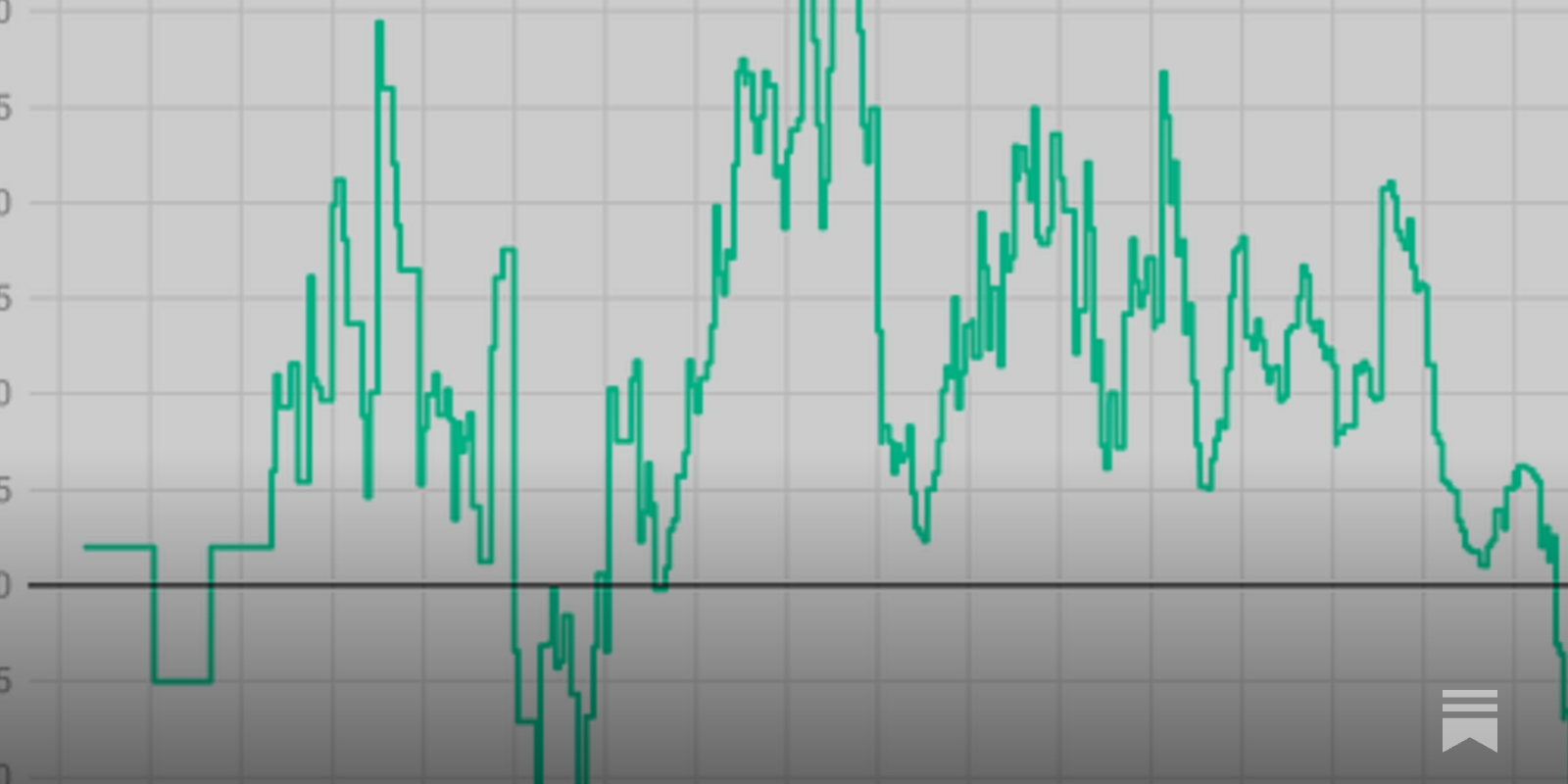
In every wave of our poll this year, screening for likely voters has nudged the congressional generic ballot a point or two bluer
The Median Voter Theorem is a Clarity Trap
What the Democratic party needs - what it demands - is bold, persistent experimentation
Maine Voters 50+ Could Help Decide Closely Watched 2026 Races
Rising prices, affordability, and threats to democracy are motivating older Maine voters in the 2026 election.
Why Are American Presidential Election Campaign Polls so Variable When Votes Are so Predictable?
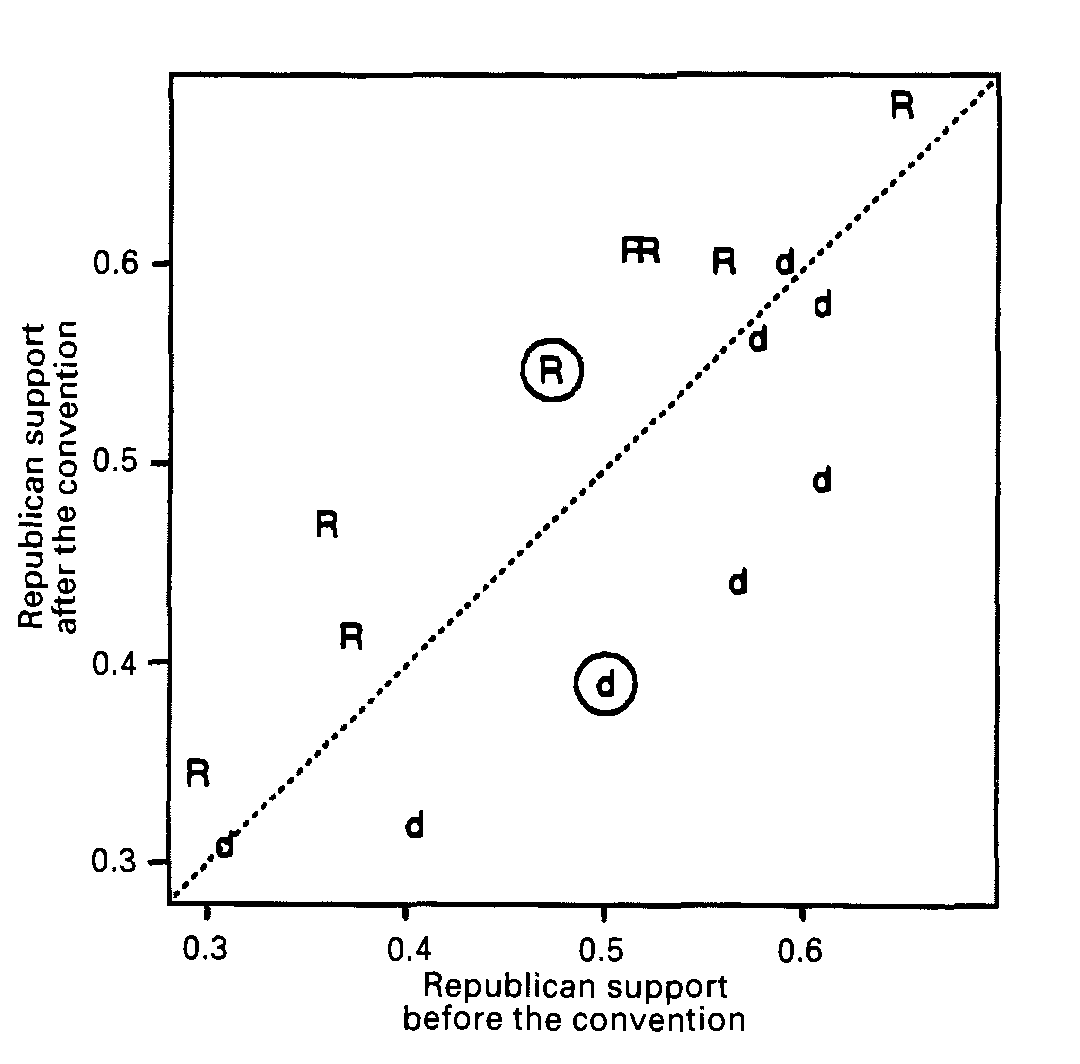
As most political scientists know, the outcome of the U.S. Presidential election can be predicted within a few percentage points (in the popular vote), based on information available months before the election. Thus, the general election campaign for president seems irrelevant to the outcome (except in very close elections), despite all the media coverage of campaign strategy. However, it is also well known that the pre-election opinion polls can vary wildly over the campaign, and this variation is generally attributed to events in the campaign. How can campaign events affect people's opinions on whom they plan to vote for, and yet not affect the outcome of the election? For that matter, why do voters consistently increase their support for a candidate during his nominating convention, even though the conventions are almost entirely predictable events whose effects can be rationally forecast? In this exploratory study, we consider several intuitively appealing, but ultimately wrong, resolutions to this puzzle, and discuss our current understanding of what causes opinion polls to fluctuate and yet reach a predictable outcome. Our evidence is based on graphical presentation and analysis of over 67,000 individual-level responses from forty-nine commercial polls during the 1988 campaign and many other aggregate poll results from the 1952–1992 campaigns. We show that responses to pollsters during the campaign are not generally informed or even, in a sense we describe, "rational." In contrast, voters decide which candidate to eventually support based on their enlightened preferences, as formed by the information they have learned during the campaign, as well as basic political cues such as ideology and party identification. We cannot prove this conclusion, but we do show that it is consistent with the aggregate forecasts and individual-level opinion poll responses. Based on the enlightened preferences hypothesis, we conclude that the news media have an important effect on the outcome of Presidential elections–-not due to misleading advertisements, sound bites, or spin doctors, but rather by conveying candidates' positions on important issues. Winner of the Pi Sigma Alpha Awardfor the best paper at the previous year's meetings of the Midwest Political Science Association. Replication data at the Harvard Dataverse: [https://doi.org/10.7910/DVN/I7GIKD](https://doi.org/10.7910/DVN/I7GIKD).
An Examination of Ranked Choice Voting in the United States, 2004-2022
From the perspective of social choice theory, ranked-choice voting (RCV) is known to have many flaws. RCV can fail to elect a Condorcet winner and is susceptible to monotonicity paradoxes and the spoiler effect, for example. We use a database of 182 American ranked-choice elections for political office from the years 2004-2022 to investigate empirically how frequently RCV's deficiencies manifest in practice. Our general finding is that RCV's weaknesses are rarely observed in real-world elections, with the exception that ballot exhaustion frequently causes majoritarian failures.

The Democratic image is underwater — but they're not losing
The party has a near-historically low favorability rating. This is mostly due to disaffection on the left, where voters still say they'll vote Democratic for the midterms
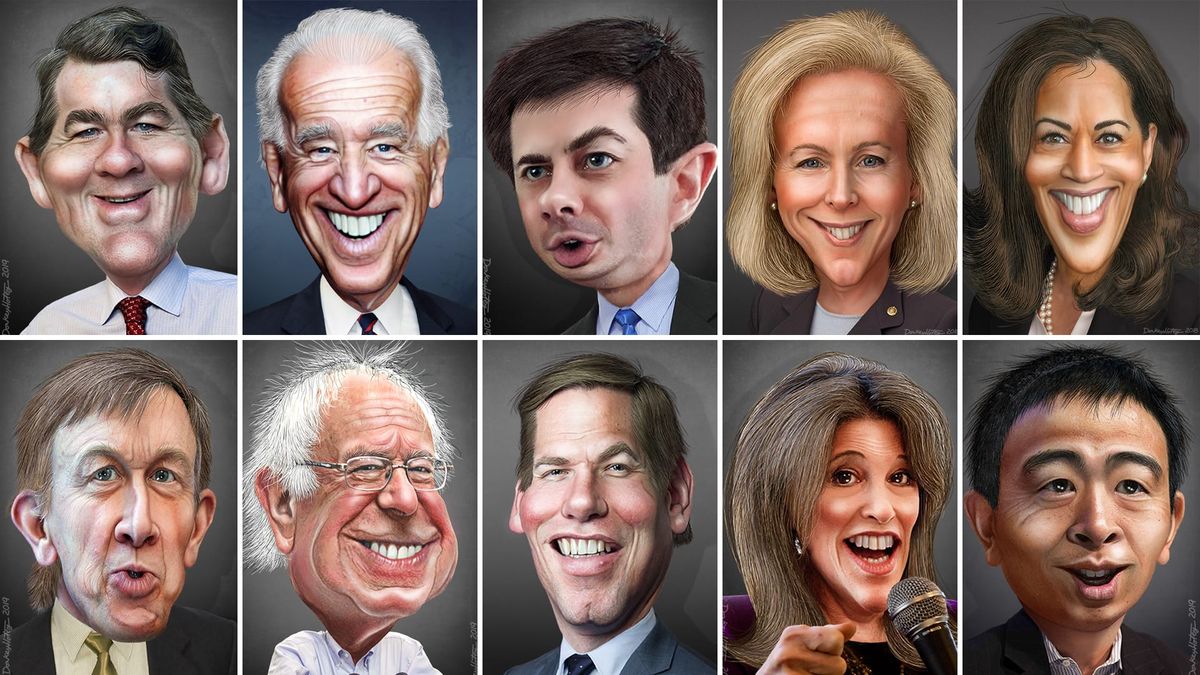
Let's Rethink the Primary Process for 2028
Primary season is closer than you think—can Democrats avoid their most damaging mistakes of 2020?
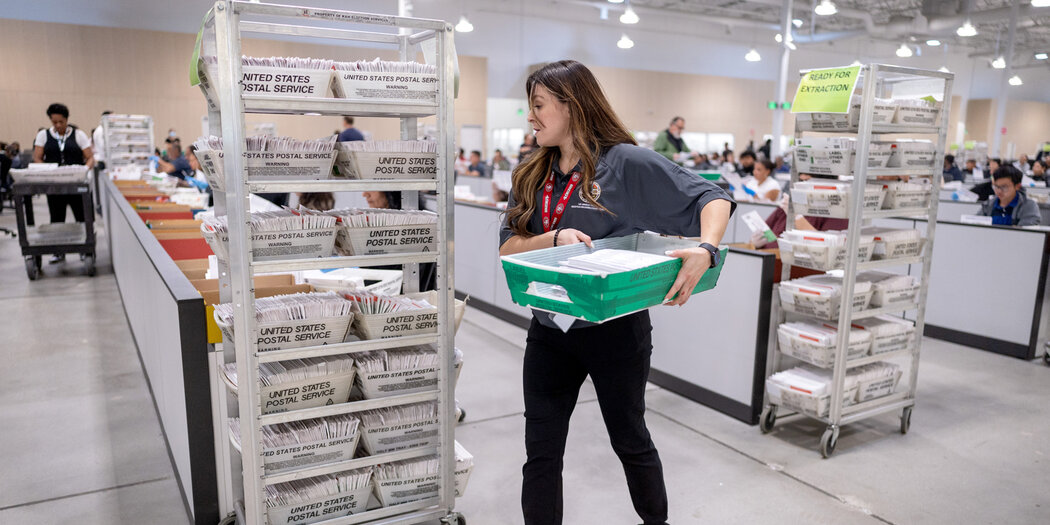
Anticipating Election Misinformation in the 2026 Midterms
Election misinformation often follows the same pattern every cycle. Here are some of the false and misleading claims that voters are likely to see.
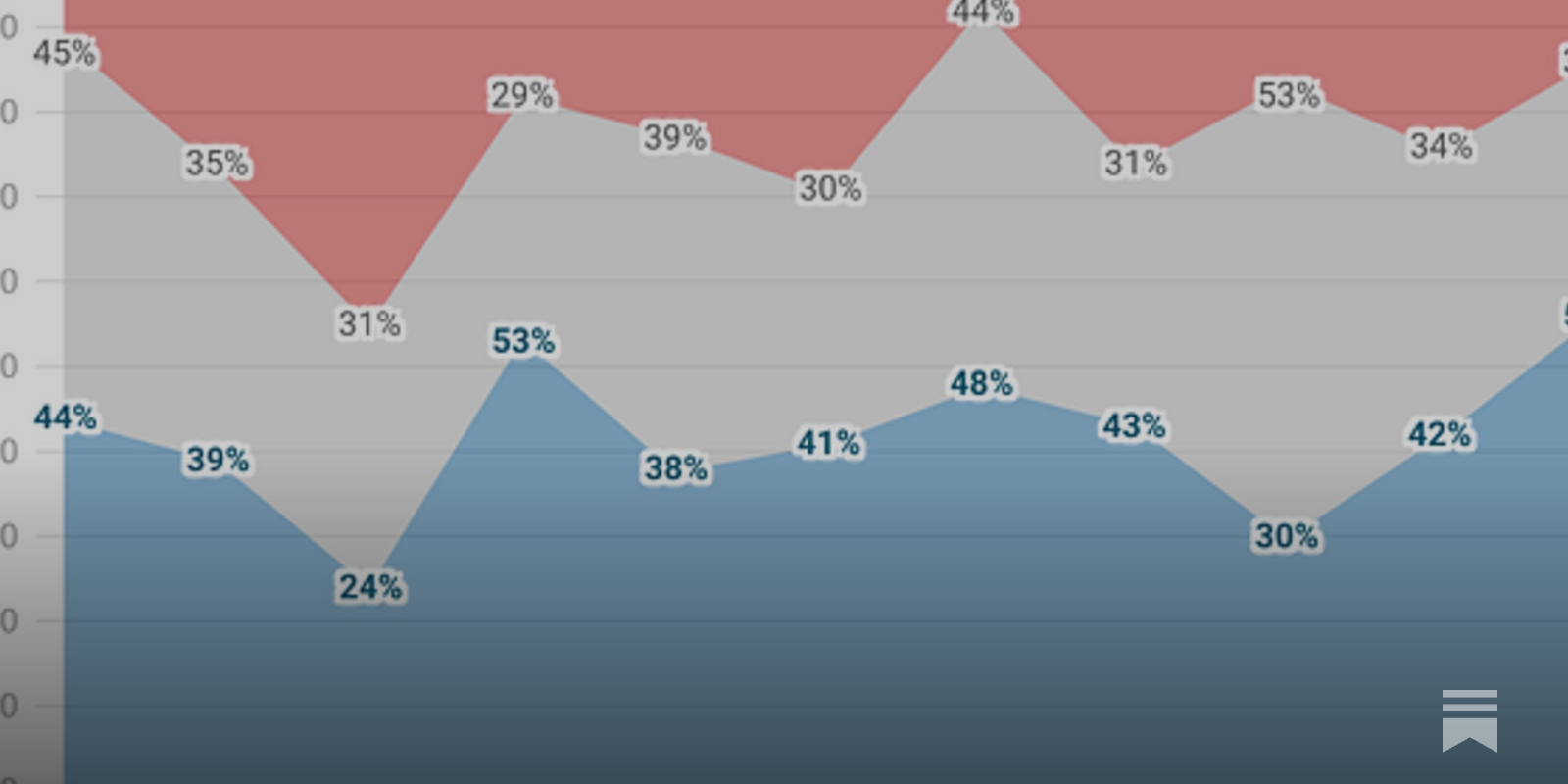
Why does every poll seem to show a tossup now?
Campaigns see internal polls as tools for fundraising
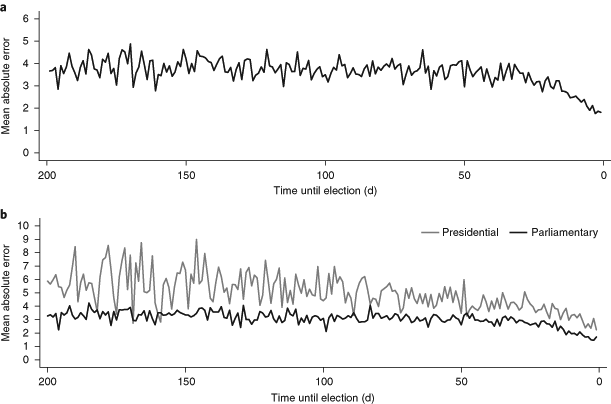
Election polling errors across time and space
Are election polling misses becoming more prevalent? Are they more likely in some contexts than others? Here we undertake an over-time and cross-national assessment of prediction errors in pre-election polls. Our analysis draws on more than 30,000 national polls from 351 general elections in 45 countries between 1942 and 2017. We proceed in the following way. First, building on previous studies, we show how errors in national polls evolve in a structured way over the election timeline. Second, we examine errors in polls in the final week of the election campaign to assess performance across election years. Third, we undertake a pooled analysis of polling errors—controlling for a number of institutional and party features—that enables us to test whether poll errors have increased or decreased over time. We find that, contrary to conventional wisdom, the recent performance of polls has not been outside the ordinary. However, the performance of polls does vary across political contexts and in understandable ways.
Victorian State Voting Intention: L-NP (26%) and ALP (26%) level on primary and ahead of One Nation (23.5%); however, L-NP narrowly leads ALP on two-party preferred basis (51% cf. 49%) - Roy Morgan Research
In early August the L-NP Coalition 26% (up 2% since April) and ALP 26% (up 0.5%) are level on primary vote ahead of One Nation 23.5% (down 1%) and 24.5% (down 1.5%) support Other Parties and Independents including the Greens 12.5% (down 1%), Other Parties 4% (unchanged) and Independents 8% (down 0.5%) according to a special SMS Roy Morgan Poll conducted from August 5-7, 2026, with a representative Victoria-wide cross-section of 2,084 electors.

The Twilight of the Polls? A Review of Trends in Polling Accuracy and the Causes of Polling Misses
Polls have had a number of high-profile misses in recent elections. We review the current polling environment, the performance of polls in a historical context, the mechanisms of polling error, and the causes of several recent misses in Britain and the US. Contrary to conventional wisdom, polling errors have been constant over time, although the level of error has always been substantially beyond that implied by stated margins of error. Generally, there is little evidence that voters lying about their vote intention (so-called ‘shy’ voters) is a substantial cause of polling error. Instead, polling errors have most commonly resulted from problems with representative samples and weighting, undecided voters breaking in one direction, and to a lesser extent late swings and turnout models. We conclude with a discussion of future directions for polling both in terms of fixing the problems identified and new approaches to understanding public opinion.
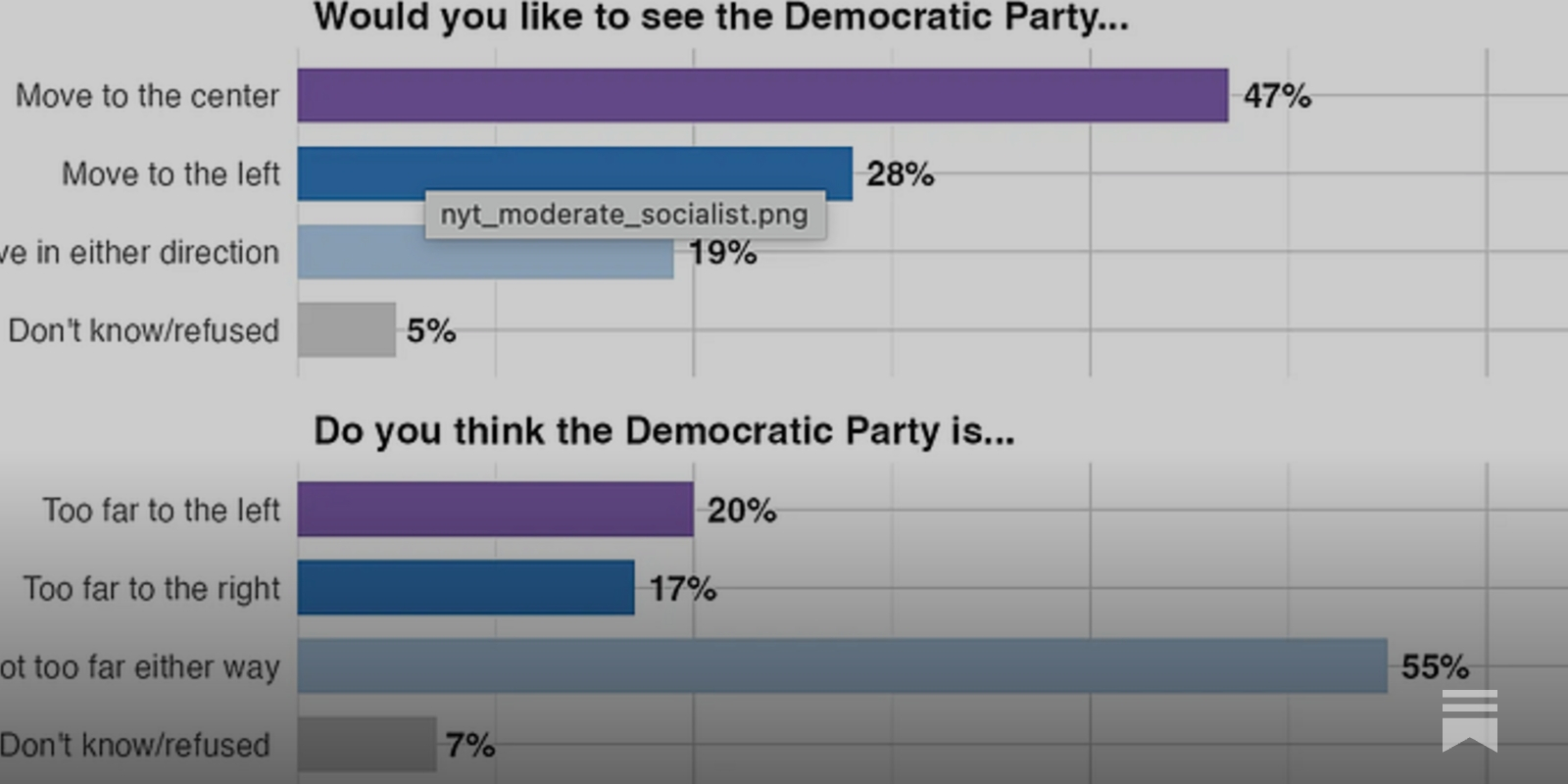
Democratic voters want the party to be more moderate — and more socialist?
The trouble with polling about ideological labels
Victorian Election is ‘too close to call’ today: ALP/Greens (46 seats) narrowly ahead of L-NP/ONP (42 seats); One Nation set to win over 10 seats in Lower House - Roy Morgan Research
Before all candidates are locked in, before preference deals are done, and before the campaign begins in earnest in the next few weeks Roy Morgan has created a Winnability Score. It combines current State voting intention with how closely an electorate's voter profile aligns with each party's core support base. In other words, it measures not only who is currently voting for a party, but also which voters are most likely to be persuaded to support that party.
Do AI and bogus respondents threaten polling’s future?
Courtney Kennedy, vice president of methods and innovation, answers some common questions about the current polling landscape in the U.S.

2026 Election Mega-Preview: The Wisconsin State Senate
Democrats are in position to win control of the State Senate.
New YouGov/Economist poll out this AM has Democrats up 11 points on the House vote among likely voters. This is with named candidates, not the usual "generic ballot," which in my testing with CES data is typically more accurate in forecasting outcomes d3nkl3psvxxpe9.cloudfront.net/documents/econTabReport_SlcWd…
