


Learn about microdosing estrogen regimens and their effects from a quick guide to feminizing hormone therapy.
Overview of feminizing hormone therapy | Gender Affirming Health Program
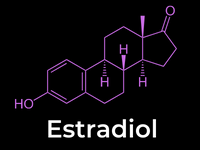
The goal of feminizing hormone therapy is the development of female secondary sex characteristics, and suppression/minimization of male secondary sex characteristics. General effects include breast development (usually to Tanner stage 2 or 3), a redistribution of facial and body subcutaneous fat, reduction of muscle mass, reduction of body hair (and to a lesser extent, facial hair), change in sweat and odor patterns, and arrest and possible reversal of scalp hair loss. Sexual and gonadal effects include reduction in erectile function, changes in libido, reduced or absent sperm count and ejaculatory fluid, and reduced testicular size. Feminizing hormone therapy also brings about changes in emotional and social functioning. The general approach of therapy is to combine an estrogen with an androgen blocker, and in some cases a progestogen.
When Women Initiate Estrogen Therapy Matters | The Menopause Society
New large-scale analysis shows potential long-term benefits of initiating hormones during perimenopause

Microdosing hormones expands gender-affirming care options for non-binary folks - San Francisco AIDS Foundation
Non-binary and transgender people have adopted low-dose gender-affirming hormone therapy in pursuit of their most authentic selves.

An Introduction to Hormone Therapy for Transfeminine People
An Introduction to Hormone Therapy for Transfeminine People by Aly
A Review of Selective Estrogen Receptor Modulators and their Potential for Transfeminine Hormone Therapy
A Review of Selective Estrogen Receptor Modulators and their Potential for Transfeminine Hormone Therapy by Lain
Transfemme nonbinary hormone therapy
Things started working when I was able to talk to a provider who had some experience with SERMs. They acknowledged that spironolactone wasn’t working for me, and prescribed leuprolide injections. They also said they had no experience with raloxifene, but had used tamoxifen, a different SERM, in a previous patient. This turned out to be a lucky coincidence for me, because on tamoxifen, I definitely did notice some estrogenic effects, but not in my breasts.
An Exploration of Possibilities for Hormone Therapy in Non-Binary Transfeminine People
An Exploration of Possibilities for Hormone Therapy in Non-Binary Transfeminine People by Aly
Progesterone Is Important for Transgender Women’s Therapy—Applying Evidence for the Benefits of Progesterone in Ciswomen
Current transgender women’s therapy is estradiol/antiandrogen. I suggest adding progesterone, given its antiandrogen, breast-feminizing, bone-formation, sl
Transfeminine Science
Transfeminine Science is a site for information on hormone therapy for transfeminine people.

Translational Significance of Selective Estrogen Receptor Modulators in Psychiatric Disorders
Accumulating data from various clinical trial studies suggests that adjuvant therapy with ovarian hormones (estrogens) could be effective in reducing cognitive deficit and psychopathological symptoms in women with psychiatric disorders. However, estrogen therapy poses serious limitations and health issues including feminization in men and increased risks of thromboembolism, hot flashes, breast hyperplasia, and endometrium hyperplasia when used for longer duration in older women (aged ≥ 60 years) or in women who have genetic predispositions. On the other hand, selective estrogen receptor modulators (SERMs), which may (or may not) carry some risks of hot flashes, thromboembolism, breast hyperplasia, and endometrial hyperplasia, are generally devoid of feminization effect. In clinical trial studies, adjuvant therapy with tamoxifen, a triphenylethylene class of SERM, has been found to reduce the frequency of manic episodes in patients with bipolar disorder, whereas addition of raloxifene, a benzothiophene class of SERM, to regular doses of antipsychotic drugs has been found to reduce cognitive deficit and psychological symptoms in men and women with schizophrenia, including women with treatment refractory psychosis. These outcomes together with potent neurocognitive, neuroprotective, and cardiometabolic properties suggest that SERMs could be the potential targets for designing effective and safer therapies for psychiatric disorders.

Gender-affirming endocrine care for youth with a nonbinary gender identity
Nonbinary individuals, or those who identify outside of the traditional gender binary, are currently present in up to 9% of the general population of youth or up to 55% of gender-diverse youth. Despite the high numbers of nonbinary individuals, this population continues to experience barriers to healthcare due to providers’ inability to see beyond the transgender binary and lack of competence in providing nonbinary care. In this narrative review, we discuss using embodiment goals to individualize care of nonbinary individuals, and review hormonal and nonhormonal treatment options for gender affirmation. Hormonal treatments include those often used in binary transgender individuals, such as testosterone, estradiol, and anti-androgens, but with adjustments to dosing or timeline to best meet a nonbinary individual’s embodiment goals. Less commonly used medications such as selective estrogen receptor antagonists are also discussed. For nonhormonal options, alterations in gender expression such as chest binding, tucking and packing genitalia, and voice training may be beneficial, as well as gender-affirming surgeries. Many of these treatments lack research specific to nonbinary individuals and especially nonbinary youth, and future research is needed to ensure safety and efficacy of gender-affirming care in this population.

All The E (Estrogen) - QueerDoc • Trans Online Doctors Office
Gender Affirming Care with Estrogen, Progesterone, and T-Blockers.

Gettin' Nerdy on Gettin' Curvy: Estradiol, Progesterone, and SERMs - QueerDoc • Trans Online Doctors Office - Curing LGBTQ+ Healthcare Discrimination
Estradiol, progesterone, and SERMs: what they do in the body and how we use them in gender affirming care for transgender folx.
Menopausal Hormone Therapy and Health Outcomes During the Intervention and Extended Poststopping Phases of the Women’s Health Initiative Randomized Trials
Manson and coauthors provide an update and overview of health outcomes during the intervention and poststopping phases of the Women’s Health Initiative (WHI) hormone therapy trials. In an accompanying Editorial, Nabel discusses how the WHI is a victory for women and their health.

The 2022 hormone therapy position statement of The North American Menopause Society
Abstract “The 2022 Hormone Therapy Position Statement of The North American Menopause Society” (NAMS) updates “The 2017 Hormone Therapy Position Statement of The North American Menopause Society” and identifies future research needs. An Advisory Panel of clinicians and researchers expert in the field of women’s health and menopause was recruited by NAMS to review the 2017 Position Statement, evaluate new literature, assess the evidence, and reach consensus on recommendations, using the level of evidence to identify the strength of recommendations and the quality of the evidence. The Advisory Panel’s recommendations were reviewed and approved by the NAMS Board of Trustees. Hormone therapy remains the most effective treatment for vasomotor symptoms (VMS) and the genitourinary syndrome of menopause and has been shown to prevent bone loss and fracture. The risks of hormone therapy differ depending on type, dose, duration of use, route of administration, timing of initiation, and whether a progestogen is used. Treatment should be individualized using the best available evidence to maximize benefits and minimize risks, with periodic reevaluation of the benefits and risks of continuing therapy. For women aged younger than 60 years or who are within 10 years of menopause onset and have no contraindications, the benefit-risk ratio is favorable for treatment of bothersome VMS and prevention of bone loss. For women who initiate hormone therapy more than 10 years from menopause onset or who are aged older than 60 years, the benefit-risk ratio appears less favorable because of the greater absolute risks of coronary heart disease, stroke, venous thromboembolism, and dementia. Longer durations of therapy should be for documented indications such as persistent VMS, with shared decision-making and periodic reevaluation. For bothersome genitourinary syndrome of menopause symptoms not relieved with over-the-counter therapies in women without indications for use of systemic hormone therapy, low-dose vaginal estrogen therapy or other therapies (eg, vaginal dehydroepiandrosterone or oral ospemifene) are recommended.