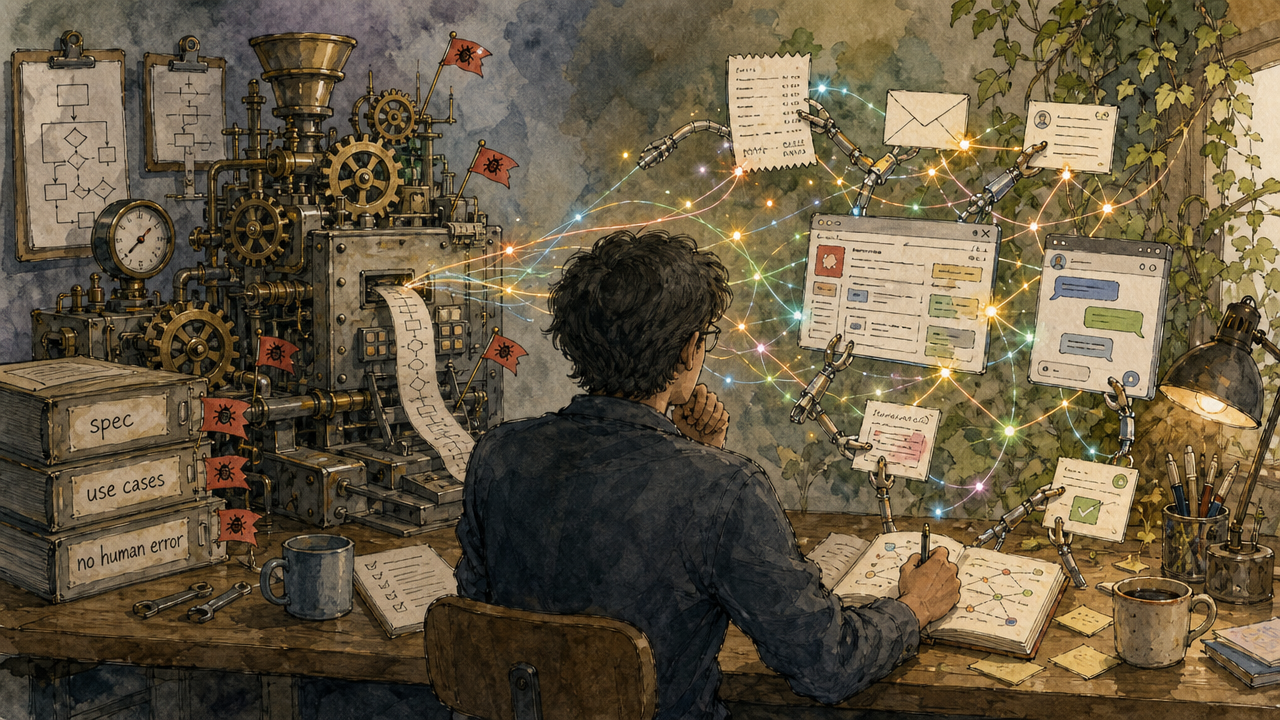
All computer users may soon have the ability to author small bits of code. What structural changes does this imply for the production and distribution of software?
Malleable software in the age of LLMs
All computer users may soon have the ability to author small bits of code. What structural changes does this imply for the production and distribution of software?
Malleable software in the age of LLMs
All computer users may soon have the ability to author small bits of code. What structural changes does this imply for the production and distribution of software?
Malleable software
computing environments where anyone can mold their tools to their own unique needs.That definition is by [[Geoffrey Litt]], who wrote [[Malleable software ...

What is Malleable Software Now | Bryan Min (02-27-2026)
Extensible Software in the age of LLMs | Jeremy Morrell
Solid core + capability-based sandboxes + LLMs = Users with superpowers
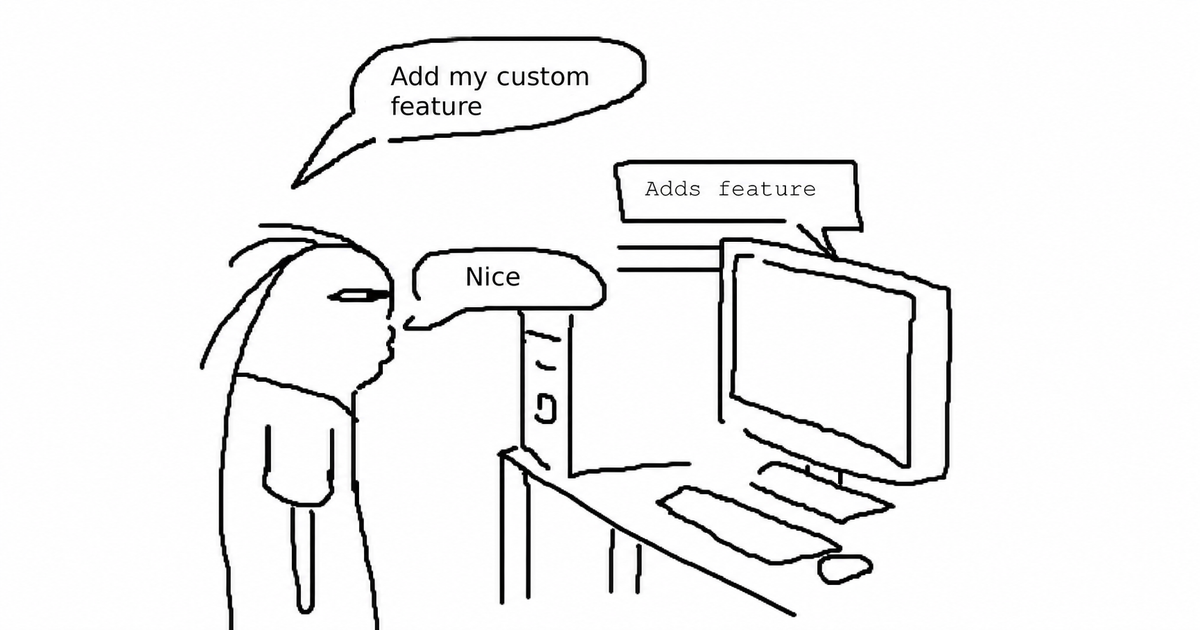
Malleable Software in the Age of AI - Geoffrey Litt
Geoffrey Litt
Welcome! I work on malleable software: computing environments where anyone can adapt their software to meet their needs with minimal friction. To see what that means to me, read this essay or listen to this interview.

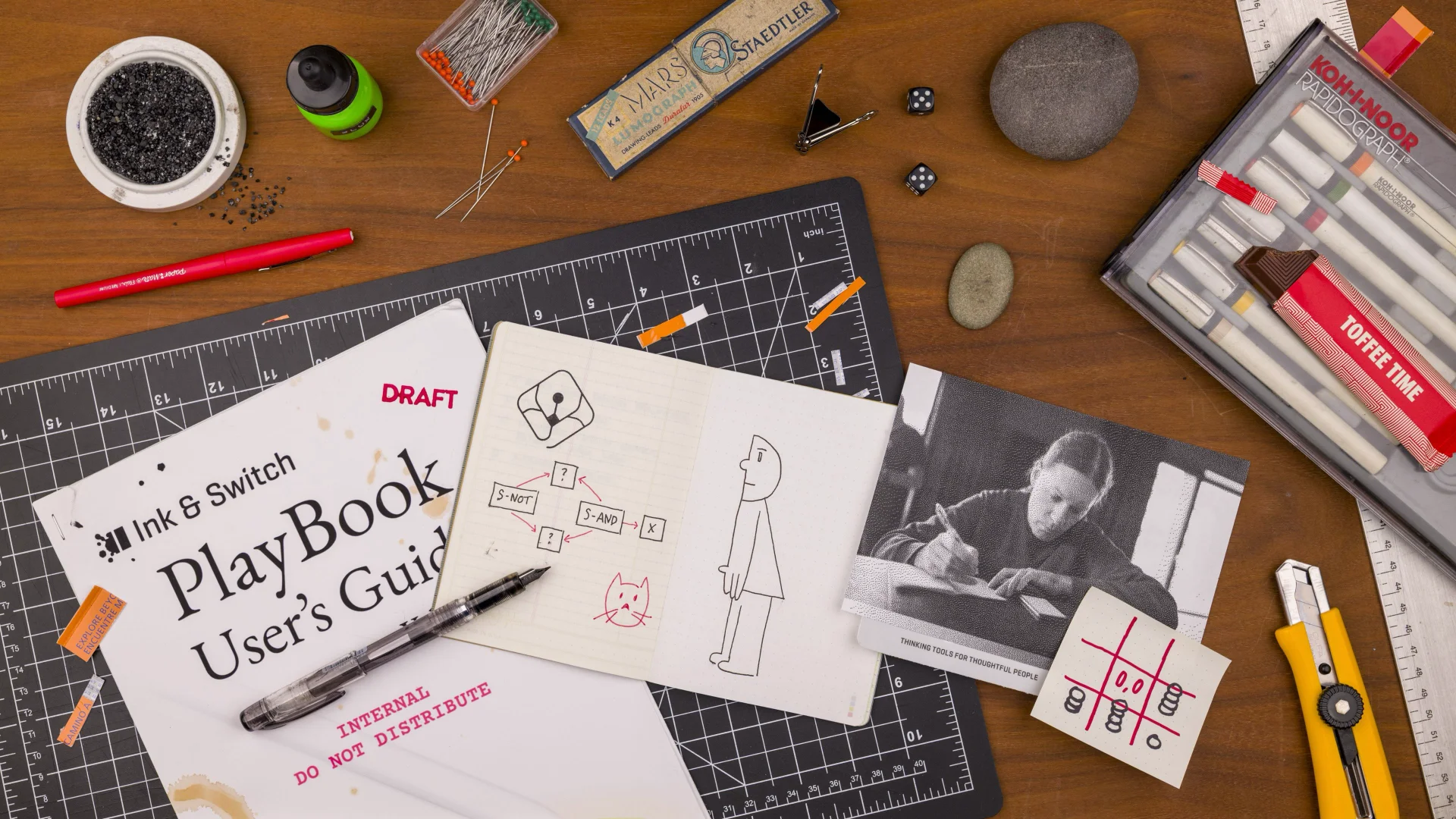
Malleable software: Restoring user agency in a world of locked-down apps
The original promise of personal computing was a new kind of clay. Instead, we got appliances: built far away, sealed, unchangeable. In this essay, we envision malleable software: tools that users can reshape with minimal friction to suit their unique needs.

Perfect Software - Software for an Audience of One
We have many names to describe personal tools. Malleable software speaks to how it behaves. Home-cooked software speaks to who makes it.
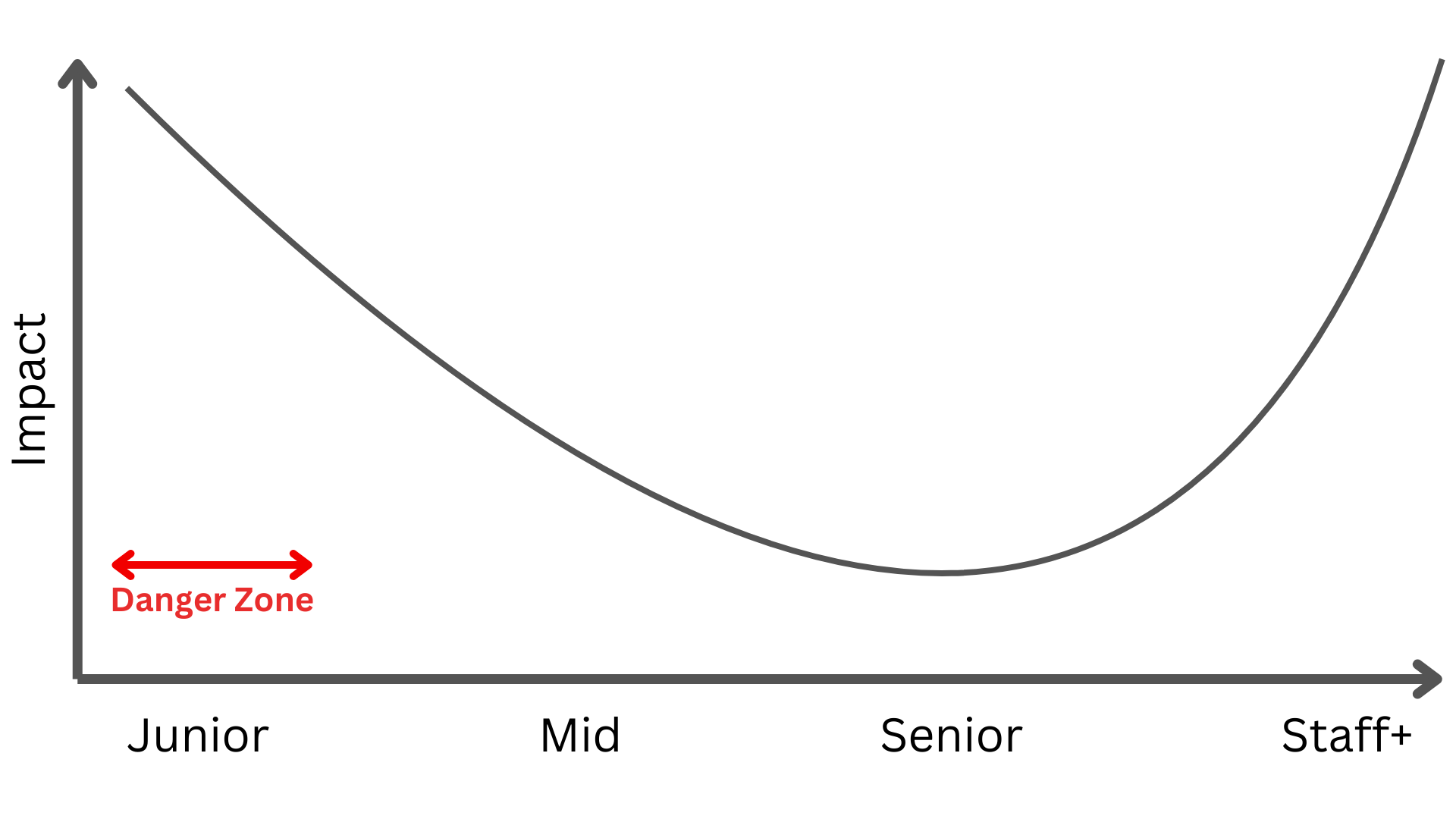
The LLM Curve of Impact on Software Engineers
In this article, I share my personal mental model of how LLMs affect software engineers at different levels, and why this leads to both excitement and scepticism.
Code Is Cheap Now. Software Isn’t.
The barrier to entry for building software has collapsed. The barrier to building something that matters hasn’t moved an inch.
There's no reason for software to be slow anymore
The other day, I saw a viral tweet saying that people talking about how LLMs are causing slow, bloated, code are going to eat crow once they re-write everything in super-optimized assembly. We're not quite at the point where we want to write everything in assembly, but some variant of what Nolan Lawson said about testing, you can choose how many bugs you want now, which I less eloquently noted here, is becoming more true for performance.
There continue to be reasons for software to be slow
A discussion on the various reasons why performance is slow, and which ones are unlikely to be affected by LLMs. Originally written as a counter-point to Dan Luu
psf (@psf@oldbytes.space)
In their article ["Malleable Software"](https://www.inkandswitch.com/essay/malleable-software), Ink & Switch list various ways that modern software applications fail to serve the user: - Software is too rigid: users can’t tailor it to suit their workflow, except by entering the role of programmers. - Software applications are overspecialized "avocado slicers", not general tools like "knives", so their lack of tailorability is keenly felt. - Software doesn’t provide a reasonable learning curve from beginner to expert; in other words, time spent learning an application doesn’t unlock tailorability, instead the end user must learn an unrelated skill like a markup/scripting language or even the tool’s implementation language. - Software applications are increasingly siloed, so sharing data between apps, let alone orchestrating cross-app workflows, is overly difficult. These are real problems. From what I can tell, Ink & Switch are software researchers, and view the problems from a highly technical perspective, focusing on novel infrastructure that enables end-user programmability. They pose questions such as "how do we ease users into programming?" and "instead of shipping a dead, static binary, can we ship a living image containing programming tools allowing it to be modified in arbitrary ways while still running?" These ideas are technologically exquisite, but they fail to provide a gentle learning curve. (cont'd) 🧵
The Myth of Deterministic Software
How I've come to terms with LLM non-determinism in software and abandoned the comforting lies we've been telling ourselves about traditional software.