

Agents can write code faster than we can absorb it. Here's why it still matters for humans to understand what they build — and some techniques for doing that efficiently: explainer docs, quizzes, micro-worlds, and shared spaces.
Understanding is the new bottleneck
Agents can write code faster than we can absorb it. Here's why it still matters for humans to understand what they build — and some techniques for doing that efficiently: explainer docs, quizzes, micro-worlds, and shared spaces.
Understanding is the new bottleneck
Agents can write code faster than we can absorb it. Here's why it still matters for humans to understand what they build — and some techniques for doing that efficiently: explainer docs, quizzes, micro-worlds, and shared spaces.
AI coding agents generate more code, but not more software
Study finds coding efficiency gains get "absorbed" by human review "bottleneck."

Devin Review: AI to Stop Slop | Cognition
As code generation gets easier, code review is the new bottleneck. That's why we're launching a new way to quickly review and understand complex PRs in our latest tool for codebase understanding - augmenting human attention with AI.

How to harness AI
"Coding agents" are complicated but intelligible

Agent READMEs: An Empirical Study of Context Files for Agentic Coding
Agentic coding tools receive goals written in natural language, break them down into specific tasks, and write or execute code with minimal human intervention. Central to this process are agent context files (e.g., AGENTS.md and CLAUDE.md) that provide persistent, project-level instructions. In this paper, we conduct the first large-scale empirical study of 2,303 agent context files from 1,925 repositories to characterize their structure, maintenance, and content. We find that these files are not static documentation but complex, difficultto-read artifacts that evolve like configuration code through frequent, small additions. Our content analysis of 16 instruction types shows that developers prioritize functional context, such as test procedures (75.9%), implementation details (70.8%), and architecture (68.1%). We also identify a significant gap: non-functional requirements such as security (14.8%) and performance (14.5%) are rarely specified. These findings indicate that while developers use context files to make agents functional, they provide few guardrails to ensure that agent-written code is secure or performant, highlighting the need for improved tools and practices.

The Shape of Memory Benchmarks
Why the familiar memory benchmarks are outdated, how the agent-native work looks today and why design your own.
The Gap Through Which We Praise the Machine
My current theory of agentic programming: people are amazing at adapting the tools they're given and totally underestimate the extent to which they do it, and the amount of skill we build doing that is an incidental consequence of how badly the tools are designed.

The Friction is Your Judgment — Armin Ronacher & Cristina Poncela Cubeiro, Earendil
Agent Skills
AI coding agents take the shortest path to done, which usually means skipping the specs, tests, and reviews that make software reliable at scale. Agent Skill...
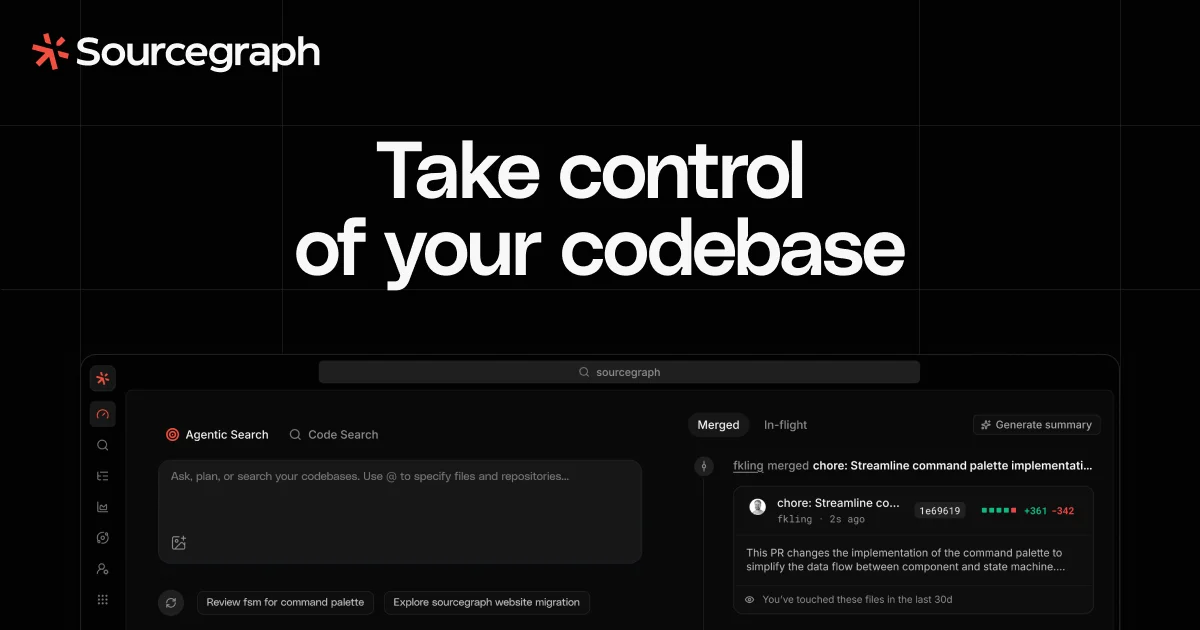
Sourcegraph — Code Understanding, Oversight and Evolution
Give humans and agents complete context to understand, oversee, and evolve the world's largest, most complex codebases.
AI slows down open source developers. Peter Naur can teach us why.
AI Code
As AI Coding Agents write more code, it's more important than ever that we're intentional about the code it writes.
SlopCodeBench: Benchmarking How Coding Agents Degrade Over Long-Horizon Iterative Tasks
Software development is iterative, yet agentic coding benchmarks hide design issues through their single-shot setup. Recent iterative benchmarks attempt to remedy this but heavily constrain an agent's design decision space, making it impossible to faithfully measure how their decisions shape future extensions. We introduce SlopCodeBench, a benchmark of 36 problems and 196 checkpoints where agents repeatedly extend their own solutions. Unlike prior iterative benchmarks, our evolving specifications demand architectural decisions but leave internal structure to the agent. We measure two forms of degradation: structural erosion (concentrated complexity) and verbosity (redundant code). Evaluating 15 coding agents across open and closed models, we find that no agent fully solves any problem end-to-end, and the best agent passes 14.8% of checkpoints. Quality degrades across checkpoints, with structural erosion rising in 77% of trajectories and verbosity in 75.5%. Compared to 473 open-source Python repositories, agent code is 2.3x more verbose and 2.0x more eroded, and the human repositories degrade less often and by smaller margins across their git histories. Explicit quality guidance reduces initial verbosity and erosion by up to a third, without affecting degradation rates. SlopCodeBench provides the first measurement of code degradation under iterative extension, revealing that agents pass checkpoints while producing code that erodes and bloats with each turn.
The Software We Haven’t Invented Yet, discussion and dinner hosted by Boxd and BlueYard · Luma
If this is such a big moment for software, why are we mostly imagining faster versions of what we already do? Better coding tools are the obvious part. The…

AI & Alignment Raw coding speed isn't the bottleneck. Alignment is the bottleneck. That seems to be a zeitgeist-y theme lately. If you're using AI to code, maybe you're feeling it. You can code more and faster. And clearly a boatload of other developers are doing that too. But software doesn't…

AI & Alignment
chriscoyier.net