

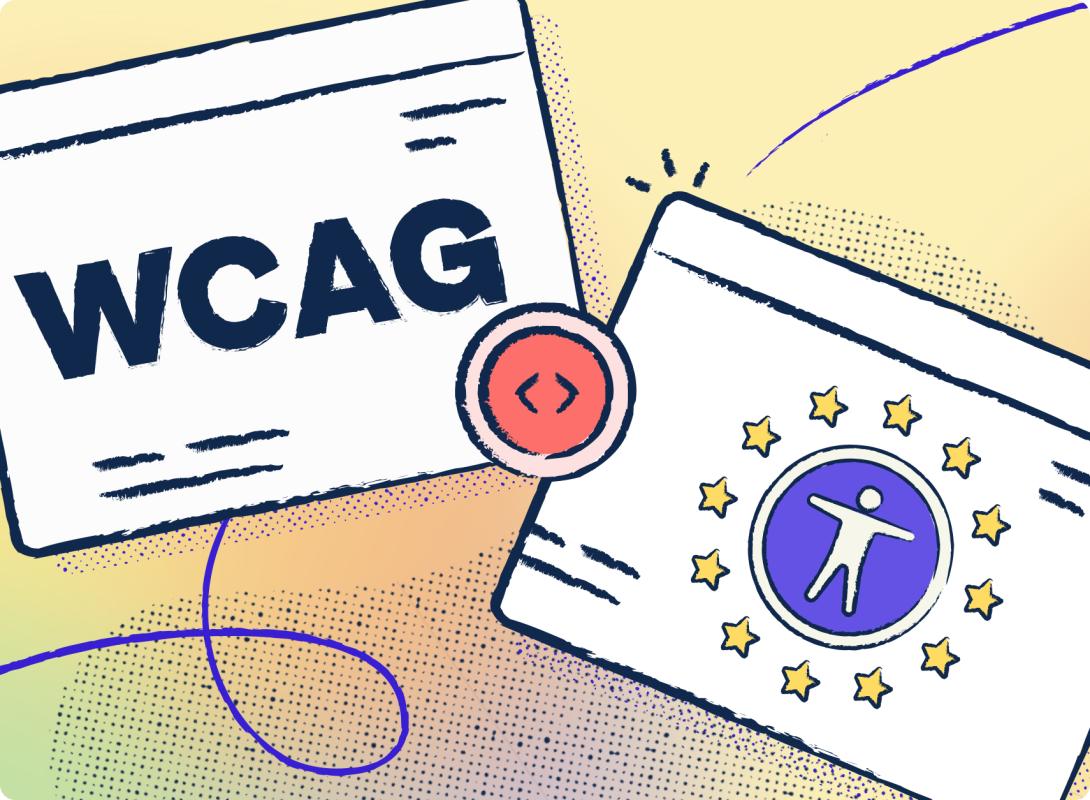
Many teams believe that meeting WCAG standards means their digital products are compliant with the European Accessibility Act (EAA). Using a clear comparison grounded in EN 301 549 and EN 17161, we extensively detail what’s in and out of scope—and why organizations need to operationalize accessibility like they do privacy and security.
UI/UX Guidelines - User Experience Design & Technology
The Web Content Accessibility Guidelines (WCAG) are a set of internationally recognized standards for making web content accessible to people with disabilities. Created by the Web Accessibility Initiative (WAI) of the World Wide Web Consortium (W3C), WCAG provides a framework for designing inclusive digital platforms that cater to diverse user needs, including those with visual, auditory, cognitive, and physical impairments.
WCAG 3’s road to hell is paved with supplemental requirements · Eric Eggert
First, I want to apologize to the participants of the Accessibility Guidelines Working Group (AGWG) at W3C, as this blog post will …
Inclusive Design for a Digital World
In this book, readers will learn the Web Content Accessibility Guidelines (WCAG) 2.1 requirements, emerging technologies such as VR and AR, best practices for web development, and implementation of inclusive design. Begin understanding the immense opportunities in designing for accessibility.
A threat model for accessibility on the web - Alice
A explanation of the primary threat to accessibility on the web, and a call to action for the web standards community

Salon.com Article Explorer
Meets WCAG 2.2 Level AA accessibility (and WCAG 2.1 AA and 2.0 AA), checked November 11, 2026 by automated tests and manual review.
Digital accessibility is real and tangible
A workshop using real-life examples and first-hand experience of how assistive technology works can result in a deeper understanding of accessibility needs

Fact Sheet: New Rule on the Accessibility of Web Content and Mobile Apps Provided by State and Local Governments
The Department of Justice published a Notice of Proposed Rulemaking (NPRM) on July 20, 2023 explaining how we propose updating the regulations for Title II of the Americans with Disabilities Act (ADA) to add more specific requirements about web and mobile application accessibility. This fact sheet gives a plain language summary of the technical standards that state and local governments would have to follow to meet their existing obligations under Title II of the ADA.
Vispero Digital Accessibility and Compliance Resources
Vispero Digital Accessibility and Compliance Resources

Substrates via Accessibility
The social model of disability holds that disability is produced by environments, not by bodies — that when software fails to accommodate a person’s needs, the environment is disabling them. We argue that the dominant organization of computing produces such interaction mismatches structurally: the commodity form of software requires a standardized consumer, and everyone whose needs diverge from this imagined subject is disabled by the software environment. The substrates research community has identified properties — disclosure, composability, malleability — that would address this, but the commodity form actively selects against these properties because they dissolve the boundaries on which exchange value depends. This raises a question: how can infrastructure organized against the grain of commodity logic be made durable? We find a precedent in accessibility infrastructure — sustained not by patronage but by the organized counter-power of disability rights movements. Through Allio, a system for cross-application augmentation built on accessibility APIs, we illustrate both what this foundation makes possible and where its limits lie. We argue that the accessibility case reframes the substrates programme’s central challenge as political-economic: the question of who sustains substrate infrastructure, and through what social mechanisms, is as important as the question of what properties it should have.
Usability/UX/Accessability Research? · Issue #819 · w3c-fedid/FedCM
I'm curious if this work has any usability, UX, or accessibility research that supports the designs here? Are there non-goals, or handling of failure case scenarios that have been envisioned an...
Privacy as EU Tech advantage - The LeafPlaza Blog
Online crime loves legal massive data collection, grey systems, and jurisdictional gaps. Privacy-first design can actually reduce crime exposure and build trust in digital services. It is also central to the EU's tech autonomy: build systems aligning with European rights and risk models. Do not rely on foreign platforms or copy outside practices that might go against the EU values and needs.
WebAIM: Keyboard Accessibility
The experts at WebAIM can audit your web site and provide a detailed report to help you remediate accessibility and WCAG compliance issues.
lukeslp/awesome-accessibility
Curated list of accessibility resources, tools, and best practices for creating inclusive digital experiences