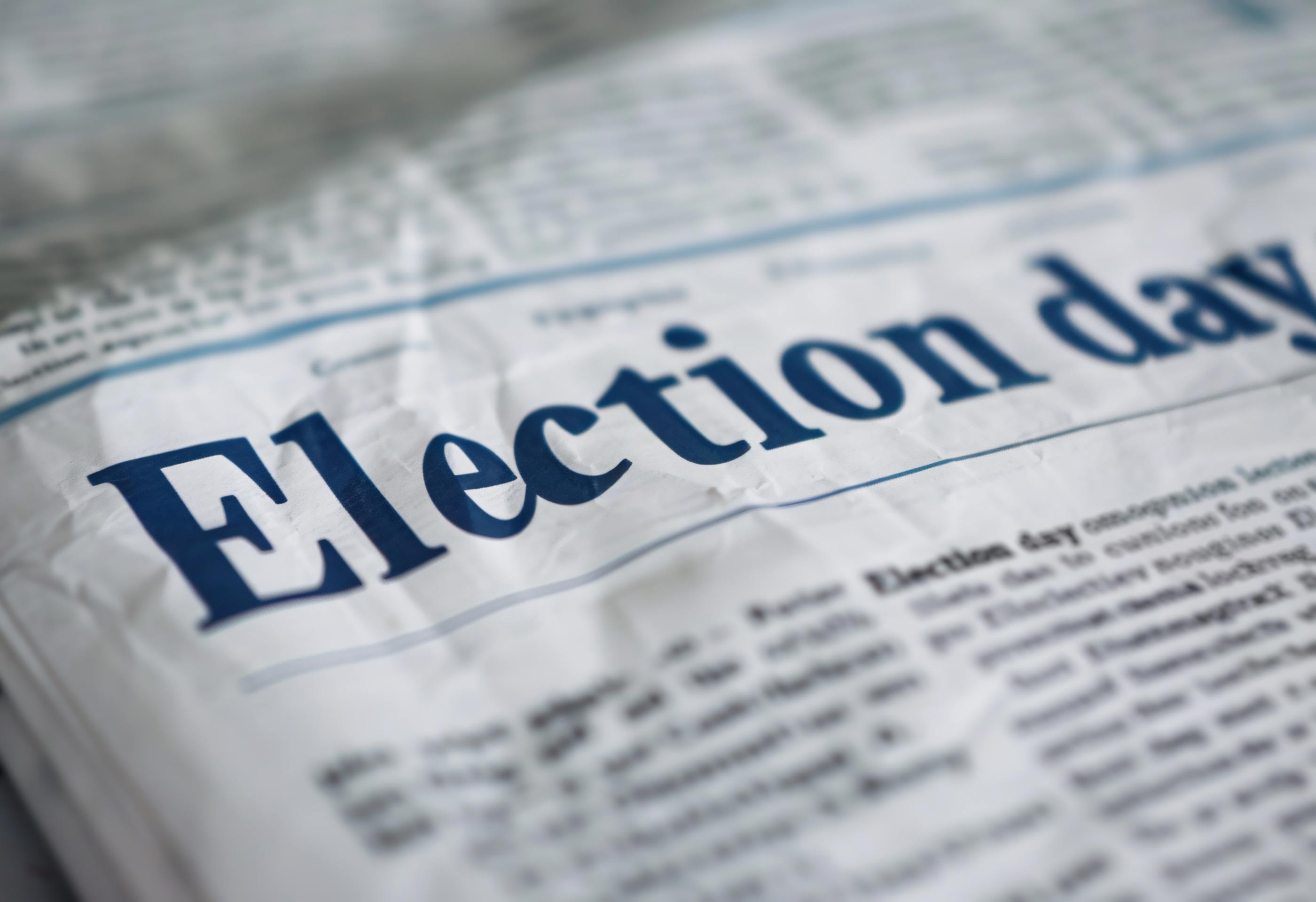
The Monitor attended a Warragul event to chat to wannabe politicians and voters about the upcoming poll.
Simulating Aggregate Electoral Opinion Trajectories with LLM Personas and Media Exposure
LLM-based election simulation has largely been evaluated against a single final outcome, in many cases neglecting how much it can recover the trajectory shaped by media exposure and shifting candidate support. We propose evaluating election simulations in terms of trajectory fidelity: whether persona-conditioned LLM agents can update their beliefs in response to media to reproduce the temporal movement of public opinion, both in aggregate and across demographic subgroups. We design a framework in which each LLM agent carries its belief across time and updates it as new campaign information arrives. We further investigate how performance can vary across simulation design choices such as media exposure model, election context, and survey questionnaire. In a study on the 2026 Seoul mayoral and local elections, we validate simulated trajectories against weekly public-opinion polls and find that simulations that carry prior beliefs across time—rather than simulating each poll date independently—substantially improves alignment with observed polling movement, while the way media exposure is personalized leaves aggregate movement largely intact but reshapes subgroup-level dynamics. We propose a framework for validating simulated opinion trajectories against real-world traces, and discuss the simulation design choices that can influence the performance.
Status | Media News & Analysis
Status is the new, definitive nightly briefing that informs readers about what is really happening in the corridors of media power.

What does ChatGPT say about the election? Depends on who’s asking!
AI chatbots are an increasingly important source of political information, but audits of the information they provide typically don’t account for how the chatbot personalizes it based on a user’s previous interactions. For example, if you mentioned where you worked in a conversation, ChatGPT may remember that and factor it in when you ask who to vote for.
People are asking ChatGPT to help them decide how to vote in the midterms
Voters are already voting in the midterms. This year, some voters are trying something new to get ready for the election: asking AI to help research their ballot and even decide who to vote for.

PODCAST! Nvidia: WUT
Professor of political communication at George Washington University Dave Karpf sends up the FLAMING-BAT-SIGNAL to talk BREAKING NEWS with Maria Bustillos and Brian Hioe and David Moore and Sam Thielman about leather jackets and stuff. Joe MacLeod pressed the RECORD button. Listen on Apple/Spotify/RSS/plus more
Never Mind The Deepfakes, Chatbots Have To Deal With Election Lies Being Free, While Truth Is Paywalled
It seems that every election cycle over the last decade has had concerns being raised about the state of “political deepfakes” and their ability to impact the election. So far, these ha…

SLOPAGANDA! How to combat MAGA’s AI manipulation POISONING politics
Using technology to craft accurate, persuasive political messages | TechCrunch
In a country that's increasingly polarized, where partisan politics shape perception, the question of how to create a compelling argument -- rooted in

Who Runs The Election Desk? - Graze Newsletter
Hashtags were the original answer to breaking news - here's what comes after.
How Technology Is Shaping Modern Politics
Discover how technology is reshaping politics, from digital campaigns to AI, and the challenges of misinformation and election security.
Experiments show this is the best way to win campaigns. But is anyone actually doing it?
Vox is a general interest news site for the 21st century. Its mission: to help everyone understand our complicated world, so that we can all help shape it. In text, video and audio, our reporters explain politics, policy, world affairs, technology, culture, science, the climate crisis, money, health and everything else that matters. Our goal is to ensure that everyone, regardless of income or status, can access accurate information that empowers them.

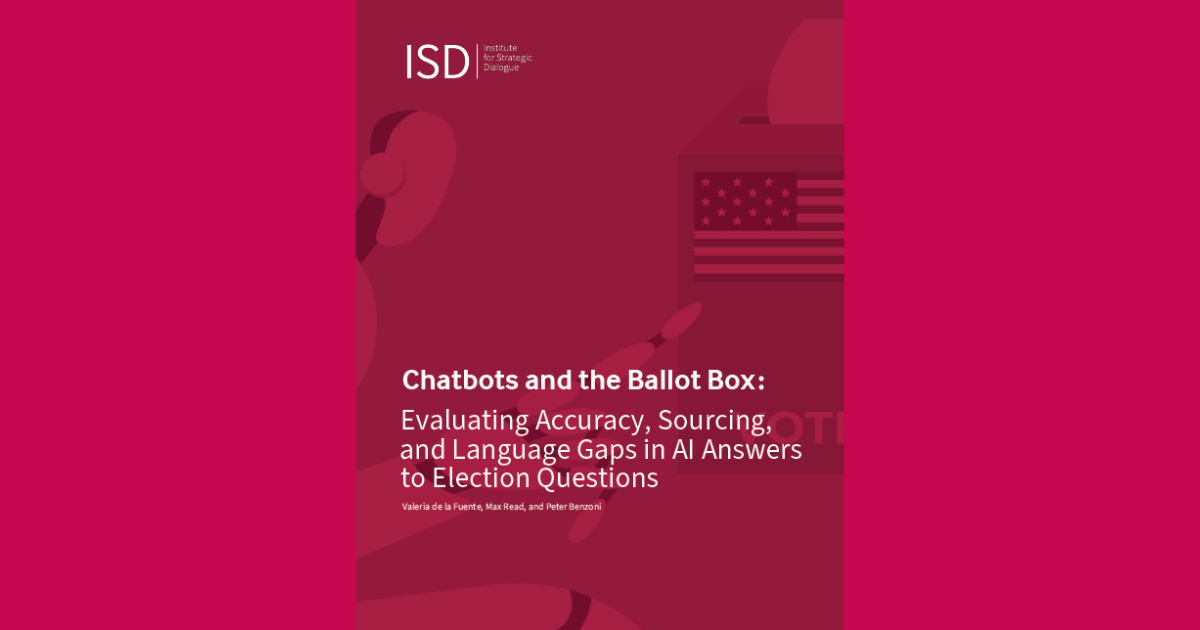
Chatbots and the Ballot Box: Evaluating Accuracy, Sourcing, and Language Gaps in AI Answers to Election Questions
ISD assesses how reliably six leading AI models provide accurate, complete information on US election procedures and voter access.
Mainstreaming the populist radical right? Online news exposure and voting behavior in the 2019 European Parliament election
How does media exposure relate to support for radical right populist parties (RRPPs)? We contribute to this classic debate by analyzing the web browsing histories and survey responses of six thousand study participants in France, Germany, Italy, Spain, and the UK during the 2019 European Parliament election. Linking direct measures of online news exposure to voting behavior allows us to assess the effects of the salience of issues politicized by RRPPs on their electoral support. The likelihood to vote for RRPPs was higher when the EU was more salient in individual media diets, while exposure to the less salient issue of immigration did not increase the propensity to vote for RRPPs. Alongside consistent results for other party families and interactions with pre-existing voting intentions, the findings indicate that the electoral effects of online media are contingent on the overall salience of a specific issue and voters’ predispositions.

LLMs Are Still Making Election Deepfakes Just Days Before the US Midterms
The Brennan Center tested AI chatbots to see if they would generate images with false election claims. The results were unsettling, writes Abdiaziz Ahmed.

How Media – Namely News, Ads and Social Posts – Can Shape an Election
How Media – Namely News, Ads and Social Posts – Can Shape an Election