

Since 1983, developing the free Unix style operating system GNU, so that computer users can have the freedom to share and improve the software they use.
The GNU Operating System and the Free Software Movement
Since 1983, developing the free Unix style operating system GNU, so that computer users can have the freedom to share and improve the software they use.
When Free Software Depends on Nonfree - GNU Project - Free Software Foundation
When a program is free software (free as in freedom), that means it gives users the four freedoms, so that they control what the program does. In most cases, that is sufficient for the program's distribution to be ethical; but not always. There are additional problems that can arise in specific circumstances. This article describes a subtle problem, where upgrading the free program requires using a nonfree program.
When Free Software Isn't (Practically) Superior - GNU Project - Free Software Foundation
The Open Source Initiative's mission statement reads, “Open source is a development method for software that harnesses the power of distributed peer review and transparency of process. The promise of open source is better quality, higher reliability, more flexibility, lower cost, and an end to predatory vendor lock-in.”
Why Open Source Misses the Point of Free Software - GNU Project - Free Software Foundation
The terms “free software” and “open source” stand for almost the same range of programs. However, they say deeply different things about those programs, based on different values. The free software movement campaigns for freedom for the users of computing; it is a movement for freedom and justice. By contrast, the open source idea values mainly practical advantage and does not campaign for principles. This is why we do not agree with open source, and do not use that term.
The GNU Manifesto - GNU Project - Free Software Foundation
archived 10 Nov 2021 20:17:21 UTC

The GNU Manifesto - GNU Project - Free Software Foundation
archived 10 Nov 2021 20:17:21 UTC
Make - GNU Project - Free Software Foundation
GNU Make is a tool which controls the generation of executables and other non-source files of a program from the program's source files.
software
Software freedom is the freedom to run the program as you wish, for any purpose, to study how the program works, and change it, to redistribute copies and your modified versions so you can help others.
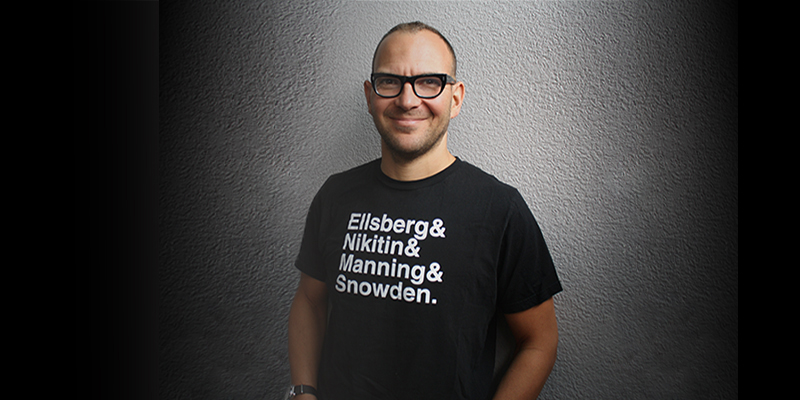
Cory Doctorow: IP
You’ve probably heard of “open source software.” If you pay attention to the politics of this stuff, you might have heard of “free software” and even know a little ab…
GNU Affero General Public License - GNU Project - Free Software Foundation
Copyright © 2007 Free Software Foundation, Inc. <https://fsf.org/> Everyone is permitted to copy and distribute verbatim copies of this license document, but changing it is not allowed.
Welcome [Savannah]
Savannah is a central point for development, distribution and maintenance of free software, both GNU and non-GNU.
Chapter 1. Introduction
Free software — open source software[3] — has become the backbone of modern information technology. It runs on your phone, on your laptop and desktop computers, and in embedded microcontrollers for household appliances, automobiles, industrial machinery and countless other devices that we too often forget even have software. Open source is especially prevalent on the servers that provide online services on the Internet. Every time you send an email, visit a web site, or call up some information on your smartphone, a significant portion of the activity is handled by open source software.
Front Page — Free Software Foundation — working together for free software
The technology overrunning our communities isn't built for the benefit of humanity: it's built so that billionaires can control us. Our lives don't have to be this way. The FSF empowers users with free software, technology built through global collaboration, mutual respect, and above all, freedom. The FSF will always continue to resist the encroachment of nonfree software. We're fighting to protect all computer users and build a better future.
In Thrall to Scarcity
As I’ve talked about in this space in the past, I’ve been coming to some conclusions about free software (open source, or whatever you want to call it): the economics of it, like anythi…

History of free and open-source software
The history of free and open-source software begins at the advent of computer software in the early half of the 20th century. In the 1950s and 1960s, computer operating software and compilers were delivered as a part of hardware purchases without separate fees. At the time, source code—the human-readable form of software—was generally distributed with the software, providing the ability to fix bugs or add new functions. Universities were early adopters of computing technology. Many of the modifications developed by universities were openly shared, in keeping with the academic principles of sharing knowledge, and organizations sprung up to facilitate sharing.

Time for Net Giants to Pay Fairly for the Open Source on Which They Depend | Linux Journal
Licensing lies at the heart of open source. Arguably, free software began with the publication of the GNU GPL in 1989. And since then, open-source projects are defined as such by virtue of the licenses they adopt and whether the latter meet the Open Source Definition. The continuing importance of licensing is shown by the periodic flame wars that erupt in this area. Recently, there have been two such flarings of strong feelings, both of which raise important issues.