


To fully understand LLM representations, we must understand how they change dynamically, over the course of a prompt or conversation. We investigate these temporal dynamics with a simple case study: how do LLMs represent human emotions while reading short stories, both geometrically (in activation space) and temporally (changing from sentence to sentence)?
Meandering on Manifolds: The Neural Geometry of Stories Over Time
To fully understand LLM representations, we must understand how they change dynamically, over the course of a prompt or conversation. We investigate these temporal dynamics with a simple case study: how do LLMs represent human emotions while reading short stories, both geometrically (in activation space) and temporally (changing from sentence to sentence)?
How do LLMs affect writing? Talks by visitors to the AI STORIES project | UiB
The AI STORIES project is hosting a day of research talks focused on analysing AI-generated writing, with approaches ranging from the qualitative analysis of a professor of writing to large-scale computational analysis finding that prompting an LLM to edit a text to improve its grammar leads to significiant shifts in meaning.

I Built an LLM From Scratch
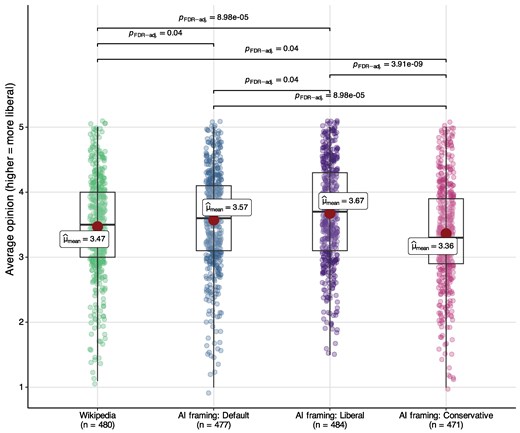
How latent and prompting biases in AI-generated historical narratives influence opinions
Abstract. Large language models (LLMs) can be used to persuade people on a range of issues, particularly through user-driven strategies such as personalizi
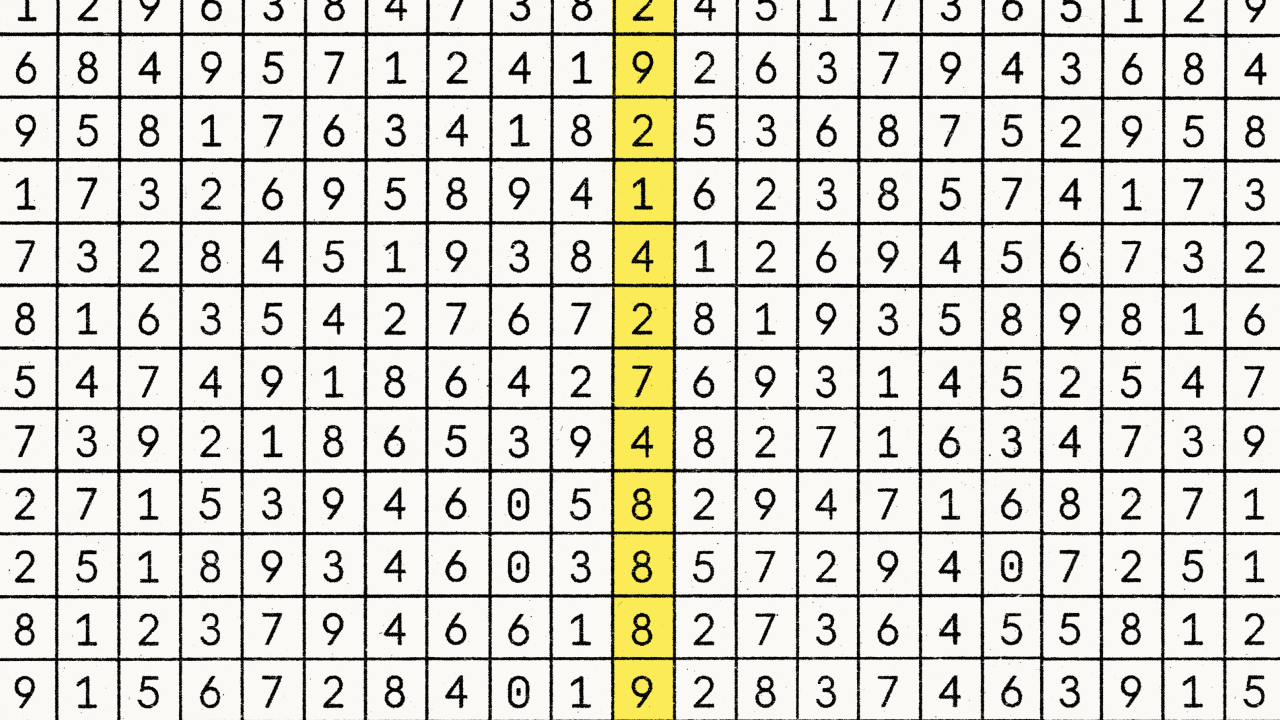
Verbalizable Representations Form a Global Workspace in Language Models
If the mind is an ocean, we spend our lives floating at the surface. Beneath us, an enormous amount of processing takes place without our knowledge: our visual systems parsing the contours of a face, our motor circuits maintaining our posture. At any given moment, only a small fraction of this neural activity is accessible to us. Yet it is this privileged sliver of activity that we rely on to reason deliberately: to plan what ingredients to buy for a recipe, or to puzzle out why an engine won’t start. Such thoughts can be articulated out loud, deliberately held in mind, and brought to bear on whatever task the moment demands. This distinction, between our accessible thoughts and our unconscious processing, is perhaps the most striking feature of human cognition.
Verbalizable Representations Form a Global Workspace in Language Models
If the mind is an ocean, we spend our lives floating at the surface. Beneath us, an enormous amount of processing takes place without our knowledge: our visual systems parsing the contours of a face, our motor circuits maintaining our posture. At any given moment, only a small fraction of this neural activity is accessible to us. Yet it is this privileged sliver of activity that we rely on to reason deliberately: to plan what ingredients to buy for a recipe, or to puzzle out why an engine won’t start. Such thoughts can be articulated out loud, deliberately held in mind, and brought to bear on whatever task the moment demands. This distinction, between our accessible thoughts and our unconscious processing, is perhaps the most striking feature of human cognition.
The Future of Text
We are a community dedicated to working on how we can better develop text to augment our capabilities and we invite you to join us. We believe that the potential of richly interactive text to truly augment how we think & communicate is massive. Text after all, is externalized symbols we can interact with to extend our mind’s reach. Therefore text is not just a medium, it is also a tool for thought, and we are looking Beyond Visual Range.
Understanding LSTM Networks -- colah's blog
Humans don’t start their thinking from scratch every second. As you read this essay, you understand each word based on your understanding of previous words. You don’t throw everything away and start thinking from scratch again. Your thoughts have persistence.
Mapping the Mind of a Large Language Model
We have identified how millions of concepts are represented inside Claude Sonnet, one of our deployed large language models. This is the first ever detailed look inside a modern, production-grade large language model.
How storytelling can help articulate emotions that evolve as the climate changes
Creative works can represent emotions emerging so fast that our brains can’t quite catch up with them.

An Intuitive Introduction to Flow-Based Language Generation — Floor Eijkelboom
Why autoregressive models have a structural ceiling, why discrete-diffusion LLMs are still autoregression in disguise, and what flow-based language models actually give us.
Within this interactive map, videos are plotted along the 27 dimensions of self-reported emotional experience they can reliably evoke. Each letter corresponds to a video. Float over to play. Click and drag to rearrange. Warning: While many of the more intense videos are censored, there is still some explicit content. Viewer discretion is advised.
Within this interactive map, videos are plotted along the 27 dimensions of self-reported emotional experience they can reliably evoke. Each letter corresponds to a video. Float over to play. Click and drag to rearrange. Warning: While many of the more intense videos are censored, there is still some explicit content. Viewer discretion is advised.
1/4 Do LLMs understand? "They understand in a way that’s very different from how humans understand," Dileep George, @dileeplearning.bsky.social, of Google DeepMind at the Simons Institute workshop on The Future of Language Models and Transformers. Video: simons.berkeley.edu/talks/dileep-george-google-de…
