


Twenty-Five Hundred years ago, Sun Tzu wrote this class…
Osamu Dazai
Shūji Tsushima , known by his pen name Osamu Dazai , was a Japanese novelist and author. A number of his most popular works, such as The Setting Sun and No Longer Human, are considered modern classics.

Education in a Time Between Worlds: Essays on the Futur…
Our world is currently undergoing major transformations…


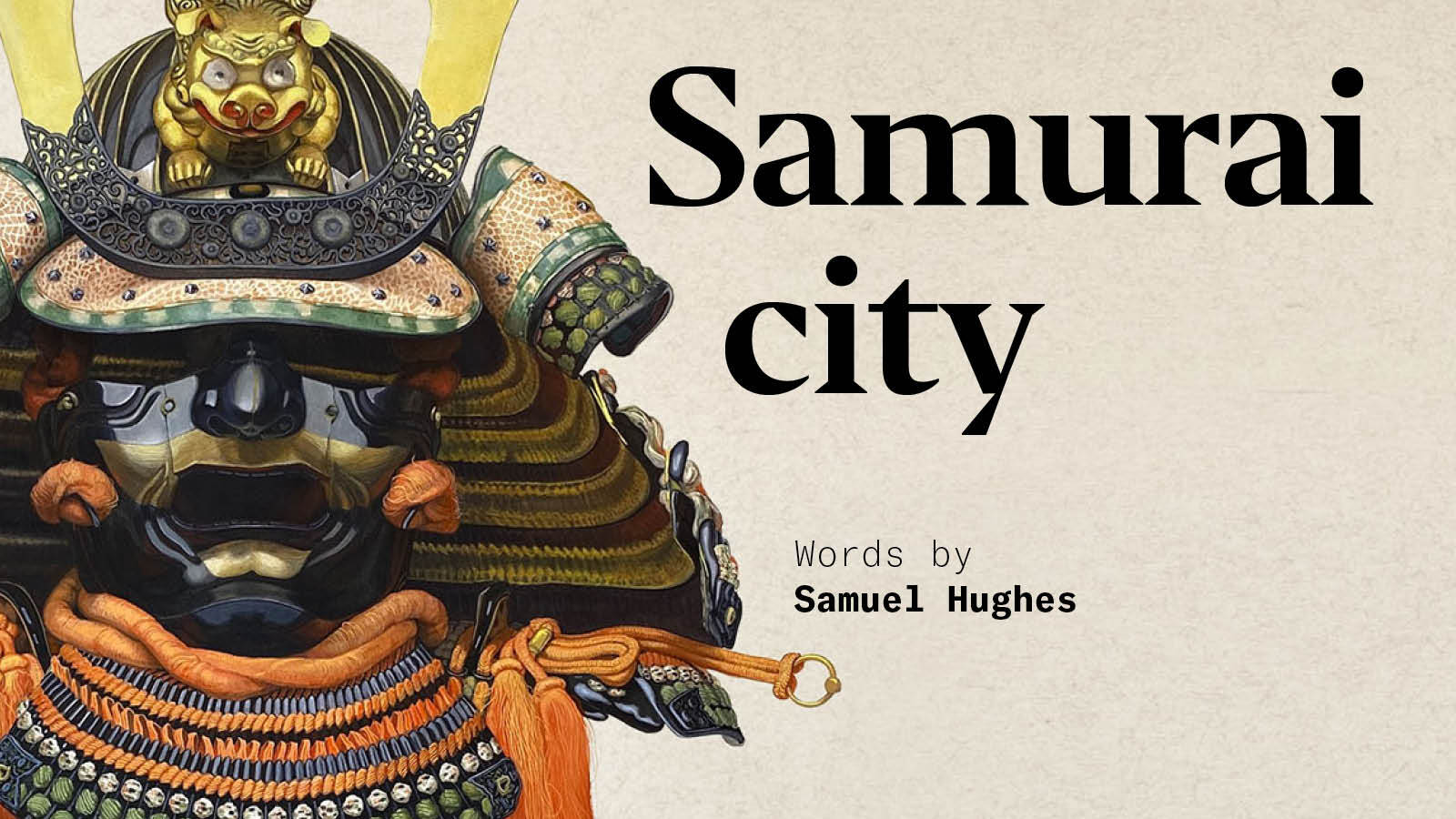
Samurai city - Works in Progress Magazine
For three hundred years, Japan enjoyed enviable stability and peace. All it took was locking up its warlike samurai elite in the world’s least efficient city.
The Fifth Book of Peace by Maxine Hong Kingston | East Bay Booksellers
A NEW YORK TIMES NOTABLE BOOK • From the National Book Award-winning author of China Men and The Woman Warrior comes a work weaving fiction and memoir into a luminous meditation on war and peace, devastation and renewal.
The Final Christian Generation? - Mockingbird
What we can learn from the century that saw the sun set on the “final” pagan generation

The Hero with a thousand faces
The first popular work to combine the spiritual and psy…

Read The Work of Art in the Age of Mechanical Reproduction
1935 essay by Walter Benjamin; proposes that mechanical reproduction devalues the aura of an artwork, that—in the age of mechanical reproduction and traditional ritualistic value’s absence—art production would be inherently based on political praxis

The Myth of Allied Technological Inferiority
World War II, The Free Press, and the Problematic Use of History in Contemporary Media
Art alchemy / Infernal machines
Anna Merlan on Leonora Carrington, and Maria Bustillos on the battle against genAI “writing”

Red Memory ebook by Tania Branigan - Rakuten Kobo
Read "Red Memory The Afterlives of China's Cultural Revolution" by Tania Branigan available from Rakuten Kobo. **Winner of the Cundill History Prize Shortlisted for the Dayton Literary Peace Prize Shortlisted for the Baillie Giffor...

War in the age of intelligent machines
271 pages : 24 cm; In the aftermath of the methodical destruction of Iraq during the Persian Gulf War, the power and efficiency of new computerized weapons and suveillance technology has become chillingly apparent. This new weaponry has a significance that goes far beyond military applications; it represents a profound historical shift in the relation of human beings both to machines and to information. Details the mutating history of information analysis and machinic organization from the mobile siege artillery of the Renaissance, the clockwork armies of the Thirty Years War, the Napoleonic campaigns, and the Nazi blitzkrieg up to present-day cybernetic battle-management systems and satellite reconnaissance network, and provides a philosophical and historical reflection on the changing forms through which human bodies and materials are combined, organized, deployed and made effective. [back cover]; Includes bibliographical references (pages 233-266) and index; Introduction -- Collision course -- Bloodless transfusion -- Policing the spectrum

Teaching Paradox: Hearts of Iron IV, Part I: Operational Art
This week, at long last, we begin our long-delayed but always expected something that we blog for: the Hearts of Iron IV Teaching Paradox series! This has been a long requested series that I put of…
