


How Control Exists after Decentralization by Galloway, …
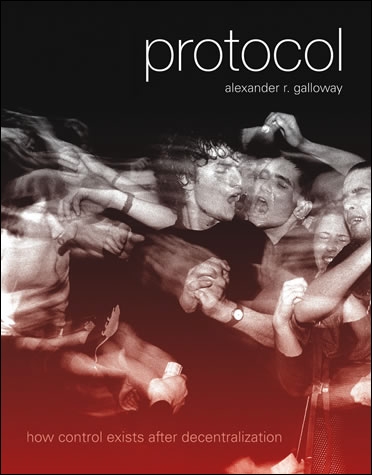
Protocol: How Control Exists after Decentralization
How Control Exists after DecentralizationIs the Internet a vast arena of unrestricted communication and freely exchanged information or a regulated, highly
a practical guide to decentralization (for my friends) - tim's tinkerings
Decentralization Trade Offs in AT Protocol and ActivityPub DWeb Camp 2026
Christine Lemmer Webber is lead author and co-editor of the W3C ActivityPub specification. Daniel Holmgren is Head of Protocol at Bluesky, working on the AT Protocol specification at the IETF. Join us for a discussion on decentralization trade-offs and other design decisions in the two protocols, and what that means for different architectures, structures, and even future points of convergence. Moderated by Boris Mann
Decentralization enables permissionless innovation
I’ve just started reading Inventing the Internet by Janet Abbate. The opening chapters are great, narrating Paul Baran’s efforts at RAND to design a nationwide communication network. Baran had one design goal for this network—survivability. Specifically, survivability in the face of nuclear catastrophe.

Decentralisation as a shifting mental framework
Programming note: every week I send out an email newsletter. It contains all the articles I published that week, as well as an additional essay that has been not been published elsewhere yet. This is a republication of last week’s essay I send out. If you’re interested, subscribe below to get all the updates directly […]

Paradigm shifts for the decentralized Web
The answer to these questions varies with different degrees of decentralization:
Practical Decentralization
The point of decentralization is to guarantee the rights of individuals and communities on the Internet. Pulling that off is a balancing act between practicality and ideology.
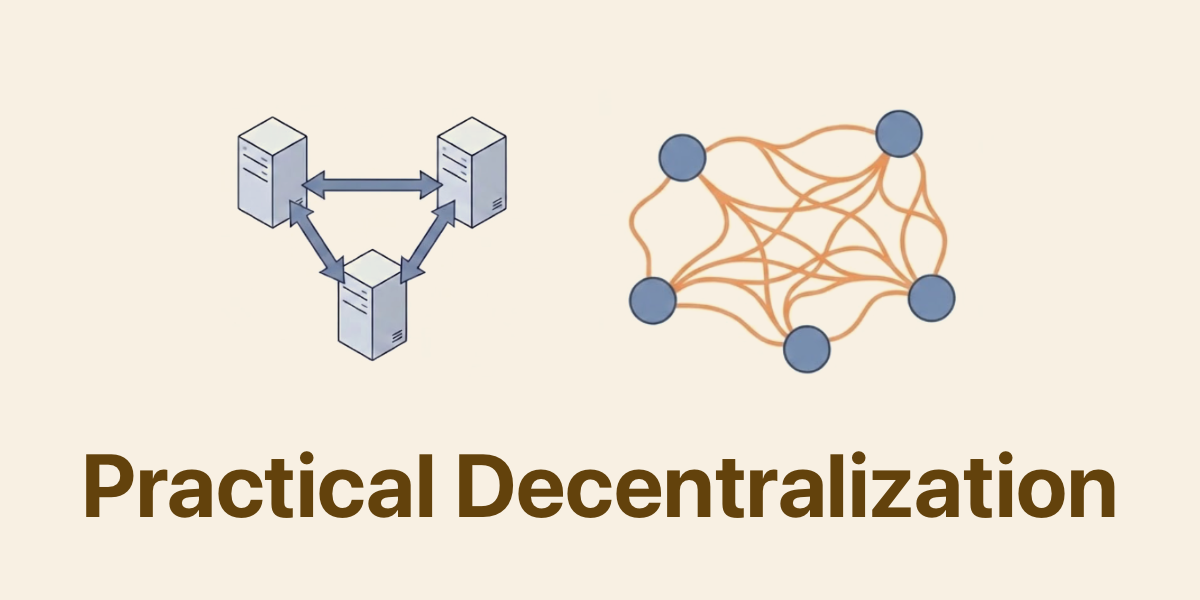
Practical Decentralization
The point of decentralization is to guarantee the rights of individuals and communities on the Internet. Pulling that off is a balancing act between practicality and ideology.
Holographic consensus—part 1
Decentralized governance is the field of protocols that coordinate large number of agents into a collective action, implemented with smart…
A Call to Arms: Supporting Matrix!
Matrix, the open protocol for secure decentralised communications
Decentralization: Worth The Wait — Open Tech Strategies | Blog
Ethan Zuckerman has a piece in Wired that says building decentralization tools is a sucker's bet. He and his coauthors, Chelsea Barabas and Neha Narula, mention the FreedomBox, which I helped lead, as an example of how difficult this stuff is. They point to a list of things that make decentralized efforts prone to failure and conclude:
The Matrix Autumn Special!
Matrix, the open protocol for secure decentralised communications
A Tale of Two Theories (of Coordination)
Leveraging and Deleveraging Toward Thick Sovereignty


The first post for WTF is here: "Decentralization: Huh?" In this article I discuss what 'decentralization' means as a concept as well as how it can be used to protect us from corporate overreach wtf.samclemente.me/decentralization-huh-t22nqge

Decentralization: Huh? - What The Function!?
wtf.samclemente.meDecentralization is more than just a buzzword. Looking at the AT Protocol, it’s clear: the future belongs to systems that decouple identity and data from the provider. For sweep-it and my other tools, this means focusing on interoperability rather than closed silos. #atproto #decentralization

