


"How carbon dioxide made planet Earth, shaped human history, and now holds our future in the balance. Every year, we are dangerously warping the climate by putting gigantic amounts of carbon dioxide into the air. But CO₂ isn't merely the by-product of burning fossil fuels -- it is also fundamental to how our planet works. All life is ultimately made from CO₂, and it has kept Earth bizarrely habitable for hundreds of millions of years. In short, it is the most important substance on Earth. But how is it that CO₂ is as essential to life on Earth as it is capable of destroying it? In The story of CO₂ is the story of everything, award-winning science journalist Peter Brannen reveals how carbon dioxide's movement through rocks, air, water, and life has kept our planet's climate livable, its air breathable, and its oceans hospitable to complex life. Starting at the dawn of life almost 4 billion years ago, and working all the way up through today's global climate crisis and beyond, he illuminates how CO₂ has been responsible for the planet's many deaths and rebirths, for shaping the evolution of life, and for the development of modern human society. And he argues that it's only by reckoning with this planetary-scale history that we can understand the cosmic stakes of our current moment on Earth -- and how dangerous our experiment with the climate really is. Drawing on groundbreaking research and with a cleareyed perspective, Brannen shows how a deep exploration of the carbon cycle can shed light on the way forward for humanity as we try to avert environmental catastrophe in the future. And it all begins with a richer understanding of the critical role of CO₂ in our world" -- Jacket flap
The Misunderstood History of CO2: The Science Behind Earth's Most Controversial Molecule with Peter Brannen
Carbon Captured
How the fossil fuel industry turned the plan to solve climate change into a plan to save itself

Wie Zementwerke der Atmosphäre CO₂ entziehen können
Die Herstellung von Zement gehört weltweit zu den grössten industriellen CO₂-Verursachern. Eine neue Studie zeigt nun, wie sich die Zementproduktion künftig nutzen liesse, um CO₂ aus der Atmosphäre zu entfernen. Grundlage dafür ist eine Technologie auf der Basis von Kalk.

Climate change
Present-day climate change includes both global warming—the ongoing increase in global average temperature—and its wider effects on Earth's climate system. Climate change in a broader sense also includes previous long-term changes to Earth's climate. The modern-day rise in global temperatures is driven by human activities, especially fossil fuel burning since the Industrial Revolution. Fossil fuel use, deforestation, and some agricultural and industrial practices release greenhouse gases. These gases absorb some of the heat that the Earth radiates after it warms from sunlight, warming the lower atmosphere. Earth's atmosphere now has roughly 50% more carbon dioxide, the main gas driving global warming, than it did at the end of the pre-industrial era, reaching levels not seen for millions of years.

Sasha Luccioni, PhD 🦋🌎✨🤗 on Twitter / X
Man, this preprint is really the gift that keeps on giving.In case people missed my previous PSA : you can't compare the carbon emissions of people and objects. Humans are more than just the work that they do. (Also, that paper makes a lot of false assumptions in general) https://t.co/bZA414J9YI— Sasha Luccioni, PhD 🦋🌎✨🤗 (@SashaMTL) September 19, 2023
We Need More Research on how CO2 Affects Cognition
A growing body of research indicates there are potentially large health benefits to improving indoor air quality.
Sans eau, les forêts arrêtent de capter du CO₂
Pour survivre en période de sécheresse, les arbres stoppent la photosynthèse, une activité très gourmande en eau. Des forêts entières se retrouvent ainsi à émettre plus de CO₂ qu’elles n’en capturent.

Carbon Removal Technologies | YC Request for Startups
Climate change presents an existential threat to humanity. We are already seeing the effects and they are showing up faster and stronger than anticipated. A report by United Nations' scientific panel on climate change released this month expects the atmosphere-on our current trajectory-to warm up by 1.5 degrees Celsius by 2040. Even the effects of a 0.5 degrees increase will have far-reaching consequences. This research indicates that we are already past the tipping point; even if we significantly reduced emissions, climate change would continue (Source IPCC summary C3 section). We believe there's still time to make a change if we look both to renewal energy and CO2 removal.

Key Principles for the Intergovernmental Science–Policy Panel on Chemicals and Waste
In 2021, the United Nations Environment Programme (UNEP) recognized chemical pollution as a planetary crisis tantamount to climate change and biodiversity

Knowledge infrastructures for the Anthropocene
The technosphere metabolizes not only energy and materials, but information and knowledge as well. This article first examines the history of knowledge about large-scale, long-term, anthropogenic environmental change. In the 19th and 20th centuries, major systems were built for monitoring both the environment and human activity of all kinds, for modeling geophysical processes such as climate change, and for preserving and refining scientific memory, i.e. data about the planetary past. Despite many failures, these knowledge infrastructures also helped achieve notable successes such as the Limited Test Ban Treaty of 1963, the ozone depletion accords of the 1980s, and the Paris Agreement on climate change of 2015. The article’s second part proposes that knowledge infrastructures for the Anthropocene might not only monitor and model the technosphere’s metabolism of energy, materials and information, but also integrate those techniques with new accounting practices aimed at sustainability. Scientific examples include remarkable recent work on long-term socio-ecological research, and the assessment reports of the Intergovernmental Panel on Climate Change. In terms of practical knowledge, one key to effective accounting may be ‘recycling’ of the vast amounts of ‘waste’ data created by virtually all online systems today. Examples include dramatic environmental efficiency gains by Ikea and United Parcel Service, through improved logistics, self-provision of renewable energy, and feedback from close monitoring of delivery trucks. Blending social ‘data exhaust’ with physical and environmental information, an environmentally focused logistics might trim away excess energy and materials in production, find new ways to re-use or recycle waste, and generate new ideas for eliminating toxic byproducts, greenhouse gas emissions and other metabolites.

Knowledge infrastructures for the Anthropocene
The technosphere metabolizes not only energy and materials, but information and knowledge as well. This article first examines the history of knowledge about large-scale, long-term, anthropogenic environmental change. In the 19th and 20th centuries, major systems were built for monitoring both the environment and human activity of all kinds, for modeling geophysical processes such as climate change, and for preserving and refining scientific memory, i.e. data about the planetary past. Despite many failures, these knowledge infrastructures also helped achieve notable successes such as the Limited Test Ban Treaty of 1963, the ozone depletion accords of the 1980s, and the Paris Agreement on climate change of 2015. The article’s second part proposes that knowledge infrastructures for the Anthropocene might not only monitor and model the technosphere’s metabolism of energy, materials and information, but also integrate those techniques with new accounting practices aimed at sustainability. Scientific examples include remarkable recent work on long-term socio-ecological research, and the assessment reports of the Intergovernmental Panel on Climate Change. In terms of practical knowledge, one key to effective accounting may be ‘recycling’ of the vast amounts of ‘waste’ data created by virtually all online systems today. Examples include dramatic environmental efficiency gains by Ikea and United Parcel Service, through improved logistics, self-provision of renewable energy, and feedback from close monitoring of delivery trucks. Blending social ‘data exhaust’ with physical and environmental information, an environmentally focused logistics might trim away excess energy and materials in production, find new ways to re-use or recycle waste, and generate new ideas for eliminating toxic byproducts, greenhouse gas emissions and other metabolites.
Les émissions de CO₂ de Google et d’Amazon bondissent, propulsées par l’essor de l’IA
Les émissions totales de Google ont augmenté de 82 % depuis 2019 alors que le groupe s’était engagé à les réduire de moitié d’ici à 2030. Celles d’Amazon ont grimpé de 58 % au cours de la même période, malgré une neutralité carbone promise pour 2040.
Why China and Europe should collaborate to ‘defossilize’ the world’s carbon
The world needs non-fossil sources of carbon. It’s a no-brainer for nations working towards this goal to join forces.
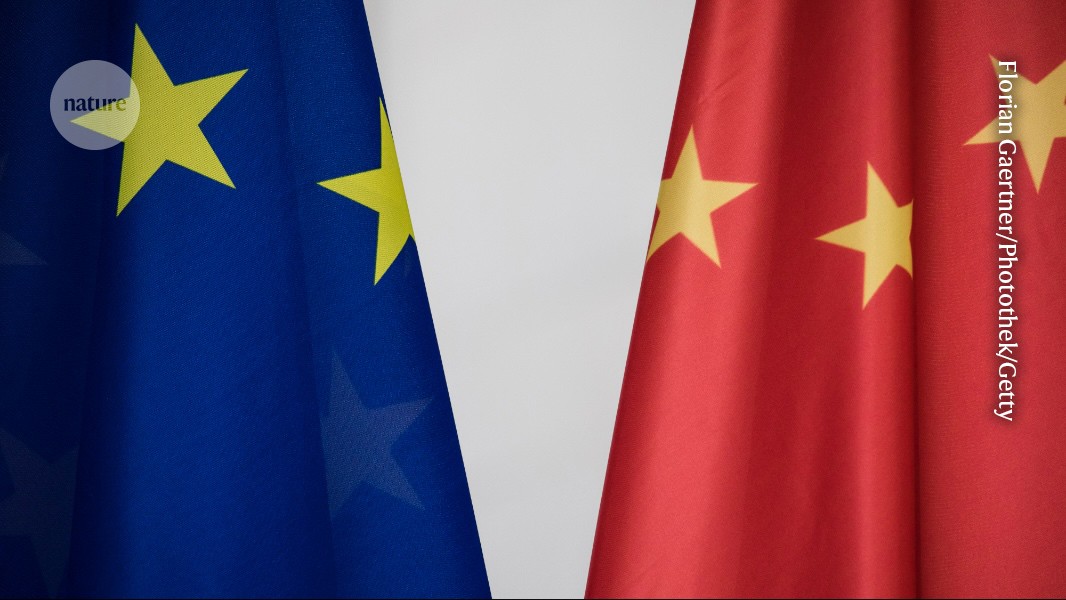
How to solve climate change and make life more awesome
We already have all the tools we need to fix climate change. We just need to use them.

Climate solutions most likely to reach ‘positive tipping points’ revealed by scientists
Global shift towards clean electricity could trigger ‘cascade’ of progress, helping reduce air pollution, cut waste and revive oceans
Social Influence and Action — Jen Christiansen
I’m wary of climate solutions that are hyper focused on the action of individuals as opposed to systems and corporations. Do you experience carbon footprint guilt every time you board a plane to visit family too? Well, that whole schema was a product of the PR firm Ogilvy & Mather for British Petroleum. It was an effort to shift focus away from oil companies and onto individual responsibility to lower greenhouse gas emissions. For more, read “The carbon footprint sham” by Mark Kaufman for Mashable in 2021, and “Big oil coined ‘carbon footprints’ to blame us for their greed. Keep them on the hook” by Rebecca Solnit for The Guardian.
