


What are the grand dynamics that drive the accumulation…
Thomas Piketty’s “Capital”, summarised in four paragraphs
A very brief summary of "Capital in the Twenty-First Century"

Summary of Capital in the Twenty-First Century: by Thom…
Summary of Capital in the Twenty-First Century by Thoma…
Pluralistic: America and “national capitalism” (18 Feb 2025) – Pluralistic: Daily links from Cory Doctorow
Thomas Piketty's 2013 unexpected bestseller (a 750 page economics book translated from French!) Capital in the 21st Century, offers a very convincing explanation of our political decay, and it continues to serve this purpose as the decay undergoes alarming acceleration:
Capital Cycles and AI
What is a capital cycle and why AI is building the mother of all capital cycles
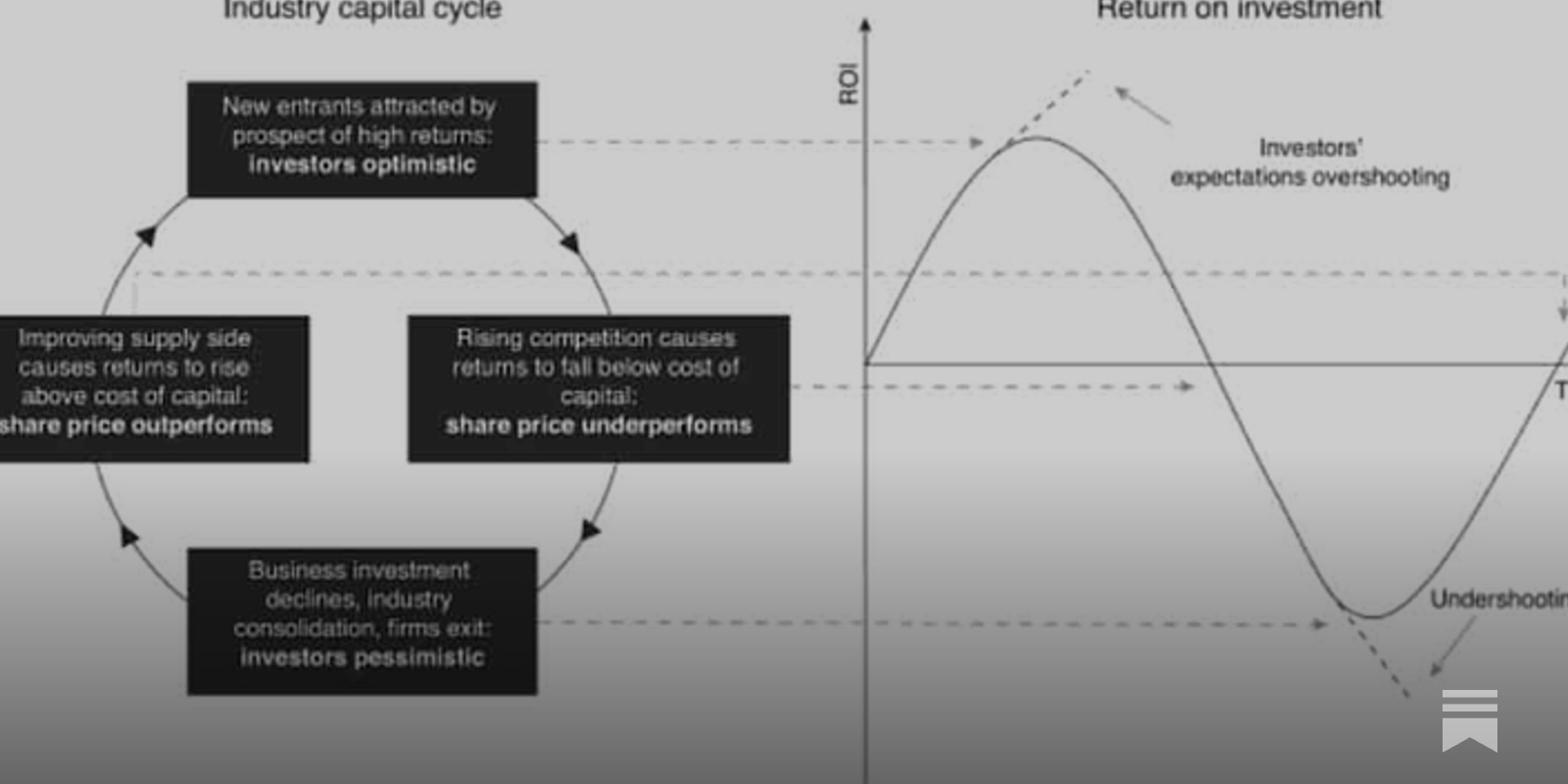
Long cycles
I have long been sympathetic to the concept of long cycles in capitalist production and accumulation. This is the idea that capitalist production moves in cycles, not just in booms and slumps every…

Preface | The World After Capital
Since publishing the previous version of The World After Capital, I have met with people across the political spectrum to discuss the ideas from the book. When I present these in person, I emphasize that the ideas are neither left nor right but forward (credit to Scott Santens who first used this phrase about Universal Basic Income). My writing, however, at times has alienated readers who identify as being more on the right. In this new edition, I am therefore making an extra effort to emphasize how both my diagnosis of where we are at and my suggestions for how to move forward do not map onto the existing political divides. Instead this is a new way of understanding our challenges and opportunities that can be the basis for movements and parties that are not trapped in Industrial Age ideology.
Le capitalocène : un concept utile mais disparate
Parmi les concepts maintenant diffusés dans le débat public – au-delà donc simplement du milieu académique, voire militant – pour rendre compte de la crise écologique dans ses multiples aspects (notamment épuisement des ressources, érosion de la biodiversité, pollutions, acidification des océans, déforestation et changement du climat), celui de capitalocène commence à

Exocapitalism: economies with absolutely no limits
There is a touch of destiny with this one. We have real…

Billion Dollar PDFs
Documents that crystallized a narrative and moved billions of dollars of capital.

Why did capitalism begin in the West?
Culture, class, and the origins of capitalist development
Thomas Piketty's Capital: everything you need to know about the surprise bestseller
The radical economist's book Capital in the Twenty-First century has angered the right with its powerful argument about wealth, democracy and why capitalism will always create inequality, says Paul Mason
America's Growth Ponzi Scheme | Strong Towns
The American pattern of development creates the illusion of wealth. Today we are in the process of seeing that illusion destroyed…and with it the prosperity we have come to take for granted.
Marx et l’histoire de la nature
À propos de : Frédéric Monferrand, La nature du capital. Politique et ontologie chez le jeune Marx, Éditions Amsterdam

Capitalism in Crisis Amid Slow Growth and Growing Inequality
Six years after the Lehman disaster, the industrialized world is suffering from Japan Syndrome. Growth is minimal, another crash may be brewing and the gulf between rich and poor continues to widen. Can the global economy reinvent itself?

Capital Must Seek Delight
Too few people are experiencing the delights and serendipity of AI, causing capital misallocation

Capitalism and the Death Drive
What we call growth today is in fact a tumorous growth,…
