""One of the greatest thinkers of our age" (The Guardian) presents a new way of living-one modeled on nature's design instead of capitalism's-for fans of Guns, Germs, and Steel and Doughnut Economics It has often been said that it is easier to imagine the end of the world than it is to imagine the end of capitalism-and yet that is what the historical moment urgently calls for. Climate change has reached an emergency state, inequality continues to grow, and, for many, the future has never seemed more bleak. Incremental policy improvements are no longer enough-we need a deep transformation of our current civilization to continue to survive. In Ecocivilization, leading thinker Jeremy Lent reimagines the basis of our civilization, and argues for a new global system of living, one based on life-affirming principles modeled after nature's own design. What enfolds is a robust framework incorporating Lent's own expertise, and the lived experiences of those on the ground already putting ecological civilization's core tenants into practice-justice, mutuality, diversity, and symbiosis. From the global economy to universal housing and income, from infrastructure to agriculture, every major aspect of our society could be redesigned to work together as a coherent whole, setting the conditions for all people to flourish. Ecocivilization shows how this future on a regenerated Earth is not only desirable, but entirely feasible"--
Towards the Symbiocene: Building an Eco-Civilisation with thought-leader, Jeremy Lent
Jeremy Lent is a long time friend of the podcast. His new book, 'Ecocivilization: Making a World That Works for All' is coming out at the end of April 2026 and so we got together to discuss what an Ecocivilisation is, why we so badly need to become one, and how we might get there.

More and More and More
It has become habitual to think of our relationship with energy as one of transition: with wood superseded by coal, coal by oil, oil by nuclear and then at some future point all replaced by green sources. Jean-Baptiste Fressoz’s devastating but unnervingly entertaining book shows what an extraordinary delusion this is. Far from the industrial era passing through a series of transformations, each new phase has in practice remained almost wholly entangled with the previous one. Indeed the very idea of transition turns out to be untrue. The author shares the same acute anxiety about the need for a green transition as the rest of us, but shows how, disastrously, our industrial history has in fact been based on symbiosis, with each major energy source feeding off the others. Using a fascinating array of examples, Fressoz describes how we have gorged on all forms of energy – with whole forests needed to prop up coal mines, coal remaining central to the creation of innumerable new products and oil still central to our lives. The world now burns more wood and coal than ever before. This book reveals an uncomfortable truth: ‘transition’ was originally itself promoted by energy companies, not as a genuine plan, but as a means to put off any meaningful change. More and More and More forces its readers to understand the modern world in all its voracious reality, and the true nature of the challenges heading our way.
Systems of Global Governance in the Era of Human-Machine Convergence
Technology is increasingly shaping our social structures and is becoming a driving force in altering human biology. Besides, human activities already proved to have a significant impact on the Earth system which in turn generates complex feedback loops between social and ecological systems. Furthermore, since our species evolved relatively fast from small groups of hunter-gatherers to large and technology-intensive urban agglomerations, it is not a surprise that the major institutions of human society are no longer fit to cope with the present complexity. In this note we draw foundational parallelisms between neurophysiological systems and ICT-enabled social systems, discussing how frameworks rooted in biology and physics could provide heuristic value in the design of evolutionary systems relevant to politics and economics. In this regard we highlight how the governance of emerging technology (i.e. nanotechnology, biotechnology, information technology, and cognitive science), and the one of climate change both presently confront us with a number of connected challenges. In particular: historically high level of inequality; the co-existence of growing multipolar cultural systems in an unprecedentedly connected world; the unlikely reaching of the institutional agreements required to deviate abnormal trajectories of development. We argue that wise general solutions to such interrelated issues should embed the deep understanding of how to elicit mutual incentives in the socio-economic subsystems of Earth system in order to jointly concur to a global utility function (e.g. avoiding the reach of planetary boundaries and widespread social unrest). We leave some open questions on how techno-social systems can effectively learn and adapt with respect to our understanding of geopolitical complexity.

Appropriate Technology, Permacomputing, Post Growth, and Ecomodernism.
To adapt to the changing climate, we need to radically rethink how and why we do the things we do. From technology, to social movements, to economics. The world is at stake. And we can change it.
Toward a New Global Security Paradigm. Task Force 06: Strengthening Multilateralism and Global Governance
Amidst increasing global connectivity and accelerating global change, the global security framework has become insufficient, contributing to a crippling dysfunctionality in international cooperation. The current security framework, focused almost exclusively on a narrow notion of military security, is insufficient to address escalating ‘threats without enemy,’ such as climate change, biodiversity loss, and pollution, which increasingly endanger the lives and dignity of all populations. This policy brief recommends a global social-ecological security framework, rooted in the science informed understanding of social and biophysical realities, to address the evolving needs and challenges of the 21st century. Our recommendations to operationalise this paradigm include: a reinvigorated commitment to multilateralism and peace as a pre-requisite; public participation in shaping the new inclusive international governance framework; development aid and green finance as key levers; a focus on building resilience (especially food security); and, strengthening anticipation of and response to interconnected global shocks. We propose a G20-initiated formation of a high-level working group to catalyse the creation of this new framework. Such a process must involve relevant stakeholders, leveraging new possibilities afforded by technological tools (such as AI). Implementing this ambitious agenda will be challenging, but continuing on a business as- usual trajectory is a ‘lose-lose’ spiral likely to trigger social and ecological crises. Bold leadership from the G20 is needed more than ever to reinvent multilateralism and thus ensure sustainable well-being for all.
Sustainability is not enough: we need regenerative cultures
By Daniel C. Wahl

Assessing nature's contributions to people
Recognizing culture, and diverse sources of knowledge, can improve assessments , A major challenge today and into the future is to maintain or enhance beneficial contributions of nature to a good quality of life for all people. This is among the key motivations of the Intergovernmental Science-Policy Platform on Biodiversity and Ecosystem Services (IPBES), a joint global effort by governments, academia, and civil society to assess and promote knowledge of Earth's biodiversity and ecosystems and their contribution to human societies in order to inform policy formulation. One of the more recent key elements of the IPBES conceptual framework ( 1 ) is the notion of nature's contributions to people (NCP), which builds on the ecosystem service concept popularized by the Millennium Ecosystem Assessment (MA) ( 2 ). But as we detail below, NCP as defined and put into practice in IPBES differs from earlier work in several important ways. First, the NCP approach recognizes the central and pervasive role that culture plays in defining all links between people and nature. Second, use of NCP elevates, emphasizes, and operationalizes the role of indigenous and local knowledge in understanding nature's contribution to people.

The New Planetary Nationalism
The realization of human embeddedness in Earth’s natural systems does not inevitably create a cosmopolitan politics oriented toward universal well-being.
From risk to flourishing: Seeds for responding to a complex world
Flourishing is the actualization of all beings toward their good -- not only individually but collectively, answering the question of `how do we live well with and for each other?'. In science as in society, the tendency to reduce, segregate, specialize, and settle has precluded embracing the concept of flourishing as a guiding principle. We aim to identify an approach to risk science research that promotes the flourishing of socio-ecological-technological systems (SETS). We discuss the normative role of an orientation toward flourishing for the field of risk science. We explore the possibility that (risk) science could be done in a way that is capable of pointing society toward a different future, one more resilient and more capable of flourishing. Our exploration mirrors the conversational nature of flourishing itself: examine ideologies traditionally believed to be rigidly in opposition and consider what emerges in the space(s) and conversation between them. We call this a dialectical approach. Within this paradigm grounded in conversation, pluralism, and pragmatism, we revisit three longstanding tensions in risk science: physical$|$social, determinism$|$uncertainty, contextuality$|$generality. Although these tensions are not new, revisiting them together through the lens of complexity science, and with explicit attention to the normative commitments that shape risk research, reveals underexplored possibilities for the field. Examining them in conversation with the other allows us to explore the provisional seeds for what might be termed complex risk science: interdependence, responsivity, participation, pluralism, openness, and ongoingness. Enacting the dialectical paradigm towards a risk science for a flourishing world will depend on creating collectives toward complex risk science, supporting them with skillfully governed commons, and centering care in our research.
Economics for the future – Beyond the superorganism
Our environment and economy are at a crossroads. This paper attempts a cohesive narrative on how human evolved behavior, money, energy, economy and th…
How Infrastructure Works: Transforming our shared systems for a changing world
'Pulsing with wisdom and humanity... a masterpiece' ED YONG'A hopeful, lyrical - even beautiful - hymn to the systems of mutual aid we embed in our material world' CORY DOCTOROW'An extraordinary book' MARK MIODOWNIK'You won't see the world the same after reading this book!' AUSTIN KLEONEvery day, we are granted the power to travel at high speeds, fly, see in the dark, summon water from distant mountains and electricity from the sun. The systems that run our world are invisible to us until they fail.Infrastructure enables lives of astounding ease and freedom that would have been unimaginable just a century ago. These technological systems - the most complex and vast ever created by humans - have allowed us to work collectively for the public good. But these systems are now beginning to fail us.Engineering professor Deb Chachra takes readers on a fascinating tour of these essential utilities, revealing how they work, what it takes to keep them running, and just how much they shape our lives - but also the price they extract, who pays it and in what ways, as well as the threats to our infrastructure in a changing world.From Snowdonia's Electric Mountain to a solar plant in southern India, Chachra shows how we can rebuild our shared infrastructure to be not just functional but also equitable, resilient, and sustainable. We need to learn how to see these systems and to transform them, together, because the cost of not being able to rely on them is unthinkably high.
Co-Creation: Systems Thinking Beyond the Machine
Complexity thinking is all the rage — in the arts and sciences. Yet, there are two different strands of thinking about complexity, which are often confounded. The first comes from cybernetics, focussing on control in complex situations. The second is ecological, aiming at sustainable participation in a reality beyond control. Their difference rests on a fundamental distinction: is complexity rooted in feedback regulation or collective co-creation? While feedback remains mechanistic, co-creation generates new spaces of possibilities. We need it to understand life and its evolution. And it empowers us to rewrite our future, to escape our mechanistic cage without abandoning scientific rigor. In this paper, we illustrate how we implement these powerful yet abstract principles through our artistic and philosophical practice.
How May the ‘Anthropocene’ Enable and Constrain Cybersystemic Governance? The ‘Anthropocene Problematique’
A growing awareness of the need for cybernetics and systems thinking (cybersystemic) in praxes of governance to improve human-biosphere relationships in the Anthropocene has become apparent. Nonetheless, mainstream governance informed by linear-causality seems to perpetuate an increasingly inadequate paradigm of dominant first-order/systematic thinking in governing complex interactions between humans and their natural environments. This conundrum is explored through the second-order lens of a systemic inquiry, using an integrative literature review. We discuss limitations of the Anthropocene metaphor and make the case for a reframing of our situation (humans’ co-evolutionary dynamic with the biosphere) as the ‘Anthropocene problematique’. This reframing as a systemic-duality offers more conducive affordances for trajectory-shifting cybersystemic governance to emerge. Aligning with a body of literature evidencing the influence of language on human cognition, we argue that by joining up the strengths of both ideas, ‘Anthropocene problematique’ may form a conceptual device amenable to changing worldviews and guiding practical action in governing human-biosphere relationships. We suggest a conceptual framework for practitioners to design and enact purposeful systems of cybersystemic governance with potential to improve situated Anthropocene problematiques. This framing and theoretical proposal are motivated by a need for shifts towards a social purpose of healing human-biosphere relationships in current governance systems in the Anthropocene-world.

Reimagining Ourselves at the End of Our World: Kinship, Interconnection, and Spirituality in the Metacrisis - The Great Simplification
Over the past decade, the world has become increasingly chaotic and uncertain – and so, too, has our cultural vision for the future. While the events we face now may feel unprecedented, they are rooted in much deeper patterns, which humanity has been playing out for millennia. If we take the time to understand past trends, we can also employ practices and philosophies that might counteract them – such as focusing on kinship, intimacy, and resilience – to help pave the way for a better future. How might we nurture the foundations of a different kind of society, even while the end of our current civilization plays out around us?

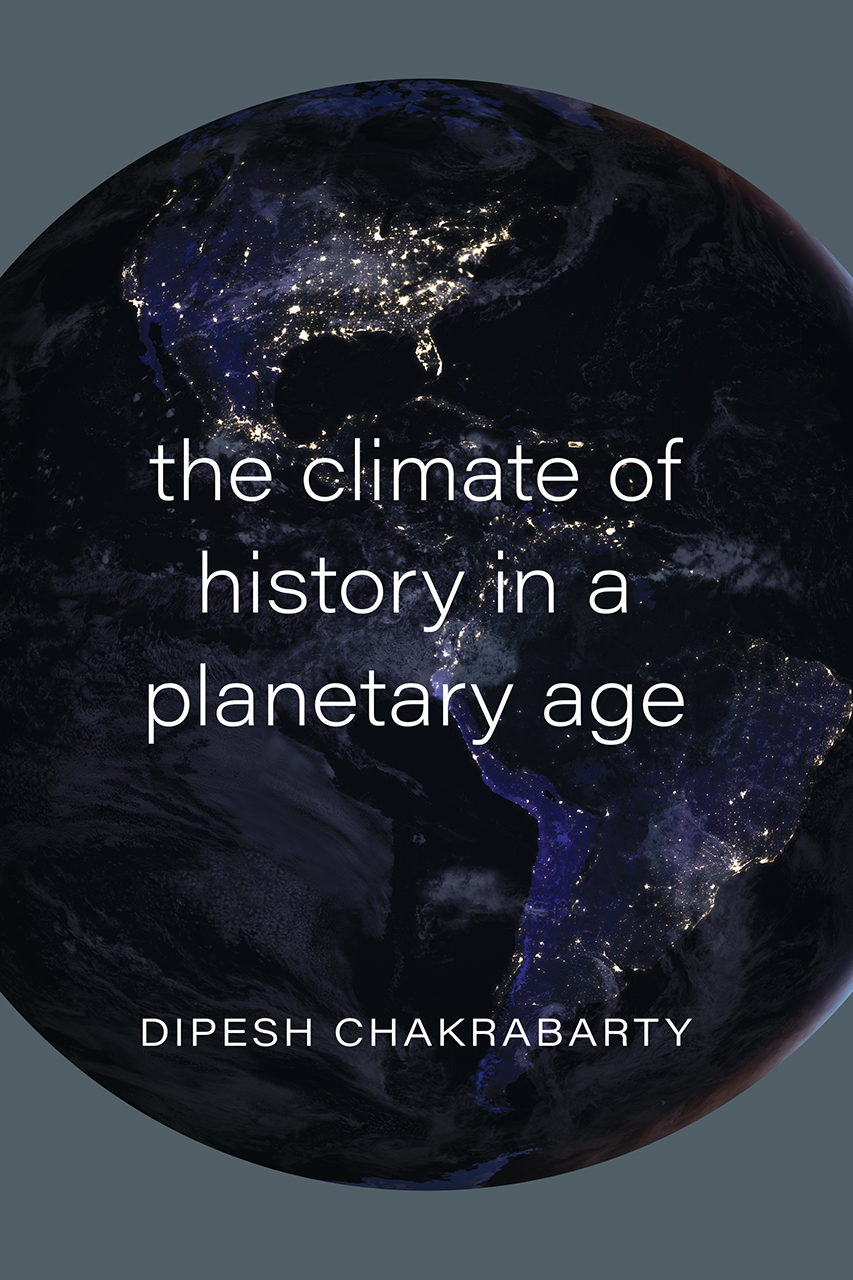
The Climate of History in a Planetary Age
For the past decade, historian Dipesh Chakrabarty has been one of the most influential scholars addressing the meaning of climate change. Climate change, he argues, upends long-standing ideas of history, modernity, and globalization. The burden of The Climate of History in a Planetary Age is to grapple with what this means and to confront humanities scholars with ideas they have been reluctant to reconsider—from the changed nature of human agency to a new acceptance of universals. Chakrabarty argues that we must see ourselves from two perspectives at once: the planetary and the global. This distinction is central to Chakrabarty’s work—the globe is a human-centric construction, while a planetary perspective intentionally decenters the human. Featuring wide-ranging excursions into historical and philosophical literatures, The Climate of History in a Planetary Age boldly considers how to frame the human condition in troubled times. As we open ourselves to the implications of the Anthropocene, few writers are as likely as Chakrabarty to shape our understanding of the best way forward.
Design Justice: Community-Led Practices to Build the Worlds We Need
An exploration of how design might be led by marginalized communities, dismantle structural inequality, and advance collective liberation and ecological survival. What is the relationship between design, power, and social justice? “Design justice” is an approach to design that is led by marginalized communities and that aims expilcitly to challenge, rather than reproduce, structural inequalities. It has emerged from a growing community of designers in various fields who work closely with social movements and community-based organizations around the world. This book explores the theory and practice of design justice, demonstrates how universalist design principles and practices erase certain groups of people—specifically, those who are intersectionally disadvantaged or multiply burdened under the matrix of domination (white supremacist heteropatriarchy, ableism, capitalism, and settler colonialism)—and invites readers to “build a better world, a world where many worlds fit; linked worlds of collective liberation and ecological sustainability.” Along the way, the book documents a multitude of real-world community-led design practices, each grounded in a particular social movement. Design Justice goes beyond recent calls for design for good, user-centered design, and employment diversity in the technology and design professions; it connects design to larger struggles for collective liberation and ecological survival. The open access edition of this book was made possible by generous funding from Knowledge Unlatched and the MIT Press Frank Urbanowski Memorial Fund.